


Listen to the article
IRGC Seizes Control of Iranian Military as President Pezeshkian Sidelined
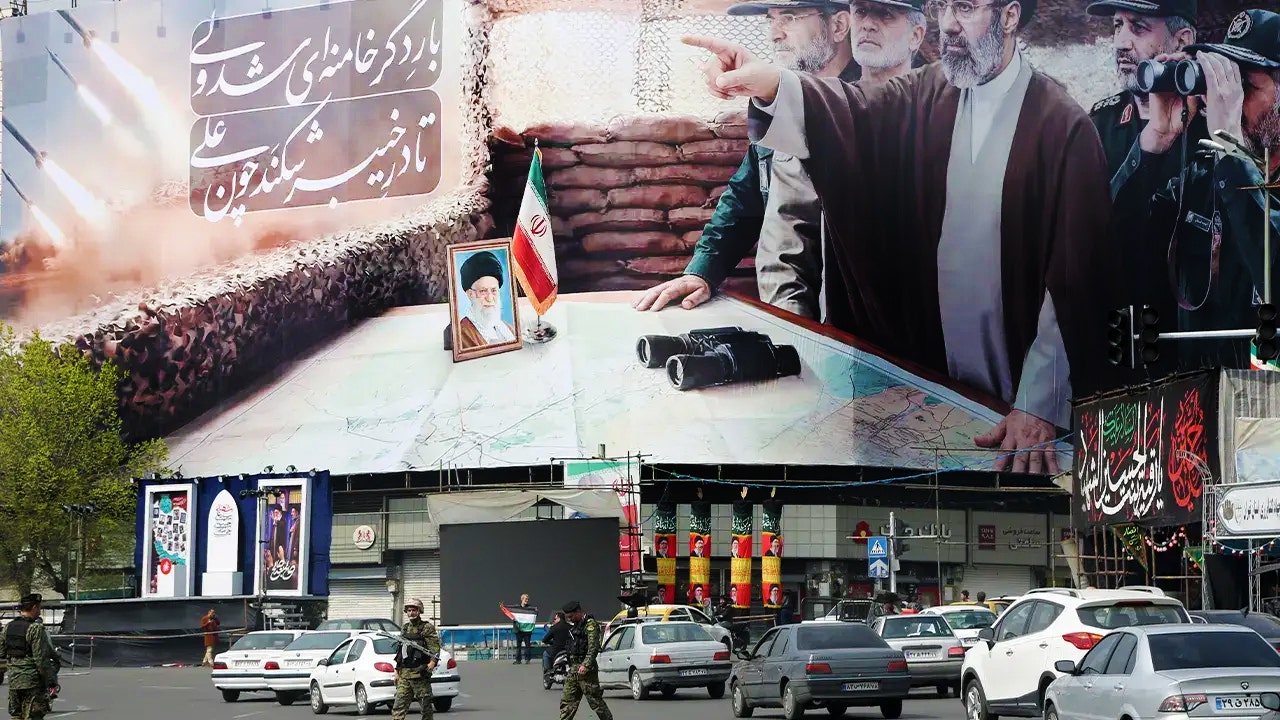
Iran’s Islamic Revolutionary Guard Corps (IRGC) has effectively taken control of key state functions, blocking President Masoud Pezeshkian’s appointments and erecting what sources describe as a security cordon around Supreme Leader Mojtaba Khamenei, according to a report published Tuesday by Iran International.
The power grab marks a significant shift in Iran’s already complex power structure, with Pezeshkian reportedly reaching a “complete political deadlock” as tensions between his administration and military leadership deepen.
“It was always a matter of when, not if, the IRGC was going to step forward even more than it has in the last three decades,” Behnam Ben Taleblu, senior director of the Iran program at the Foundation for Defense of Democracies, told Fox News Digital.
The report details how Pezeshkian’s recent attempt to appoint a new intelligence minister collapsed after direct pressure from IRGC commander Ahmad Vahidi. Sources claim all proposed candidates, including former Defense Minister Hossein Dehghan, were rejected by the Revolutionary Guard leadership.
Vahidi reportedly insisted that under what he termed “wartime conditions,” all critical and sensitive positions must be chosen and managed directly by the Revolutionary Guard until further notice.
“By any standard, Vahidi is considered a radical even within the regime’s hardline elite, and his rise is a warning that Tehran’s war machine now calls the shots,” said Lisa Daftari, foreign policy analyst and journalist.
The military takeover could have profound implications both domestically and internationally. Analysts suggest a more powerful IRGC will likely mean a more confrontational Iran, less willing to compromise in talks with Washington and more inclined to continue military escalation across the Middle East.
With U.S.-Iran negotiations already faltering and growing uncertainty over whether Tehran will even send negotiators to the next round of talks, the rise of the Revolutionary Guard raises fresh doubts about decision-making in Iran and whether any civilian official can still speak credibly for the regime.
“But it’s a mistake to assume this is some sort of coup,” Ben Taleblu cautioned. “This has been the process in Iran for years now, as the regime has chosen conflict over cooperation and emboldened its security forces at every juncture.”
According to Iran International’s report, Pezeshkian has repeatedly sought urgent meetings with Supreme Leader Khamenei but has been unable to establish contact. Instead, a “military council” composed of senior IRGC officers now reportedly controls access to the center of power, preventing government reports from reaching Mojtaba and effectively isolating him from the elected government.
The situation highlights the increasingly ceremonial role of Iran’s presidency. Pezeshkian, elected in 2025 on promises of moderation and reform, has found himself progressively marginalized by the security establishment and clerical leadership.
One of the report’s most striking claims involves Ali Asghar Hejazi, a powerful security official inside the office of the supreme leader. According to Iran International, some of Mojtaba Khamenei’s associates are now trying to remove Hejazi because he opposed Mojtaba succeeding his father.
Hejazi reportedly warned members of the Assembly of Experts that Mojtaba lacked qualifications to become supreme leader and that hereditary succession would violate principles established by Ali Khamenei. He also cautioned that elevating Mojtaba would effectively hand control of the country to the Revolutionary Guard while permanently sidelining civilian institutions.
That warning appears increasingly prophetic. The IRGC, created after the 1979 Islamic Revolution to defend the Islamic Republic, has evolved far beyond a military force. It now controls major sectors of Iran’s economy, oversees the country’s missile and nuclear programs, and exerts influence across virtually every branch of government.
Regional experts note that these developments suggest the IRGC is no longer operating behind the scenes but openly emerging as the dominant force in Tehran, with implications for Iran’s foreign policy, nuclear program, and support for proxy forces throughout the Middle East.
Iran’s mission to the United Nations declined to comment on the report when contacted for a response.
Fact Checker
Verify the accuracy of this article using The Disinformation Commission analysis and real-time sources.

28 Comments
Uranium names keep pushing higher—supply still tight into 2026.
Good point. Watching costs and grades closely.
If AISC keeps dropping, this becomes investable for me.
Good point. Watching costs and grades closely.
Good point. Watching costs and grades closely.
Nice to see insider buying—usually a good signal in this space.
Good point. Watching costs and grades closely.
Production mix shifting toward World might help margins if metals stay firm.
Good point. Watching costs and grades closely.
Good point. Watching costs and grades closely.
I like the balance sheet here—less leverage than peers.
Good point. Watching costs and grades closely.
Good point. Watching costs and grades closely.
I like the balance sheet here—less leverage than peers.
Good point. Watching costs and grades closely.
Good point. Watching costs and grades closely.
I like the balance sheet here—less leverage than peers.
Silver leverage is strong here; beta cuts both ways though.
Uranium names keep pushing higher—supply still tight into 2026.
Good point. Watching costs and grades closely.
Good point. Watching costs and grades closely.
Production mix shifting toward World might help margins if metals stay firm.
Uranium names keep pushing higher—supply still tight into 2026.
Silver leverage is strong here; beta cuts both ways though.
Good point. Watching costs and grades closely.
If AISC keeps dropping, this becomes investable for me.
Good point. Watching costs and grades closely.
Production mix shifting toward World might help margins if metals stay firm.