


Listen to the article
Iran’s Military Strategy Focused on Survival Amid US-Israeli Strikes
Iran’s military is not designed to win a conventional war against the United States or Israel but rather to survive one, absorb damage, and continue fighting over time, according to military experts. This strategic approach is becoming increasingly evident as Iran’s forces weather weeks of sustained U.S. and Israeli strikes.
The scale of the military campaign against Iran has been significant. According to a March 23 fact sheet from U.S. Central Command, Operation Epic Fury has struck more than 9,000 targets alongside more than 9,000 combat flights, targeting missile sites, air defenses, Islamic Revolutionary Guard Corps (IRGC) command centers, and weapons production facilities.
“We are targeting and eliminating Iran’s ballistic missile systems, destroying the Iranian Navy, and ensuring Iran cannot rapidly rebuild,” Joint Chiefs of Staff Chairman Gen. Dan Caine stated during a Pentagon briefing in March.
Despite these claims of success, security analysts offer a more nuanced assessment. “It’s a mixed bag,” said Nicholas Carl, a fellow at the American Enterprise Institute and assistant director of the Critical Threats Project. “On one hand, Iran’s military is badly degraded across the board, but the regime still retains a significant amount of capability.”
A Dual Military Structure Built for Regime Protection
At the core of Iran’s defense system is a deliberate dual structure: the conventional army, known as the Artesh, and the Islamic Revolutionary Guard Corps, a parallel force created after the 1979 revolution specifically to safeguard the Islamic regime.
“You need to separate between the IRGC and the regular army,” Middle East intelligence expert Danny Citrinowicz explained. “The IRGC gets all of the budgets — better salaries, better equipment, better everything.”
According to Carl, Supreme Leader Ali Khamenei has shaped the armed forces throughout decades around one central objective: preserving the Islamic Republic and exporting its revolutionary ideology. Carl describes the IRGC as a “deeply ideological praetorian guard,” while the Artesh remains a more conventional force focused on defending Iran’s borders.
“The IRGC is probably the more dangerous of the two, but we cannot discount the threat that the regular military poses as well,” Carl added.
Missiles Remain Iran’s Strategic Backbone
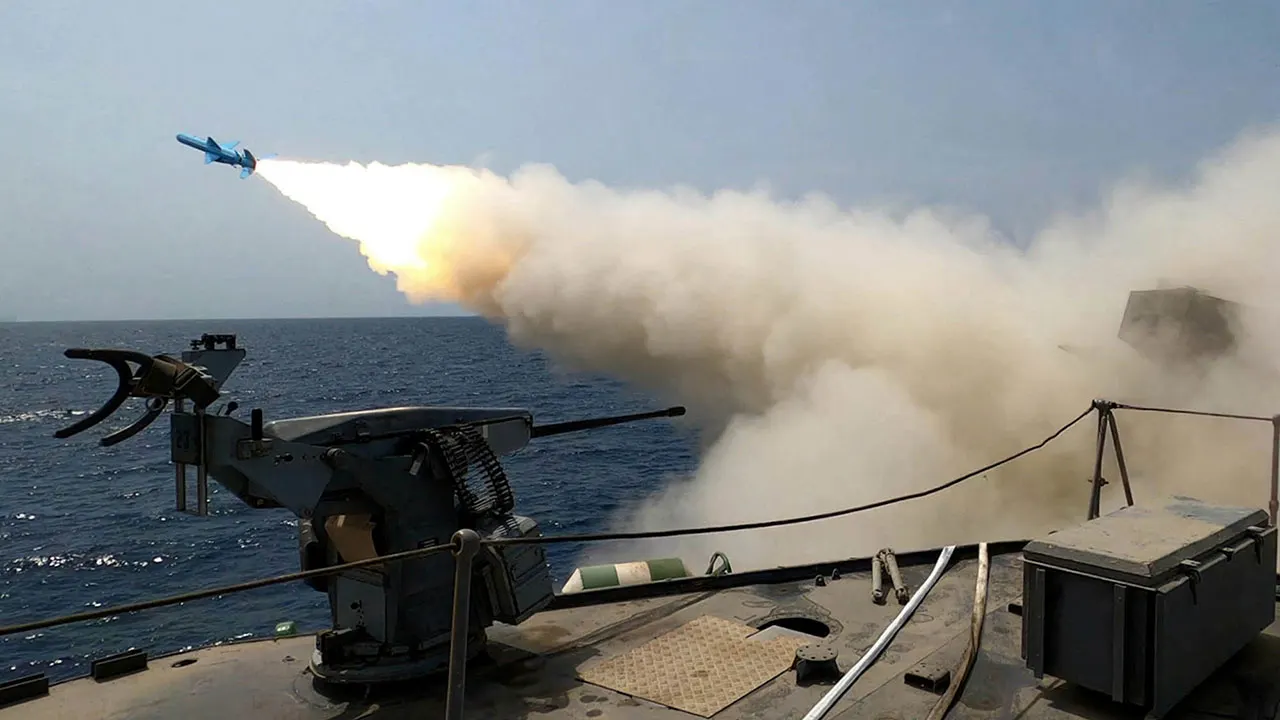
Despite extensive strikes targeting Iran’s missile capabilities, the missile program remains the cornerstone of Iranian military power. The IRGC Aerospace Force has developed what analysts describe as the largest missile inventory in the Middle East.
U.S. officials claim these capabilities have been significantly reduced. “Iran’s ballistic missile shots fired are down 86% from the first day of fighting,” Caine reported, adding that drone launches have dropped by roughly 73%. Secretary of War Pete Hegseth similarly stated that “the enemy can no longer shoot the volume of missiles they once did, not even close.”
However, both U.S. officials and independent analysts acknowledge the threat persists. “Iran will still be able to shoot some missiles and launch one-way attack drones,” Hegseth conceded.
Carl noted that the decline in missile fire has stabilized: “Iranian missile and drone fire has dropped precipitously, about 90% since the war began, but that number has been consistent for weeks. That means they still retain enough capability to sustain strikes across the region.”
U.S. estimates suggest roughly a third of Iran’s missile capabilities remain active. “The regime still does have a significant capability to threaten targets across the region, especially as it demonstrates the ability to shoot beyond 2,000 kilometers,” Carl said.
Naval Forces Designed to Disrupt Global Trade
While the Pentagon claims to have “effectively neutralized” Iran’s major naval presence by damaging or destroying more than 140 Iranian vessels, analysts warn that Iran’s naval threat was never dependent on large ships.
The IRGC Navy is built around “area denial capabilities,” including fast attack craft, mines, missiles, and drones designed to swarm adversaries and disrupt maritime movement.
“They still have the capacity — speedboats, drones, surface-to-sea missiles — allowing them to block the Strait of Hormuz,” Citrinowicz explained.
Carl clarified a common misconception: “It’s not technically accurate to say the Strait of Hormuz is closed. Iran is selectively denying access, firing at some ships while allowing others to pass. Iran has to do very, very little to achieve a meaningful effect.”
Air and Ground Force Dynamics
U.S. officials claim to have established “localized air superiority” over Iranian airspace. However, Iran’s air force was never the centerpiece of its military strategy. Years of sanctions have left it reliant on aging aircraft with limited modernization capabilities.
“There is definitely a setback, but Iran was never built on an air force,” Citrinowicz noted. Instead, Iran relies on missiles, drones, and layered defenses for air security.
On the ground, Iran retains a significant advantage: its ground forces have largely remained unengaged in the current conflict. The Artesh ground forces, which include tens of brigades, are positioned primarily to defend Iran’s borders.
“The ground troops are still intact, nobody has invaded Iran,” Citrinowicz observed, adding that these forces are increasingly launching drones, indicating an adaptation in Iran’s fighting strategy.
The Regional Proxy Network
Beyond its borders, Iran extends its military influence through a network of proxy forces managed by the IRGC’s Quds Force. These include Hezbollah in Lebanon, Hamas in Gaza, and the Houthis in Yemen.
Carl explained that the Quds Force provides “leadership, materiel, intelligence, training, and funds” to these allied militias across the Middle East.
“The ‘Axis of Resistance’ is the central mechanism by which Iran can further regionalize the conflict, to endanger as many actors’ interests as possible,” Carl said.
Built for Endurance
Iran’s military is ultimately structured to confront both external and internal threats, with regime survival as its paramount objective. The result is a force built on redundancy, asymmetric capabilities, and endurance rather than conventional military dominance.
Even after weeks of sustained strikes, Iran maintains enough capability to continue launching missiles, disrupting global shipping, and leveraging proxy forces across the region. While significantly weakened, it remains strategically dangerous.
“We cannot discount the threat that the Iranian military poses,” Carl concluded. “It remains a force capable of threatening regional and international security.”
Fact Checker
Verify the accuracy of this article using The Disinformation Commission analysis and real-time sources.

7 Comments
I’m curious to see how Iran’s missile, naval, and IRGC forces adapt and evolve in response to the sustained US-Israeli strikes. Their survival-focused strategy seems to be holding up so far, but the long-term impact remains to be seen.
Iran’s focus on survival-oriented defense is understandable given the power imbalance with the US and Israel. However, the analysts’ assessment of a ‘mixed bag’ suggests the campaign may not have fully neutralized their key military systems and capabilities.
Interesting to see Iran’s military strategy shifting more towards survival and asymmetric warfare rather than conventional force projection. Curious to learn more about how their missile systems, naval forces, and IRGC are being targeted and degraded.
The scale of the US-led operation against Iran’s military assets seems quite extensive, with over 9,000 targets hit and sorties flown. I wonder how effective these strikes have been in actually weakening Iran’s defense capabilities long-term.
The details on the scale and targets of the US-led operation against Iran’s military are quite striking. It will be important to monitor how Iran’s forces adapt and whether the campaign is able to significantly degrade their key systems over time.
The information on Iran’s military strategy and the operational details of the US-led campaign against it provides an interesting geopolitical perspective. I’ll be following this story closely to see how the dynamics unfold.
This is a complex and high-stakes situation. I appreciate the nuanced analysis on the effectiveness of the US-Israeli strikes and Iran’s efforts to sustain its defense capabilities. Understanding the motivations and strategic considerations on both sides is crucial.