


Listen to the article
Iranian Couple Prepares for Uncertain Future as U.S. Threats Loom
DUBAI, United Arab Emirates — Zahra Arghavan and Mehdi Alishir stood on their balcony, watching the sun set over Tehran and bracing for the sound of airstrikes.
As time ticks down on U.S. President Donald Trump’s latest ultimatum, their thoughts were clouded by new fears: How long will the power be out if plants are bombed? How would they leave the city if the bridges are taken out?
“Honestly, the situation is really unclear,” Arghavan said. “We don’t really understand things like how long the power might go out if it does, or what life without electricity would even look like.”
Five weeks into the conflict, the couple has grown accustomed to the roar of American and Israeli fighter jets, the sound of explosions and sleepless nights. Like many Tehran residents, they’ve evacuated the capital and returned multiple times in search of safety that remains elusive.
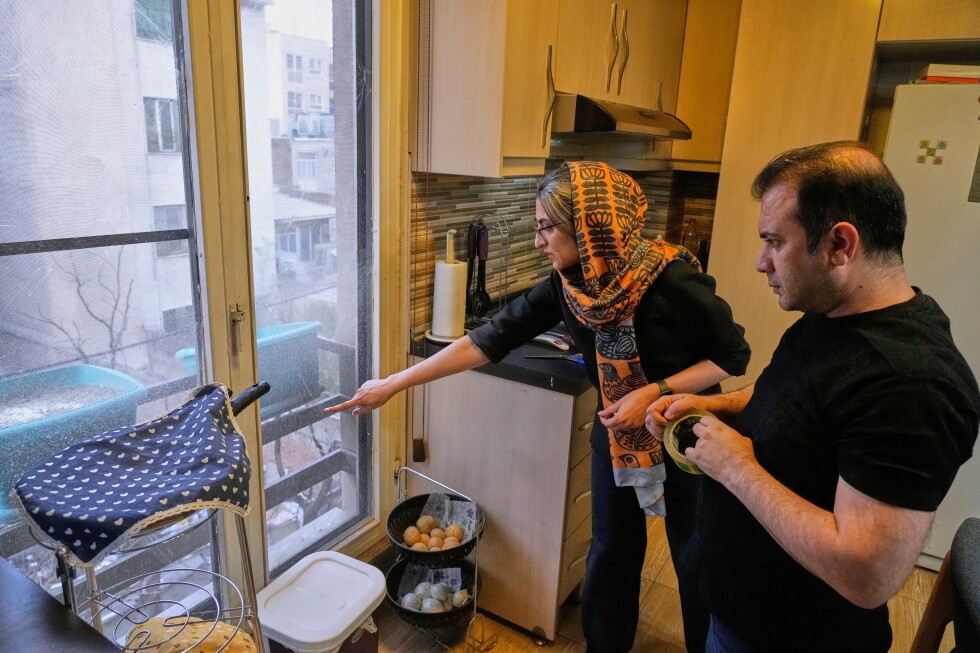
The couple has taken practical precautions in their apartment. Clear packing tape lines the edges of their windows to protect against blast damage. Mirrors and fragile objects have been secured or relocated. A packed bag containing essential documents, medications and necessities sits ready for a quick evacuation.
Alishir says they could manage life without power—and potentially without running water—for about a week. “If it goes on longer, we’ll definitely run into problems,” he said.
Trump’s weekend threat raised the stakes dramatically. In an expletive-laden warning, the U.S. president vowed that “Tuesday will be Power Plant Day, and Bridge Day,” declaring that Iran’s leaders will be “living in Hell” if they don’t open the Strait of Hormuz, one of the world’s most critical maritime chokepoints for oil transportation.
The Strait, connecting the Persian Gulf to the Arabian Sea, handles roughly 20% of global oil shipments. Any disruption there would send energy markets into turmoil and potentially trigger a global economic crisis.
For Arghavan and Alishir, married for over a decade, this crisis follows other hardships they’ve endured together, including the COVID-19 pandemic and the intense 12-day regional conflict last June.
Their current struggles began even before the first American and Israeli bombs struck Iran on February 28. The Iranian government’s crackdown on nationwide protests in January severely limited internet access, with internet monitoring organization NetBlocks calling it the longest nationwide shutdown ever recorded.
This digital isolation has directly impacted their livelihoods. Arghavan runs a small language school teaching French to Iranians hoping to relocate to Quebec, Canada.
“We were basically an online school, and our students had classes with kids abroad,” she explained. “Around 50% of our learners were outside the country. But now, with all these internet outages, it’s really disrupting our work.”
The ongoing conflict has created complex divisions within Iranian society. Some citizens participate in daily pro-government rallies, while others quietly support the strikes against the regime while simultaneously condemning civilian casualties and infrastructure damage.
Security analysts note that targeting power plants and bridges would represent a significant escalation in the conflict, potentially causing widespread humanitarian consequences beyond military objectives. Such tactics would likely affect ordinary citizens like Arghavan and Alishir far more than government officials or military personnel who have access to backup systems and alternative facilities.
The couple places blame for the conflict on Israel and the United States while hoping for a diplomatic solution that would spare further civilian suffering.
“I really hope an agreement is reached soon and that whatever happens, it ends up helping people, because right now people are the ones paying a heavy price,” Arghavan said.
As dusk falls over Tehran, the uncertainty of tomorrow weighs heavily on millions of residents like Arghavan and Alishir, who continue preparing for worst-case scenarios while hoping for peace.
Fact Checker
Verify the accuracy of this article using The Disinformation Commission analysis and real-time sources.

21 Comments
Silver leverage is strong here; beta cuts both ways though.
Production mix shifting toward World might help margins if metals stay firm.
Good point. Watching costs and grades closely.
Good point. Watching costs and grades closely.
I like the balance sheet here—less leverage than peers.
I like the balance sheet here—less leverage than peers.
Good point. Watching costs and grades closely.
The cost guidance is better than expected. If they deliver, the stock could rerate.
Good point. Watching costs and grades closely.
Good point. Watching costs and grades closely.
The cost guidance is better than expected. If they deliver, the stock could rerate.
Good point. Watching costs and grades closely.
Good point. Watching costs and grades closely.
Silver leverage is strong here; beta cuts both ways though.
Production mix shifting toward World might help margins if metals stay firm.
Silver leverage is strong here; beta cuts both ways though.
Exploration results look promising, but permitting will be the key risk.
Good point. Watching costs and grades closely.
Good point. Watching costs and grades closely.
Exploration results look promising, but permitting will be the key risk.
Good point. Watching costs and grades closely.