


Listen to the article
Iranian National Extradited to Seattle on Charges of Violating U.S. Sanctions
An Iranian citizen has been extradited to Seattle to face multiple charges related to illegal exports of sensitive military equipment from the United States to Iran, the Justice Department announced Monday. The case highlights ongoing tensions between the two countries and U.S. efforts to enforce trade sanctions.
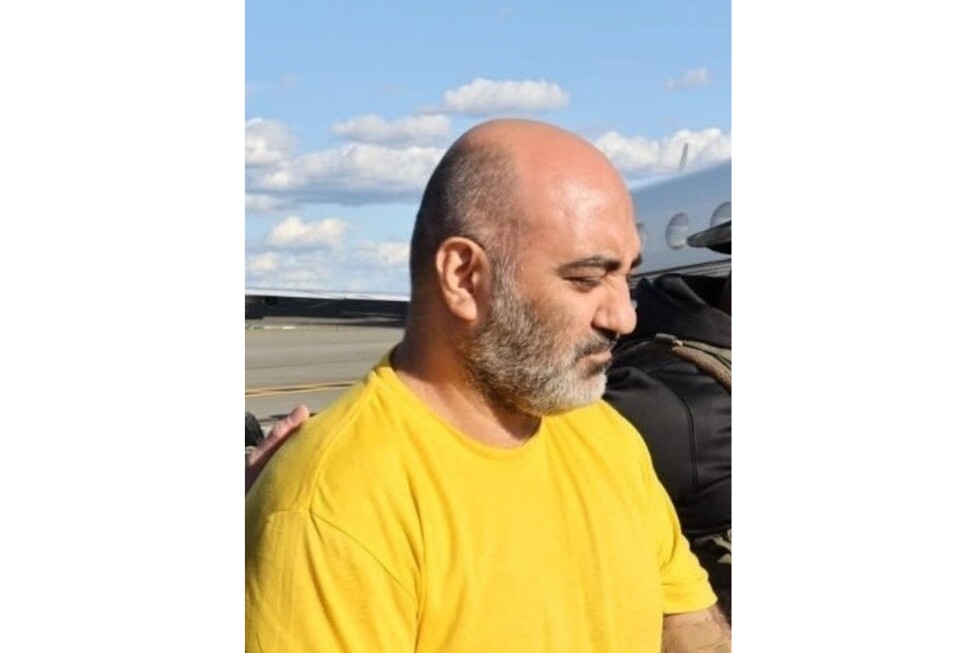
Reza Dindar, 44, was indicted in 2014 on charges including conspiracy, smuggling and money laundering but was only arrested last July in Panama at the request of U.S. authorities. He arrived in Seattle last Thursday after Panamanian officials approved his extradition to the United States.
Dindar made his initial appearance in U.S. District Court on Monday, with his formal arraignment scheduled for May 1. His attorney, Farhad Alavi, declined to comment when contacted by The Associated Press.
According to the recently unsealed indictment, Dindar operated a business called New Port Sourcing Solutions based in Xi’an, China. In 2011 and 2012, prosecutors allege that Dindar and co-conspirators used deceptive practices to purchase components for three military sonar systems worth $97,600 from a business in western Washington state.
The indictment claims Dindar deliberately concealed that the equipment was ultimately destined for Iran, falsely stating that no export license was required. After the initial purchase, the sonar systems were reportedly shipped to China before being covertly redirected to Iran. These actions allegedly violated U.S. sanctions on Iran that were first imposed in 1995 and renewed in 2001.
The case comes amid a backdrop of ongoing geopolitical tensions in the Middle East. Since February 28, when the U.S. and Israel escalated military actions against Iran during nuclear program negotiations, regional violence has intensified significantly. The conflict has resulted in approximately 3,000 casualties in Iran, more than 2,290 in Lebanon, 23 in Israel, and over a dozen in Gulf Arab states. Additionally, fifteen Israeli soldiers in Lebanon and thirteen U.S. service members throughout the region have been killed.
The illegal export of military and dual-use technologies to sanctioned countries remains a significant concern for U.S. law enforcement and intelligence agencies. Military sonar systems are particularly sensitive as they can enhance a nation’s naval capabilities, potentially disrupting the balance of power in volatile regions like the Persian Gulf.
The Justice Department did not explain the decade-long gap between Dindar’s indictment and his eventual arrest, nor did they disclose his whereabouts during that period. Such delays in apprehending suspects in international sanctions cases are not uncommon, as individuals may operate in countries with limited extradition agreements with the United States.
In a separate but similar case, federal prosecutors announced the arrest of a 44-year-old Los Angeles woman at Los Angeles International Airport on Saturday night. She is accused of helping Iran traffic weapons to Sudan, which has been embroiled in a devastating civil war for four years. While unrelated to Dindar’s case, this arrest underscores the U.S. government’s broader efforts to combat sanctions violations and arms trafficking networks connected to Iran.
U.S. sanctions against Iran have been a cornerstone of American foreign policy for decades, aimed at limiting Tehran’s ability to develop nuclear weapons and support militant groups in the Middle East. These sanctions prohibit most U.S. businesses from engaging in trade with Iran and restrict the export of sensitive military technologies.
If convicted, Dindar could face substantial prison time and financial penalties. Conspiracy to violate export laws can carry sentences of up to 20 years in federal prison, while money laundering charges can result in additional penalties.
Fact Checker
Verify the accuracy of this article using The Disinformation Commission analysis and real-time sources.

6 Comments
I wonder what the potential penalties could be for the Iranian citizen if he is found guilty. Violations of U.S. sanctions can carry significant fines and prison time.
The use of deceptive practices to obtain restricted military equipment is very concerning. I hope the investigation uncovers the full scope and nature of this smuggling operation.
This extradition and indictment demonstrate the United States’ commitment to enforcing trade sanctions and preventing the proliferation of restricted military technology. It’s an important national security issue.
Smuggling military equipment to Iran is a serious offense. I’m curious to learn more about the specific sonar systems involved and how they were obtained under false pretenses.
Yes, the details around the procurement of those sensitive military components will be crucial. It seems the Iranian citizen and his co-conspirators went to great lengths to avoid detection.
This case highlights the ongoing tensions between the U.S. and Iran, as well as the importance of enforcing trade sanctions. It will be interesting to see how this plays out legally.