


Listen to the article
Japan’s Morning Ritual: How Radio Taiso Keeps a Nation Moving
In the quiet hours of early morning across Japan, a simple melody plays on radios at precisely 6:30 a.m., signaling the start of a nearly century-old tradition. Millions of Japanese citizens—from schoolchildren to seniors—begin their day with Radio Taiso, or Exercise Radio, a 10-minute calisthenics routine broadcast nationwide that has become deeply woven into the cultural fabric of the country.
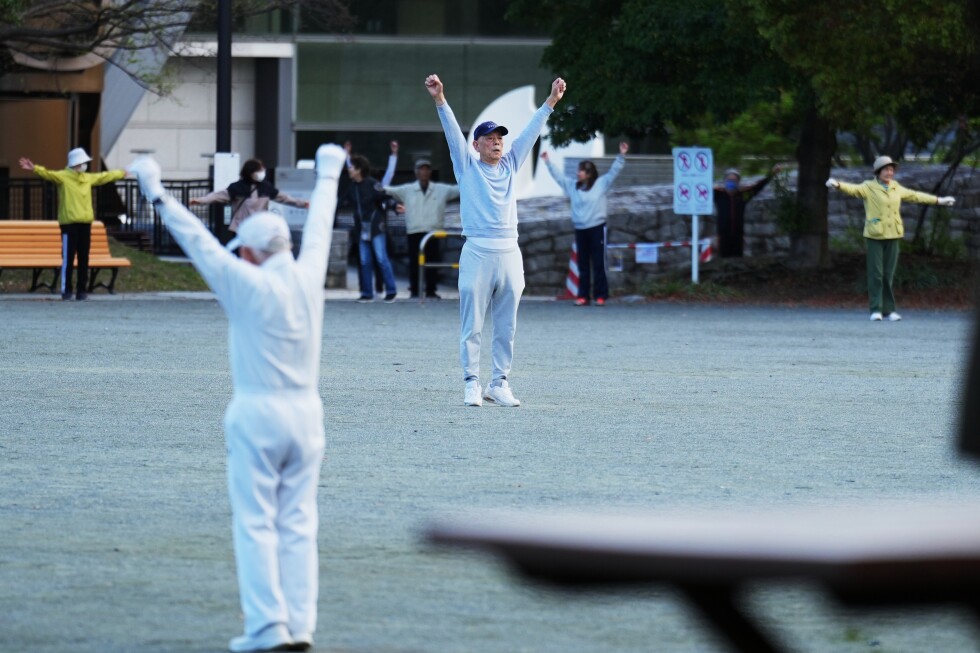
The practice, characterized by gentle stretching and basic movements performed to piano accompaniment, spans generations and settings. In parks, corporate offices, school playgrounds, and private homes, Japanese people move in unison through a series of coordinated exercises designed to awaken the body and prepare for the day ahead.
“By moving my body, I feel better,” says 88-year-old Mieko Kobayashi, who visits Tokyo’s Kiba Park almost daily to participate in the communal routine. For Kobayashi and many others, particularly elderly Japanese, Radio Taiso provides not just physical benefits but crucial social interaction.
The exercises themselves are remarkably accessible—no specialized equipment or particular fitness level required. Participants reach skyward, twist their torsos, bend at the hips, swing their arms, and perform light cardiovascular movements like jumping or marching in place. The routine comprises about a dozen basic moves divided into three-minute segments of gradually increasing difficulty, though even the most challenging portions remain manageable for most people.
Radio Taiso can be adapted for different abilities—exercises can be performed standing or seated, and individuals can adjust the intensity to match their capabilities. This universal accessibility helps explain why the tradition has endured for nearly a century, becoming a fixture in Japanese daily life since its formal introduction in 1928, coinciding with Emperor Hirohito’s enthronement.
The social element of Radio Taiso proves particularly valuable for Japan’s aging population. Yoshiko Nagao, 77, notes that many park participants live alone, making the daily gathering an essential social anchor. “Laughing and chatting while taking a walk after the exercise is also good,” she explains. “We come even on New Year’s Day.”
For 83-year-old Kenji Iguchi, who appears decades younger than his age, Radio Taiso has been part of his routine for about 20 years. “It’s for my joints, mainly the knees and back, because of my age,” he explains. Rising at 5 a.m., Iguchi walks around the park before joining the group exercise, appreciating both the physical benefits and social connections.
Japan’s remarkable longevity statistics suggest these daily habits may contribute to national health outcomes. The country boasts one of the world’s longest life expectancies—approximately 85 years compared to 79 in the United States. In late 2023, the government reported nearly 100,000 Japanese citizens aged 100 or older, marking the 55th consecutive annual record. Of these centenarians, about 88% are women.
Interestingly, Radio Taiso’s origins aren’t purely Japanese but trace back to American influence. According to the Japan Radio Taiso Federation, Japanese postal ministry officials visited the United States in the 1920s and returned inspired by a similar program sponsored by Metropolitan Life Insurance Company. Within a decade, millions of Japanese citizens were participating in sessions often led by postal workers who distributed instructional materials and organized training.
The practice faced a temporary setback following World War II when American occupation authorities banned the group exercises, viewing them as potentially “totalitarian” with militaristic undertones. However, popular demand led to Radio Taiso’s reinstatement in 1951, just before the occupation ended.
Today, according to a 2023 federation survey, more than 20 million Japanese people practice Radio Taiso at least once weekly. The tradition has also spread internationally, with particular popularity in Brazil, home to the largest population of Japanese descent outside Japan.
For those interested in experiencing this Japanese cultural institution, numerous Radio Taiso routines are available online, including English-language versions that allow people worldwide to participate in this simple yet effective approach to daily wellness that has helped keep generations of Japanese citizens active and connected.
Fact Checker
Verify the accuracy of this article using The Disinformation Commission analysis and real-time sources.

12 Comments
This radio exercise tradition in Japan is truly fascinating. I can see how the combination of physical activity, social connection, and cultural continuity would be so valuable, especially for the elderly. Kudos to Japan for preserving and promoting this wonderful ritual over nearly a century. I wonder if we could see similar programs take root in other countries.
What a wonderfully simple yet powerful tradition. Radio Taiso sounds like a fantastic way to start the day – engaging the body, mind, and community all at once. The fact that it spans generations and settings in Japan is really quite remarkable. I’d be curious to learn more about the history and evolution of this cultural practice.
This radio exercise tradition in Japan is really fascinating. I wonder if we could see something similar catch on in other countries, as a way to encourage physical activity and social interaction, especially among the elderly. It seems like a wonderfully simple yet impactful daily ritual.
Agreed, the communal aspect is so important, especially for seniors. Creating those regular touchpoints and a sense of shared experience through something as simple as a radio-guided exercise routine is quite powerful. A great model for improving public health holistically.
This radio exercise routine in Japan is such a compelling cultural practice. I love how it brings people together, across generations, to start the day with some gentle movement and social interaction. The accessibility and communal nature of Radio Taiso seem like key factors in its longevity and widespread appeal. A wonderful model for promoting holistic health and wellbeing.
Fascinating insight into Japan’s enduring radio exercise tradition. I can see how the shared experience and social connection would be especially meaningful for the elderly. A simple yet powerful way to start the day energized and engaged with the community.
Radio Taiso sounds like a brilliant public health initiative that taps into the power of community and shared experience. The fact that it’s accessible to all ages and fitness levels, and has become so deeply embedded in Japanese culture, is really quite remarkable. I’d be curious to learn more about the origins and evolution of this tradition.
This radio exercise tradition in Japan is a wonderful example of how simple, community-oriented practices can have outsized impacts on physical and mental wellbeing. The fact that it’s so widespread, crossing generational lines, is a testament to its value. I’d be curious to learn more about the history and origins of Radio Taiso.
What an interesting cultural practice! I admire how Radio Taiso has become so deeply embedded in Japanese society over nearly a century. The physical and social benefits, spanning all ages, are really quite remarkable. I could see this kind of shared, accessible exercise routine being beneficial in many contexts beyond Japan as well.
Wow, 10 minutes of daily calisthenics across Japan – that’s quite an impressive cultural ritual. I like how it spans generations and settings, bringing people together in a healthy, communal activity. Radio Taiso seems like a wonderful way to cultivate both physical and social wellbeing.
Yes, the accessibility of the exercises is a key part of its appeal and longevity. No special equipment or fitness level required, just a commitment to moving your body and connecting with others. A great model for promoting public health and community.
Radio Taiso seems like a brilliant public health initiative, seamlessly woven into the cultural fabric of Japan. The accessibility, social connection, and habit-forming nature of the daily routine are all key strengths. I wonder if we could see similar programs take root in other countries, customized to local cultures and needs.