


Listen to the article
In the aftermath of the Chernobyl nuclear disaster, a quiet corner of Moscow’s Mitinskoye Cemetery revealed the human toll that Soviet officials were reluctant to acknowledge. Two Western journalists, acting on a tip, discovered a series of identical graves—final resting places for victims of the world’s worst nuclear accident.
The graves, 23 in total, lined the entrance of the cemetery in June 1986, less than two months after the April 26 explosion and fire at the Chernobyl nuclear power plant in Ukraine, then part of the Soviet Union. Each grave featured fresh flowers atop mounded earth and concrete borders, with workers erecting identical marble headstones in a steady drizzle.
Six headstones bore the names of firefighters previously identified by Soviet press as victims of radiation exposure. These first responders—Viktor Kibenok, Vladimir Pravik, Nikolai Vashchuk, Vasily Ignatenko, Vladimir Tishchura, and Nikolai Titenok—were honored with etched gold stars and their military fire brigade ranks on their markers.
What made the scene particularly haunting were the empty spaces between some graves, suggesting officials anticipated more deaths from radiation exposure. The cemetery was organized with fifteen graves forming a row at the back of what appeared to be a designated Chernobyl plot, with a second row of eight graves arranged with a conspicuous gap that could accommodate seven more burials.
When questioned by Associated Press Moscow correspondent Carol J. Williams and another Western journalist, a cemetery official declined to provide his name but confirmed that a monument would eventually commemorate those who died. “They will all be brought here,” the official stated, refusing to specify the total casualties resulting from the disaster.
The Soviet government’s last official casualty report, released on June 5, 1986, acknowledged only 26 deaths—including two killed during the initial explosion and fire. Among them was power plant worker Valery Khodemchuk, whose body was never recovered and would remain entombed in the ruined No. 4 reactor. Another worker, Vladimir Shashenok, had reportedly been killed instantly and buried near the power station, according to the Communist Party daily Pravda.
Dr. Robert Gale, an American bone marrow specialist who assisted Soviet doctors treating radiation victims, had warned that more deaths were likely among the 55 to 60 individuals still in serious condition at the time. Those suffering from acute radiation sickness had been transported to Moscow hospitals, and the deaths presumably occurred there.
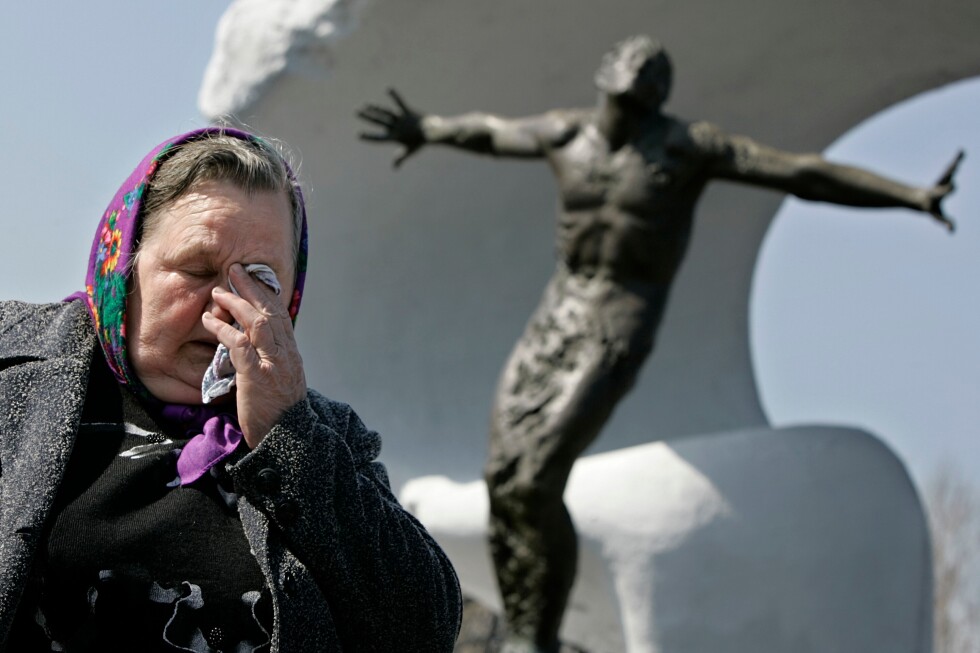
The cemetery scene painted a somber picture of the disaster’s human cost. Bouquets of red and pink flowers, left by grieving relatives, adorned each grave. “It’s very sad, they were so young,” remarked an elderly woman visiting another area of the cemetery. “They were brought here to be treated at hospitals, but they couldn’t be sent home to be buried.”
This observation highlighted the ongoing contamination issues at Chernobyl, where authorities had established an exclusion zone and evacuated all residents from surrounding areas.
The journalists’ investigation faced resistance from authorities. Cemetery officials confiscated their notes and film, claiming they needed special permission to visit the site. A police officer stationed at the cemetery informed them that access was restricted to family members only, and special authorization was required to record names or take photographs of the headstones.
Eventually, an official escorted the journalists to view the graves under strict conditions that they neither take notes nor photographs—another example of the Soviet government’s tight control over information regarding the disaster.
The discovery of these graves provided rare tangible evidence of Chernobyl’s human toll at a time when official information was scarce and tightly controlled. In the weeks following the disaster, the Soviet government had released only minimal details about the accident’s scope and impact, making independent verification of casualties and consequences nearly impossible for the outside world.
Fact Checker
Verify the accuracy of this article using The Disinformation Commission analysis and real-time sources.

7 Comments
The firefighters who lost their lives trying to control the Chernobyl disaster are true heroes. It’s heartbreaking to see their graves, but also a powerful reminder of the bravery and selflessness of those who put themselves in harm’s way to protect others.
The discovery of these unmarked graves is a poignant illustration of the Soviet Union’s reluctance to fully acknowledge the extent of the Chernobyl disaster. It highlights the importance of transparency and accountability when it comes to nuclear safety.
You’re absolutely right. Burying the victims in unmarked graves was an attempt to cover up the full scale of the tragedy. Openness and honesty are crucial to preventing and responding to such disasters in the future.
The discovery of these graves is a powerful and poignant reminder of the human tragedy of Chernobyl. The sacrifices made by the first responders and the attempts to hide the full extent of the disaster are deeply troubling. We must continue to study and learn from this tragedy to prevent similar disasters in the future.
Heartbreaking to see the toll of the Chernobyl disaster on the first responders. Their sacrifice in trying to contain the damage is truly admirable. It’s a somber reminder of the human cost of nuclear accidents and the need for robust safety protocols.
This is a stark and sobering reminder of the devastating human cost of the Chernobyl nuclear accident. The unmarked graves and unacknowledged victims speak volumes about the Soviet Union’s attempts to cover up the full extent of the disaster.
Absolutely. The reluctance to fully disclose the scale of the tragedy and honor the victims is a tragic failure of transparency and accountability. We must learn from this to ensure greater nuclear safety and openness in the future.