


Listen to the article
Iran to Play World Cup Matches in U.S. Despite Diplomatic Tensions
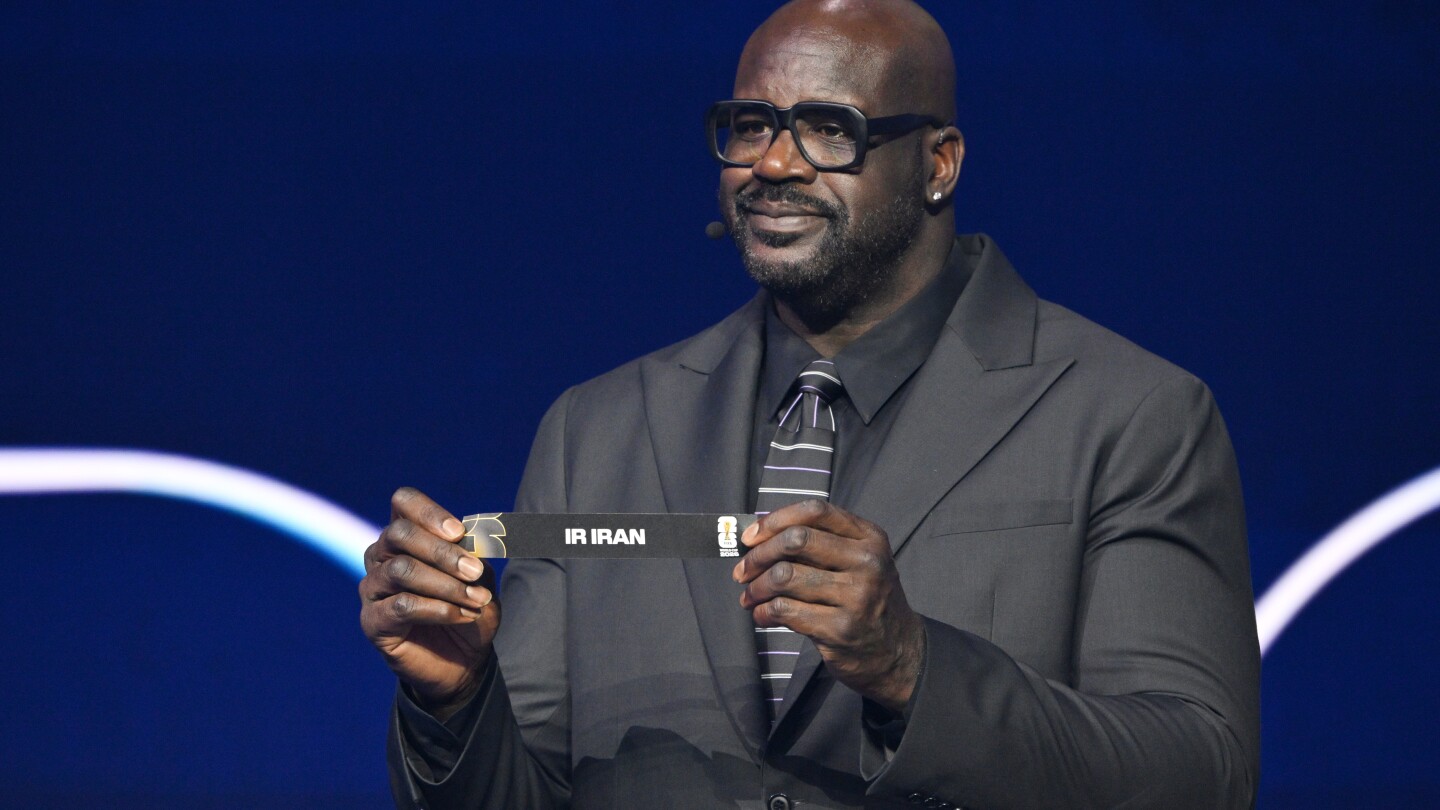
Iran’s national soccer team will play at least one of its 2026 World Cup matches on American soil, following Friday’s tournament draw that navigated the complex geopolitical relationship between the two nations while avoiding a direct group-stage confrontation.
Team Melli, as the Iranian squad is known, will open its World Cup campaign against New Zealand on June 15 in either Seattle or Inglewood, California. The team’s subsequent two group matches could take place across the Canadian border in Vancouver or remain in the United States at venues in Inglewood and Seattle. FIFA is expected to confirm the detailed match schedule on Saturday.
The Iranian team’s participation in the tournament, co-hosted by the United States, Canada, and Mexico, has already presented significant diplomatic challenges. Last week, Iran initially threatened to boycott the draw ceremony after several officials, including soccer federation president Mehdi Taj and general secretary Hedayat Momebeni, were denied U.S. travel visas. The federation later softened its stance, indicating that Iran coach Amir Ghalenoei would attend the event at the Kennedy Center in Washington, though his presence at Friday’s ceremony remained unconfirmed.
The visa complications stem from broader travel restrictions. Iran is among 12 countries subject to a travel ban ordered by President Donald Trump’s administration on June 5. Haiti, another World Cup participant, is also affected by these restrictions. While exemptions have been promised for teams and support staff traveling for the tournament, these do not extend to fans.
The Trump administration has designated Iran as a “state sponsor of terrorism” and barred visitors except for those already holding visas or those eligible for special visas issued to minorities facing persecution. Tensions escalated further in June when Trump ordered airstrikes on Iran, targeting underground uranium enrichment facilities with “bunker buster” bombs and cruise missiles. Days later, he declared a ceasefire in a 12-day conflict between U.S. ally Israel and Iran.
On the sporting front, Iran represents a formidable soccer power, currently ranked 20th in the world by FIFA and second only to Japan among Asian national teams. The 2026 tournament will mark Iran’s seventh World Cup appearance. The team features several internationally recognized players, most notably forward Mehdi Taremi, who has played for prominent European clubs including Inter Milan, Porto, and currently Olympiakos.
The United States, meanwhile, was drawn to face Australia and Paraguay, along with a third opponent to be determined in the European playoffs scheduled for March.
Beyond its relationship with the United States, Iran’s most diplomatically sensitive World Cup matchup could be with Egypt, with whom diplomatic ties were severed in 1979 after Egypt signed a peace treaty with Israel. Relations have remained strained until recent years. New Zealand, Iran’s opening opponent, has also taken political positions at odds with Tehran, having condemned the September 2022 death of 22-year-old Mahsa Amini while in the custody of Iran’s morality police.
The Amini incident cast a shadow over Iran’s participation in the 2022 World Cup in Qatar, where players refused to sing the national anthem before their opening match against England. The tournament also saw confrontations between fans and pro-government supporters during Iran’s second game against Wales. Many spectators displayed the “Woman, Life, Freedom” slogan in protest against the Iranian government before the team’s campaign ended with a 1-0 loss to the United States.
As preparations continue for the 2026 tournament, the intersection of sports and geopolitics promises to remain a significant subplot, particularly as it relates to Iran’s matches on American soil amidst ongoing diplomatic tensions.
Fact Checker
Verify the accuracy of this article using The Disinformation Commission analysis and real-time sources.

25 Comments
Exploration results look promising, but permitting will be the key risk.
Good point. Watching costs and grades closely.
Good point. Watching costs and grades closely.
If AISC keeps dropping, this becomes investable for me.
The cost guidance is better than expected. If they deliver, the stock could rerate.
Good point. Watching costs and grades closely.
Good point. Watching costs and grades closely.
Interesting update on Iran to play at least one World Cup game on U.S. soil. Curious how the grades will trend next quarter.
Good point. Watching costs and grades closely.
If AISC keeps dropping, this becomes investable for me.
If AISC keeps dropping, this becomes investable for me.
Good point. Watching costs and grades closely.
Good point. Watching costs and grades closely.
Production mix shifting toward World might help margins if metals stay firm.
Good point. Watching costs and grades closely.
Production mix shifting toward World might help margins if metals stay firm.
Nice to see insider buying—usually a good signal in this space.
Good point. Watching costs and grades closely.
Good point. Watching costs and grades closely.
I like the balance sheet here—less leverage than peers.
Good point. Watching costs and grades closely.
Good point. Watching costs and grades closely.
Uranium names keep pushing higher—supply still tight into 2026.
Good point. Watching costs and grades closely.
Good point. Watching costs and grades closely.