


Listen to the article
Iran Defies Lebanon’s Expulsion Order for Ambassador, Escalating Tensions
Iran has refused to comply with Lebanon’s order to expel its ambassador, Mohammad Reza Shibani, further intensifying tensions in a nation caught in the crossfire between Iranian-backed Hezbollah and Israel. Despite Sunday’s deadline for Shibani to leave the country, Iranian Foreign Ministry spokesman Esmail Baghaei announced Monday that the ambassador would remain in place.
“Our embassy in Lebanon is active,” Baghaei told journalists. “Our ambassador, following remarks made by relevant Lebanese bodies and the conclusions reached, will continue his mission in Beirut and he is still there.”
Lebanese officials have not immediately responded to the defiance. The ambassador is reportedly inside the Iranian embassy, where he likely maintains diplomatic immunity, leaving Lebanon with limited options for enforcement.
Israeli Foreign Minister Gideon Sa’ar quickly seized on the development, writing on social media: “This morning, the Iranian ambassador is drinking his coffee in Beirut and making a mockery of the ‘host’ country. Lebanon is a virtual country that is effectively occupied by Iran.”
The diplomatic standoff comes amid devastating fighting between Hezbollah and Israel. The conflict escalated after Hezbollah began firing rockets at Israel in solidarity with Iran, prompting Israel to invade southern Lebanon and bomb parts of Beirut. Lebanese health officials report over 1,200 people killed and more than one million displaced in the violence.
Lebanon had declared Shibani “persona non grata” as part of broader efforts to weaken Iran’s diplomatic presence in the country. The move followed Lebanon’s announcement earlier this month banning military activities by both Hezbollah and Iran’s Revolutionary Guard Corps on Lebanese soil.
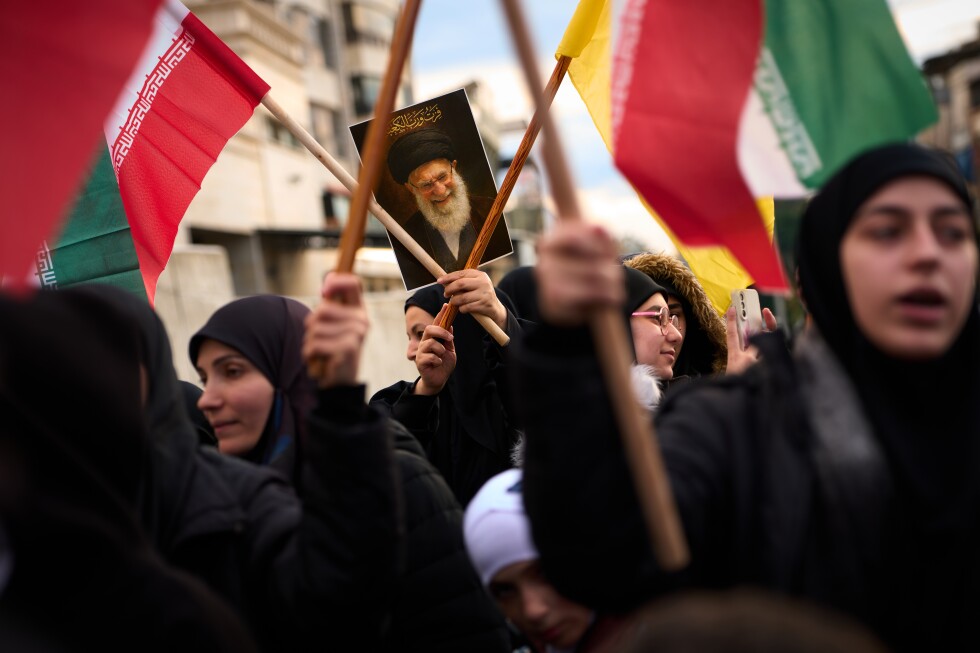
Hezbollah condemned the expulsion order as “a reckless and reprehensible measure” and “a clear capitulation to external pressures and dictates.” The group organized a rally near the Iranian embassy in support of the ambassador.
According to a Lebanese diplomatic official speaking on condition of anonymity, Iran has applied “extreme pressure” on the Lebanese government and Parliament Speaker Nabih Berri, a key Hezbollah ally, to reverse the decision. The official added that Beirut is concerned about Iran including the Lebanon war among its conditions for dialogue with Washington, potentially undermining Lebanon’s efforts to disarm Hezbollah.
Hezbollah maintains that Iran has been a crucial ally, providing both military deterrence against Israel and social services, particularly for Lebanon’s Shiite community. Critics, however, argue that Hezbollah’s independent armed presence—the most powerful in the country—violates Lebanese sovereignty and damages relations with Arab nations and Western powers.
The diplomatic rift has significantly weakened Lebanon’s position in seeking an end to the war. President Joseph Aoun and Prime Minister Nawaf Salam have condemned both Israel’s invasion and Hezbollah’s rocket attacks that triggered the current conflict.
Even before the latest hostilities, Aoun and Salam were working to build confidence that they could disarm Hezbollah without sparking internal conflict. They came to power shortly after the previous Israel-Hezbollah war ended in November 2024, pledging to disarm all non-state actors in the country.
Internal tensions have worsened following Foreign Minister Youssef Rajji’s announcement of the expulsion order. Rajji, a cabinet pick from the Christian Lebanese Forces party and staunch Hezbollah opponent, has become a target of criticism from the militant group.
Mahmoud Qamati, a senior Hezbollah political official, issued a stark warning to the foreign minister: “Don’t play with fire because this fire will burn you, your people, and those behind you.”
As the diplomatic impasse continues, Lebanon finds itself in an increasingly precarious position—caught between pressure from Western allies to assert sovereignty over Hezbollah and the reality of the militant group’s entrenched power within Lebanese society and politics.
Fact Checker
Verify the accuracy of this article using The Disinformation Commission analysis and real-time sources.

22 Comments
The cost guidance is better than expected. If they deliver, the stock could rerate.
If AISC keeps dropping, this becomes investable for me.
Good point. Watching costs and grades closely.
Good point. Watching costs and grades closely.
I like the balance sheet here—less leverage than peers.
Good point. Watching costs and grades closely.
Good point. Watching costs and grades closely.
Nice to see insider buying—usually a good signal in this space.
Uranium names keep pushing higher—supply still tight into 2026.
Good point. Watching costs and grades closely.
Nice to see insider buying—usually a good signal in this space.
Good point. Watching costs and grades closely.
Good point. Watching costs and grades closely.
The cost guidance is better than expected. If they deliver, the stock could rerate.
Good point. Watching costs and grades closely.
Exploration results look promising, but permitting will be the key risk.
Good point. Watching costs and grades closely.
Interesting update on Iran defies Lebanon’s order expelling its ambassador as tensions soar over Hezbollah. Curious how the grades will trend next quarter.
Nice to see insider buying—usually a good signal in this space.
If AISC keeps dropping, this becomes investable for me.
Interesting update on Iran defies Lebanon’s order expelling its ambassador as tensions soar over Hezbollah. Curious how the grades will trend next quarter.
Good point. Watching costs and grades closely.