


Listen to the article
Iran and U.S. Deadlocked as Middle East Conflict Intensifies
Iran and the United States have reached an apparent impasse in ceasefire negotiations, with both sides hardening their positions as the Middle East conflict escalates. President Donald Trump extended his deadline for Iran to reopen the Strait of Hormuz until April 6, while Tehran has tightened its control over the vital waterway.
The strategic standoff comes as thousands of additional U.S. troops head to the region. The USS Tripoli, carrying approximately 2,500 Marines, is approaching Middle Eastern waters, and at least 1,000 paratroopers from the 82nd Airborne Division have been ordered to deploy to the area.
Meanwhile, air raid sirens have been sounding across Israel warning of Iranian missile barrages, while Gulf nations scramble to intercept incoming fire. Heavy strikes have been reported in Tehran and other Iranian cities as Israel continues its military campaign.
The conflict has evolved into what analysts describe as a war of attrition, with each side testing the other’s endurance. The United States has presented shifting objectives throughout the conflict, including neutralizing Iran’s missile and nuclear programs, ending Tehran’s support for regional militant groups, and at one point even suggesting regime change.
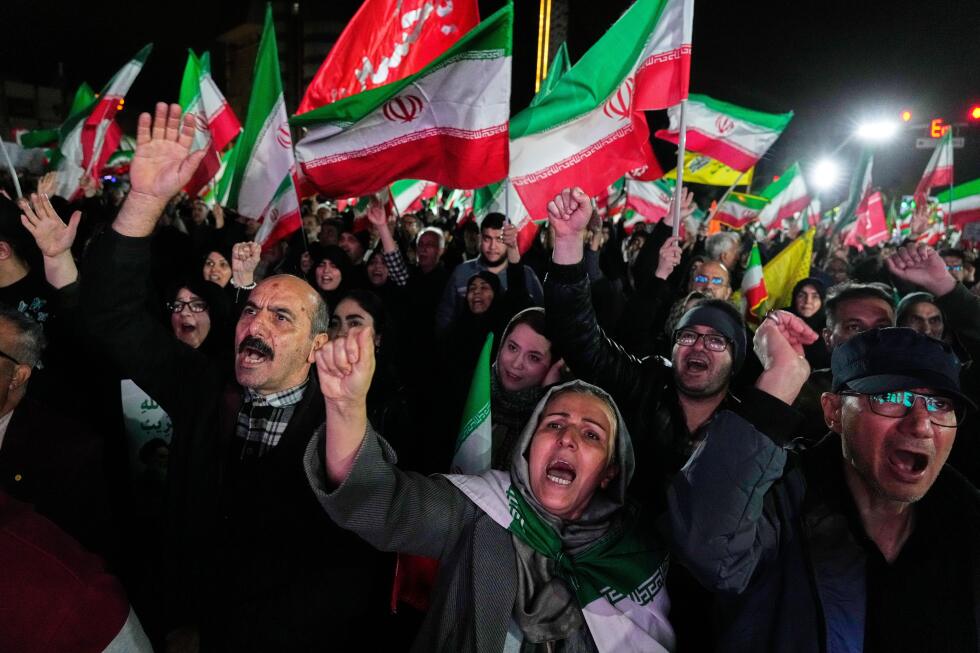
Despite the U.S.-Israeli campaign inflicting significant damage on Iran’s military and government infrastructure and killing top leaders, Tehran continues to launch missile attacks, and there are no signs of internal uprising against the government.
For Iran’s leadership, survival alone could be viewed as victory. Tehran appears to be leveraging its control over the Strait of Hormuz—through which 20% of globally traded oil and natural gas normally passes—to pressure the U.S. by disrupting global energy markets. The Gulf Cooperation Council reports that Iran is now operating a “de facto toll booth” regime in the strait, charging ships for safe passage.
Lloyd’s List Intelligence confirms that at least two vessels have paid fees in Chinese yuan to secure transit. Iran’s blockade of the strait and attacks on Gulf energy infrastructure have sent Brent crude prices soaring more than 40% since the war began.
Trump has threatened to strike Iran’s power plants if the strait isn’t fully reopened, while Iran has warned of retaliation against critical regional infrastructure such as desalination facilities. During a Cabinet meeting Thursday, Trump claimed Iran is allowing some oil tankers through as a “sign of good faith” for negotiations.
Diplomatic efforts continue despite the escalation. The U.S. has delivered a 15-point “action list” to Iran through Pakistani intermediaries, described by Trump envoy Steve Witkoff as a framework for a potential peace agreement. Egypt is also acting as a mediator, with Egyptian Foreign Minister Badr Abdelatty stating that both sides appear to desire “calm and the exploration of negotiations.”
However, Iranian Foreign Minister Abbas Araghchi contradicted these claims, stating on Iranian state television that his government “has not engaged in talks to end the war and does not plan to.” He acknowledged that the U.S. had attempted to send messages through third countries but dismissed these as neither conversations nor negotiations.
Press TV, an English-language Iranian state broadcaster, reported that Iran has its own five-point proposal, which includes demands for reparations and recognition of its sovereignty over the Strait of Hormuz.
On the military front, Israel has intensified its operations in Lebanon, deploying its 162nd Division to the southern region to join thousands of troops already there. The Israeli military describes this open-ended invasion as necessary to protect northern border towns from Hezbollah attacks and to remove the militant group from the area.
Israel has also claimed responsibility for killing Commodore Alireza Tangsiri, head of the Iranian Revolutionary Guard’s navy, and Behnam Rezaei, Iran’s naval intelligence chief. Israeli Defense Minister Israel Katz stated that Tangsiri was responsible for operations blocking ships in the Strait of Hormuz.
The human cost of the conflict continues to mount. Iranian Deputy Health Minister Ali Jafarian told Al Jazeera that more than 1,900 people have been killed in Iran. In Israel, 18 civilians and three soldiers have died, while American military fatalities have reached 13. Lebanese authorities report more than 1,100 deaths, and in Iraq, where Iranian-backed militants have joined the conflict, 80 security force members have been killed.
As the conflict enters a critical phase, Israeli military spokesperson Brigadier General Effie Defrin acknowledged that the army needs an additional 15,000 soldiers to reach full operational capacity for its multiple missions, highlighting the strain on Israel’s military resources as the regional conflict shows no signs of abating.
Fact Checker
Verify the accuracy of this article using The Disinformation Commission analysis and real-time sources.

10 Comments
This is a complex geopolitical situation with significant implications for global energy markets and supply chains. Both sides appear entrenched, but further military escalation would be disastrous. Continued diplomatic efforts, even if slow, may be the best path forward.
You raise a good point. The economic ripple effects, especially for commodities and energy, are a major concern. Keeping lines of communication open is crucial to avoid an outright conflict.
As an observer, I’m concerned that the mutual hardening of positions by the US and Iran could lead to a dangerous miscalculation. The potential impact on energy and commodity markets is also quite worrying. I hope pragmatism and a commitment to diplomacy can prevail over brinkmanship in this case.
I share your sentiment. Given the high stakes involved, both sides need to exercise extreme caution and focus on finding a face-saving path to de-escalation. Cooler heads must prevail to prevent a catastrophic outcome.
The escalating conflict between the US and Iran is deeply concerning. This impasse risks further destabilizing the already volatile Middle East region. I hope cooler heads can prevail and a diplomatic resolution found before the situation spirals further out of control.
Agreed, de-escalation and a negotiated settlement are critical at this juncture. The potential for miscalculation and unintended consequences is high.
The US and Iran seem to be playing a high-stakes game of chicken. While I understand the security concerns on both sides, this confrontational approach risks sparking a wider regional war. I hope the parties can find a face-saving way to step back from the brink.
I share your skepticism about the current trajectory. Cooler heads must prevail to prevent an even more dangerous escalation. Diplomacy, however difficult, remains the best path to a sustainable resolution.
This situation highlights the fragility of geopolitical dynamics in the Middle East. With US troops and assets flowing into the region, the potential for miscalculation or unintended escalation is high. I hope both sides can show restraint and find a diplomatic off-ramp before the conflict spirals further.
Well said. The risks of a wider regional conflagration are very real. Maintaining open lines of communication, even through intermediaries, will be critical to de-escalating tensions and avoiding a disastrous outcome.