


Listen to the article
Improved weather conditions on Saturday allowed rescue teams to recover more bodies in the aftermath of devastating landslides and flash floods that have claimed more than 300 lives across Indonesia’s Sumatra island. Emergency responders continue to face significant challenges as they struggle to reach several isolated areas cut off by the disaster.
The catastrophic flooding has affected three provinces—North Sumatra, West Sumatra, and Aceh—with the death toll continuing to rise. According to Suharyanto, head of the National Disaster Management Agency, North Sumatra has reported 166 fatalities, while West Sumatra has confirmed 90 deaths and Aceh 47. Nearly 60,000 families have been displaced and are now sheltering in temporary government facilities.
Rescue operations have been severely hampered by damaged infrastructure, with many affected areas completely isolated due to destroyed roads and downed communication lines. Authorities have been forced to rely on aircraft to deliver essential supplies to these cut-off communities. The lack of heavy equipment has further complicated recovery efforts, particularly in remote mountainous regions.
The disaster was triggered by intense monsoon rains that caused rivers to overflow their banks, sending torrents of water, mud, and debris through mountainside villages. The deluge swept away people, submerged thousands of homes and buildings, and buried entire communities under tons of mud and rocks.
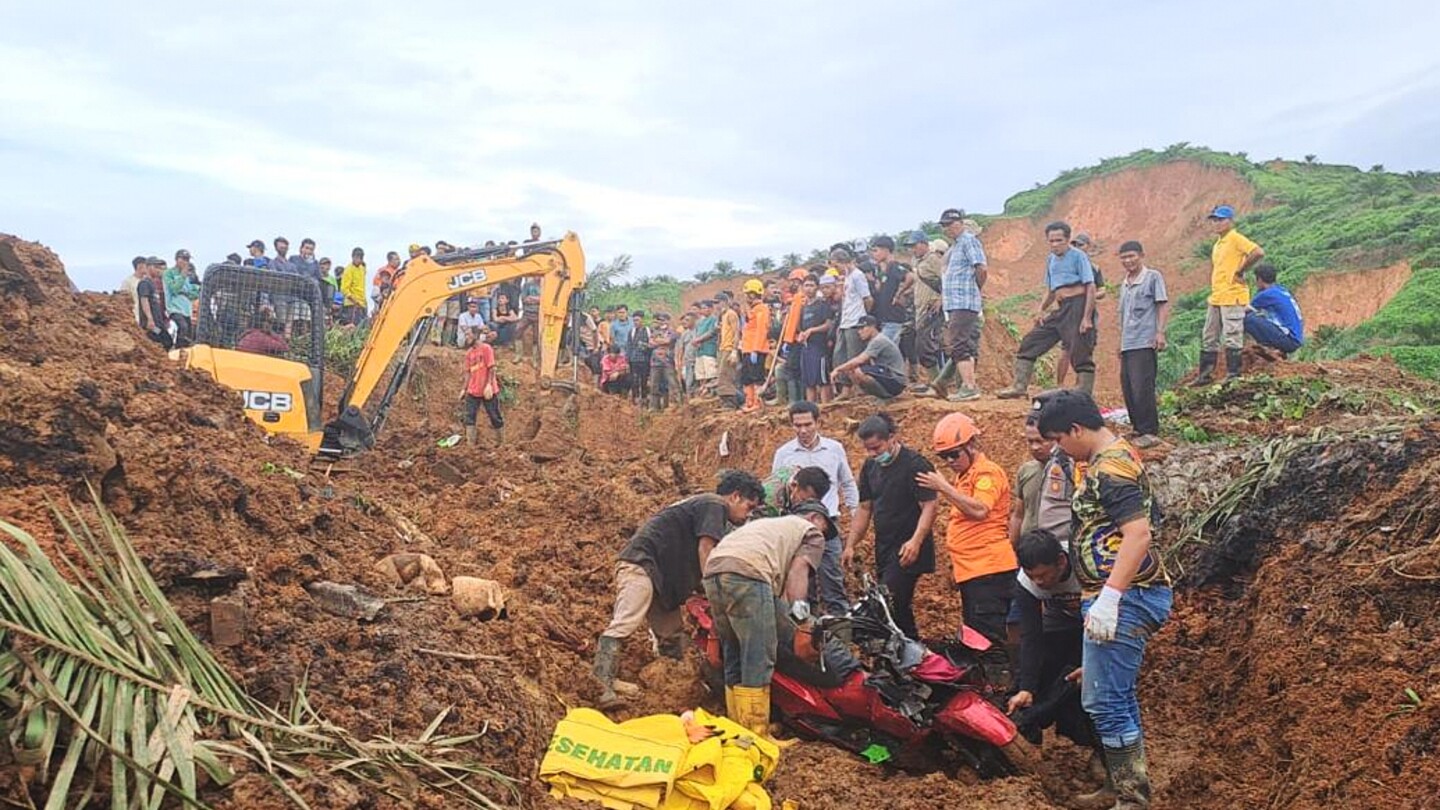
In West Sumatra’s Agam district, nearly 80 people remain missing across three villages that were buried by landslides. Desperate relatives watched in anguish as rescuers pulled bodies from the ruins of homes in Salareh Aia village. The need for heavy excavation equipment is critical in these areas where survivors might still be trapped.
Indonesian authorities have employed cloud seeding techniques—dispersing particles into clouds to create precipitation—in an attempt to redirect rainfall away from areas where search and rescue operations are ongoing. This strategy aims to prevent further flooding and landslides that could compound the disaster.
Environmental concerns have also emerged following the disaster. Images showing massive piles of logs washed ashore on West Sumatra’s Air Tawar Beach have sparked public concern about potential illegal logging activities that might have exacerbated the flooding and landslides by reducing natural vegetation that helps prevent soil erosion.
The situation in Aceh province, located at the northern tip of Sumatra, remains particularly dire. Hundreds of police officers, soldiers, and local residents have been forced to dig through debris with bare hands, shovels, and hoes due to the difficulty in deploying heavy machinery to the region. Persistent heavy rainfall has further complicated these efforts.
Television footage captured the dramatic rescue of a man clinging to a coconut tree amid strong currents, highlighting the perilous conditions faced by both victims and rescuers. The floods have also destroyed critical infrastructure, with at least nine bridges collapsed in Aceh’s Bireuen district, severing the main transportation route between North Sumatra’s capital Medan and Banda Aceh. Residents in affected areas now rely on boats to cross rivers between villages.
Aceh Governor Muzakir Manaf has declared a state of emergency until December 11 to address the crisis, acknowledging the significant challenges ahead. “We have to do many things soon, but conditions do not allow us to do so,” he stated.
This disaster is the latest in a series of natural calamities to strike Indonesia, a nation particularly vulnerable to such events due to its location on the “Ring of Fire,” a seismically active zone in the Pacific Basin characterized by frequent earthquakes, volcanic eruptions, and tsunamis. Additionally, the country’s geography—an archipelago of 17,000 islands with numerous mountainous regions and flood plains—makes it susceptible to seasonal flooding and landslides during monsoon periods.
As rescue operations continue, authorities fear the death toll may rise further as teams reach previously inaccessible areas and more missing persons are accounted for.
Fact Checker
Verify the accuracy of this article using The Disinformation Commission analysis and real-time sources.

10 Comments
What a heartbreaking situation. My thoughts are with the families and communities impacted by these floods and landslides. The rescue teams are facing immense challenges, but I hope they can continue their crucial work to find and assist survivors.
The scale of this disaster is truly staggering. 300 lives lost is an unimaginable tragedy. I hope the rescue teams can continue their critical work and find more survivors in the coming days.
Absolutely, the recovery efforts will be long and difficult. Rebuilding the damaged infrastructure will be crucial to helping these communities get back on their feet.
This is a devastating natural disaster that has taken a terrible toll. I hope the rescue efforts can locate more survivors and that the affected areas receive the necessary aid and support to recover and rebuild. My deepest condolences to all those who have lost loved ones.
Yes, the scale of this tragedy is truly immense. Restoring critical infrastructure and providing humanitarian relief will be essential in the weeks and months ahead.
This is a devastating blow for Indonesia. The loss of life and destruction of homes and infrastructure is truly tragic. I hope the government can provide the necessary resources and support to aid the recovery efforts.
Agreed, the government will need to mobilize significant resources to assist these communities. Restoring critical services and infrastructure will be essential.
These floods and landslides are a harsh reminder of the devastating power of nature. My sincere condolences to all those who have lost loved ones. I hope the affected areas can recover and rebuild in the months ahead.
This is a devastating tragedy. My heart goes out to the families and communities impacted by these devastating floods and landslides. The rescue efforts must be incredibly challenging given the damaged infrastructure and remote, isolated areas.
Agreed, the loss of life is heartbreaking. I hope the rescue teams can reach all those in need and provide the necessary aid and support.