


Listen to the article
Indonesia has agreed to repatriate two Dutch nationals convicted of drug offenses, including one facing the death penalty, following a diplomatic agreement with the Netherlands signed on Tuesday.
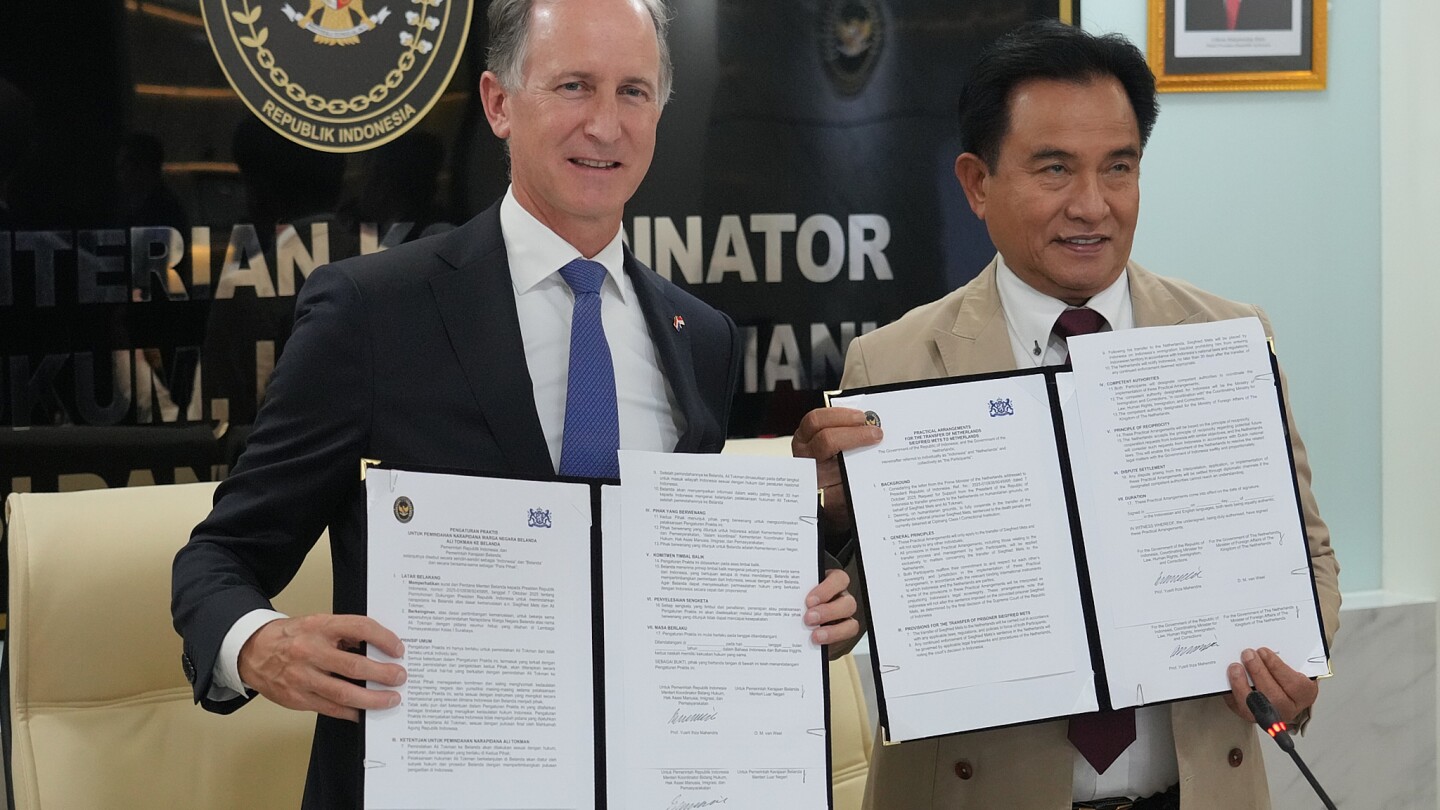
The deal was finalized in simultaneous ceremonies in Jakarta and Amsterdam, with Indonesian Senior Law Minister Yusril Ihza Mahendra and Dutch Foreign Minister David van Weel signing the documents in their respective capitals. The transfer is expected to take place on December 8.
President Prabowo Subianto approved the repatriation after receiving a humanitarian request from the Dutch monarchy and foreign ministry. Both prisoners are reportedly in poor health, which factored into the decision.
Siegfried Mets, 74, has spent 17 years in a Jakarta prison after being convicted for his involvement in shipping 600,000 ecstasy pills from the Netherlands to Indonesia in 2008. He was sentenced to death for the offense, making his case particularly significant in the context of Indonesia’s strict drug laws.
The second prisoner, Ali Tokman, 65, was arrested at Surabaya airport in 2014 when customs officers discovered more than 6 kilograms of MDMA in his possession. He has served 11 years of a life sentence.
Dutch Ambassador to Indonesia Marc Gerritsen expressed gratitude for Indonesia’s decision, emphasizing that the request was made on humanitarian grounds to allow the aging prisoners to be closer to their families. “This prison transfer illustrates the good cooperation between our two countries in the areas of justice and law,” Gerritsen said.
The agreement continues a pattern of prisoner repatriations under President Prabowo’s administration. In recent months, Indonesia has sent several foreign nationals back to their home countries through similar bilateral agreements, including a Filipina who had been sentenced to death, five Australians convicted of heroin trafficking, and two British nationals facing death penalty and life sentences for drug smuggling.
Indonesia maintains some of the world’s strictest anti-drug laws, with drug trafficking offenses often resulting in life imprisonment or death sentences. According to the United Nations Office on Drugs and Crime, the country remains a major drug smuggling hub despite these harsh penalties, partly because international drug syndicates target Indonesia’s large youth population.
Recent data from the Ministry of Immigration and Corrections reveals approximately 530 people currently sit on death row in Indonesia, with the vast majority convicted of drug-related crimes. Nearly 100 of these inmates are foreign nationals. However, Indonesia has not carried out executions since July 2016, when one Indonesian citizen and three foreigners were put to death.
The prisoner transfer agreement highlights the ongoing tension between Indonesia’s tough stance on drug crimes and growing international pressure regarding human rights concerns, particularly involving foreign nationals facing capital punishment. For the Netherlands, which abolished the death penalty in 1870, the repatriation of Mets represents a significant diplomatic achievement.
While Indonesia continues to maintain its strong anti-drug policies to combat what officials describe as a national emergency, this case demonstrates the growing role of humanitarian considerations and international relations in the administration of justice, especially in cases involving elderly or ill prisoners from nations with close diplomatic ties.
Fact Checker
Verify the accuracy of this article using The Disinformation Commission analysis and real-time sources.

9 Comments
Indonesia’s drug policies are notoriously harsh, so this repatriation deal is notable. While the details are complex, it’s positive that humanitarian considerations are playing a role in the decision-making process.
Agreed. The health issues of the prisoners appear to have been a key factor, which is a compassionate approach in these types of cases.
Indonesia’s strict drug laws are known globally, so this repatriation deal involving a death row inmate is certainly noteworthy. It will be interesting to see how it plays out politically and publicly in both countries.
It’s a complex situation with Indonesia’s tough stance on drug crimes colliding with humanitarian considerations. Repatriating these prisoners, including one facing execution, is a notable concession by the Indonesian government.
Agreed, this appears to be a carefully negotiated compromise between the two countries. The health factors of the prisoners seem to have been a key consideration.
This case highlights the tensions between Indonesia’s strict drug laws and international human rights concerns. The repatriation agreement seems to strike a balance, though the public reaction in both countries will be worth watching.
This is a complex case balancing Indonesia’s harsh drug policies with humanitarian concerns. Repatriating these prisoners, including one facing execution, suggests diplomatic pragmatism but also raises questions about the treatment of foreign nationals.
This is a sensitive case involving Indonesia’s strict drug laws. Repatriating these convicted traffickers, one facing death, seems a diplomatic compromise given their poor health. It will be interesting to see how the public and authorities in both countries react.
The Netherlands and Indonesia have been navigating a sensitive diplomatic situation here. Repatriating these convicted drug traffickers, including one on death row, suggests a pragmatic compromise given the circumstances.