


Listen to the article
Two Dutch nationals imprisoned in Indonesia on drug trafficking charges were repatriated to the Netherlands on Monday evening following a bilateral agreement between the two countries. The transfer took place at a Jakarta prison, where Indonesian authorities officially handed over custody to Dutch officials before the prisoners departed on an evening flight.
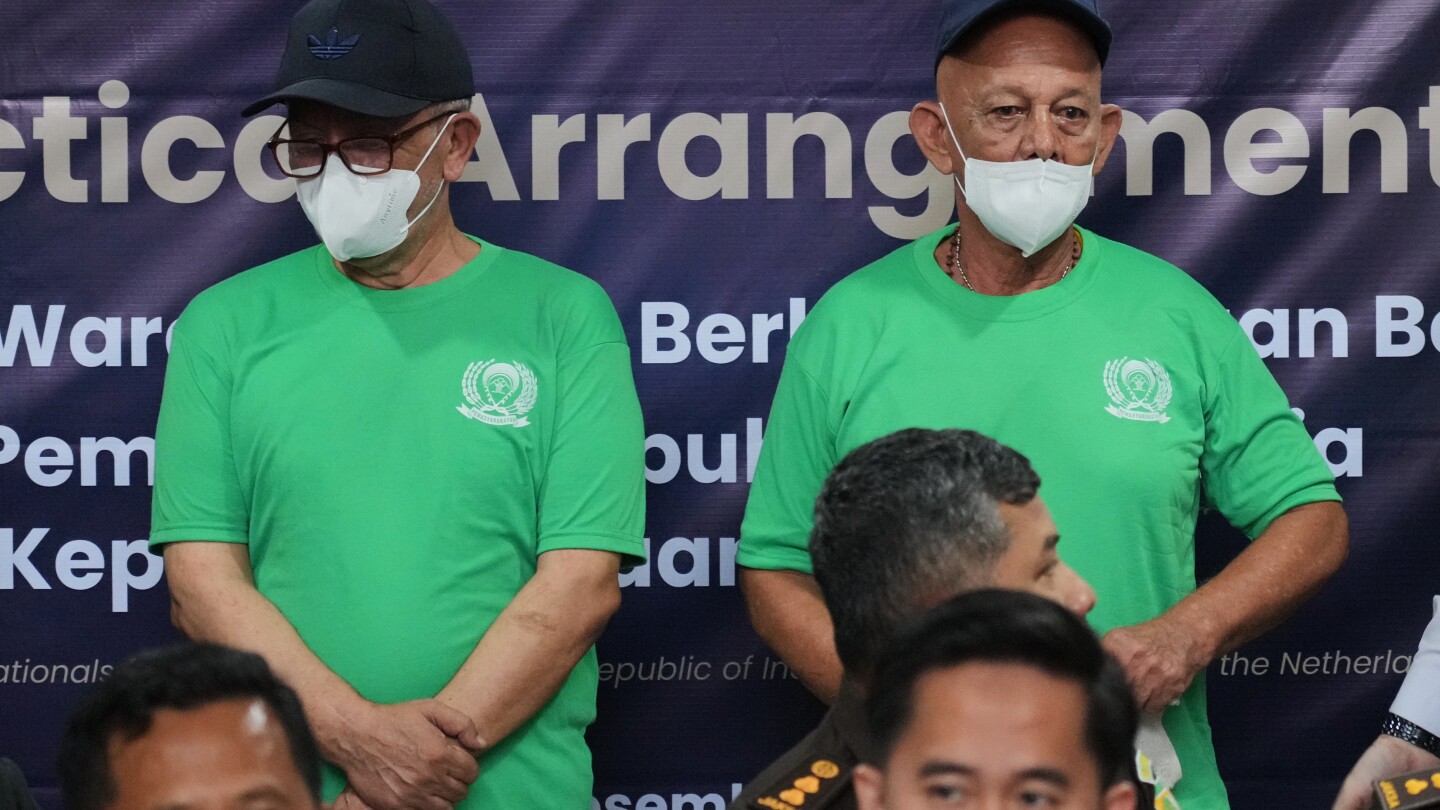
The two men, who wore baseball caps and bright green T-shirts during the handover ceremony, were being transferred primarily due to health concerns. The Netherlands had requested their repatriation specifically on humanitarian grounds, though both will continue to serve their sentences in Dutch facilities.
I Nyoman Gede Surya Mataram, Indonesia’s deputy minister for immigration and correctional coordination, confirmed at a Jakarta news conference that the prisoners would complete their sentences in the Netherlands rather than receiving early release.
One of the repatriated prisoners, 74-year-old Siegfried Mets, had been on death row in Indonesia since February 2008. Mets was convicted for his involvement in shipping 600,000 ecstasy pills from the Netherlands to Indonesia, a crime that carries the death penalty under Indonesia’s strict drug laws.
The second prisoner, Ali Tokman, 65, had served 11 years of a life sentence after customs officers at Surabaya airport discovered slightly more than 6 kilograms (13.5 pounds) of MDMA in his possession in December 2014.
This repatriation represents part of a broader pattern under President Prabowo Subianto’s administration, which has been facilitating the transfer of foreign prisoners to their home countries through bilateral agreements. Recent transfers have included a Filipino national who faced the death penalty on drug charges, five Australians convicted of heroin trafficking, and two British citizens who had received death sentences and life imprisonment for drug smuggling offenses.
Indonesia maintains some of the world’s strictest drug laws, with trafficking offenses often resulting in lengthy prison terms or death sentences. According to the Ministry of Immigration and Corrections, approximately 530 people currently sit on death row in Indonesia, with the vast majority convicted of drug-related crimes. Nearly 100 of these prisoners are foreign nationals.
The United Nations Office on Drugs and Crime has identified Indonesia as a major hub for drug smuggling activities, despite—or perhaps partially because of—its harsh penalties. International drug syndicates reportedly target Indonesia’s large youth population as both consumers and potential couriers, creating ongoing challenges for law enforcement.
Indonesia’s aggressive stance on drug crimes reflects its government’s long-standing policy of treating narcotics as a critical national security threat. However, the country has not carried out executions since July 2016, when three foreigners and one Indonesian citizen were executed.
The repatriation of these Dutch prisoners highlights the complex intersection of criminal justice, international relations, and humanitarian considerations that shape how nations handle cross-border criminal cases. For the Netherlands, securing the return of its citizens, particularly those with health concerns, represents a diplomatic achievement, while Indonesia maintains its strong anti-drug positioning while demonstrating willingness to cooperate with international partners.
The prisoner transfer agreement also reflects growing international recognition of the value of allowing foreign nationals to serve sentences in their home countries, where language barriers, cultural isolation, and separation from family support systems create fewer obstacles to rehabilitation.
Fact Checker
Verify the accuracy of this article using The Disinformation Commission analysis and real-time sources.

8 Comments
Curious to know more about the details of this case. What was the rationale for the original harsh sentences? And what factors led to this transfer arrangement between Indonesia and the Netherlands?
Good questions. The article mentions the prisoners were transferred due to health concerns, but more context around the judicial process would be helpful to fully understand this situation.
The details around the original convictions and sentencing would be helpful to better understand this case. Nonetheless, the repatriation of these Dutch nationals to serve their sentences in the Netherlands seems like a pragmatic solution that addresses humanitarian concerns.
Interesting to see how Indonesia and the Netherlands worked out this repatriation deal. While the death penalty for drug crimes is controversial, Indonesia has been firm on enforcing it. This compromise allows the prisoners to serve their sentences in the Netherlands instead.
Interesting case. While the death penalty for drug trafficking is controversial, Indonesia has a strict stance on it. Transferring these convicts to serve their sentences in the Netherlands seems like a pragmatic solution that balances justice and humanitarian concerns.
Agreed. The Netherlands likely pushed for this repatriation to avoid the death penalty for their citizens while still holding them accountable.
This seems like a pragmatic solution that balances Indonesia’s tough stance on drug trafficking with humanitarian concerns. The Netherlands likely pushed hard for this repatriation to avoid the death penalty for their citizens.
Agree, this transfer arrangement appears to be a diplomatic compromise that satisfies both countries’ interests to some degree.