


Listen to the article
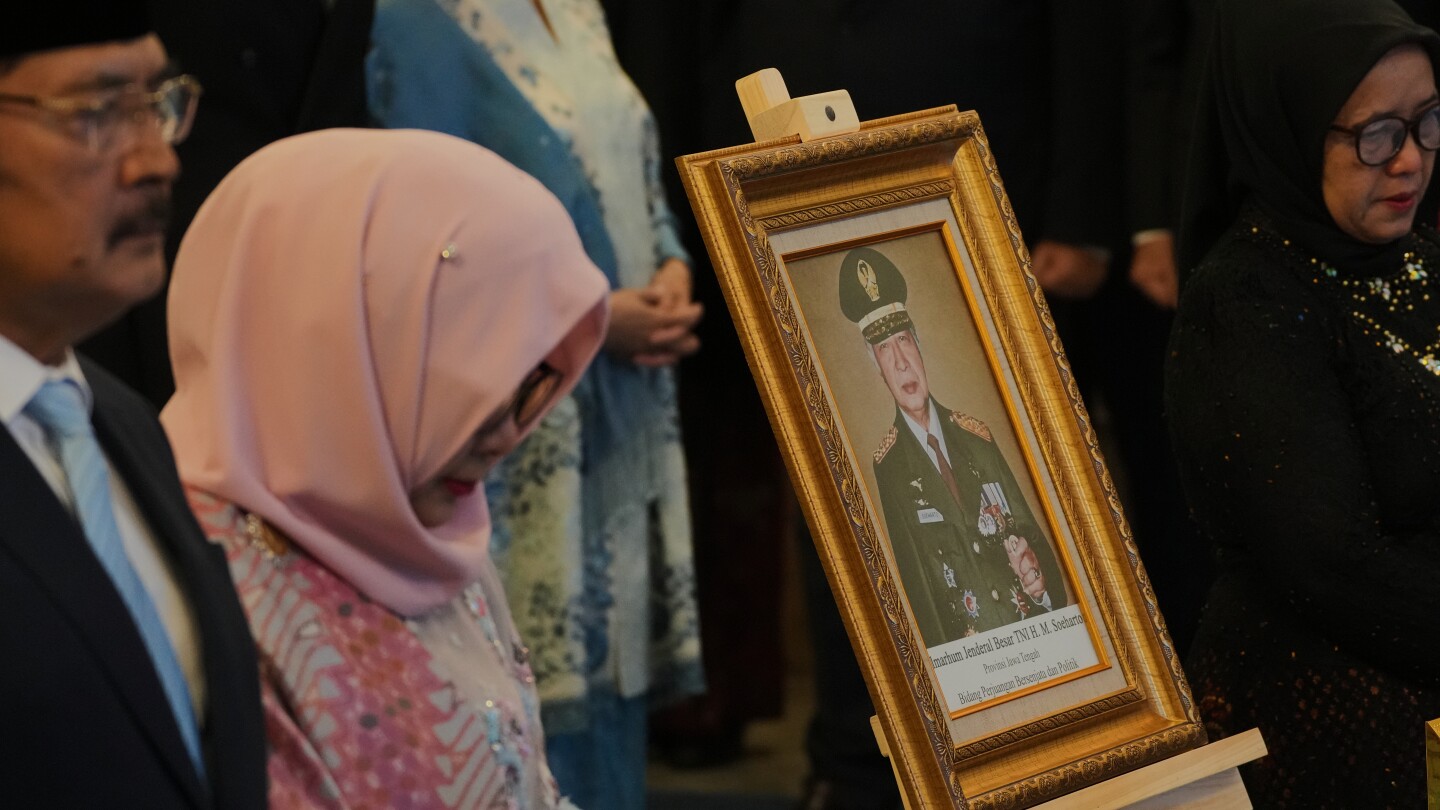
Indonesia’s decision to officially recognize former dictator Suharto as a national hero has sparked significant controversy across the Southeast Asian nation. President Prabowo Subianto bestowed the honor during a televised ceremony at the presidential palace in Jakarta on Monday, commemorating National Hero Day.
Suharto was among ten individuals receiving the prestigious national recognition. The former ruler governed Indonesia with an iron grip for 32 years until widespread protests forced him from power in 1998 during the Asian financial crisis.
Culture Minister Fadli Zon defended the decision by highlighting Suharto’s contributions to Indonesia’s independence struggle against Dutch colonial rule. Zon specifically pointed to Suharto’s military leadership in operations that secured control of what is now West Papua from the Netherlands. The minister further praised the former dictator for reducing poverty, controlling inflation, and suppressing a Communist uprising, while dismissing allegations of corruption and human rights abuses as unproven.
President Prabowo himself has deep personal connections to Suharto’s regime. He rose through military ranks under Suharto’s patronage as part of an Indonesian special forces unit accused of widespread human rights violations. Notably, Prabowo was also married to Suharto’s daughter, Siti Hediati Hariyadi, from 1983 to 1998. The president made no public statement following the ceremony.
The recognition has unleashed a wave of outrage among human rights organizations and survivors of state violence during Suharto’s rule. Critics view the honor as an attempt to whitewash a dark chapter of Indonesian history marked by severe repression and corruption.
Bedjo Untung, who was imprisoned without trial after being accused of Communist Party involvement, expressed shock and anger at the government’s decision. Untung, who endured torture during his nine-year imprisonment from 1970 to 1979, now chairs the 1965 Murder Victim’s Research Foundation. “It feels deeply unfair. We are still living with the suffering until today,” he stated.
Suharto’s 32-year rule was characterized by authoritarian control, including military presence in every village across the archipelago nation. Human rights groups and United Nations reports indicate that between 300,000 and 800,000 alleged communists were killed during his rise to power in 1965-1966. Over the following three decades, an additional 300,000 people were reportedly killed, disappeared, or starved in regions seeking independence, including East Timor, Aceh, and Papua.
While Suharto has been nominated for national hero status multiple times since 2010, previous Indonesian administrations rejected such proposals following public outcry and debate. Prasetyo Hadi, the Minister of State Secretary, explained that this year’s candidates were recommended by parliament after thorough discussions with the national assessment committee and community groups.
Critics like Jaleswari Pramodhawardani, a senior policy analyst at Laboratorium Indonesia 2045, argue that honoring Suharto undermines the nation’s collective memory and commitment to transitional justice established by the 1998 reform movement. Pramodhawardani warned that such recognition effectively pardons state violence and halts justice for countless victims.
In a notable contrast, the government simultaneously honored former President Abdurrahman Wahid, who repealed many of Suharto’s repressive laws, and Marsinah, a prominent labor activist killed during Suharto’s dictatorship. Marsinah was found murdered in 1993 at age 24 after disappearing following a confrontation with military personnel.
The contentious decision reflects ongoing tensions in Indonesia’s efforts to reconcile with its authoritarian past while charting a democratic future.
Fact Checker
Verify the accuracy of this article using The Disinformation Commission analysis and real-time sources.

4 Comments
While Suharto’s military accomplishments during Indonesia’s independence struggle are notable, bestowing him with national hero status glosses over his authoritarian rule and severe human rights abuses. This decision by the government is concerning and risks whitewashing a dark chapter in the country’s history.
Recognizing Suharto as a national hero is a highly controversial move that will likely deepen divisions within Indonesia. The former dictator’s legacy is complex, with both positive and negative impacts on the country. A more nuanced, balanced approach would be more appropriate in my view.
While Suharto played a role in Indonesia’s independence struggle, his subsequent authoritarian rule and human rights abuses make him a deeply controversial figure. Bestowing him with national hero status is a highly problematic decision that warrants significant scrutiny and criticism.
It’s understandable that the Indonesian government wants to celebrate the country’s history of independence, but elevating Suharto to national hero status is a problematic decision. Suharto’s authoritarian rule and human rights abuses should not be whitewashed or ignored, even if he had some notable achievements.