


Listen to the article
Indigenous Voices Echo Through COP30 Climate Talks, But Question of True Influence Lingers
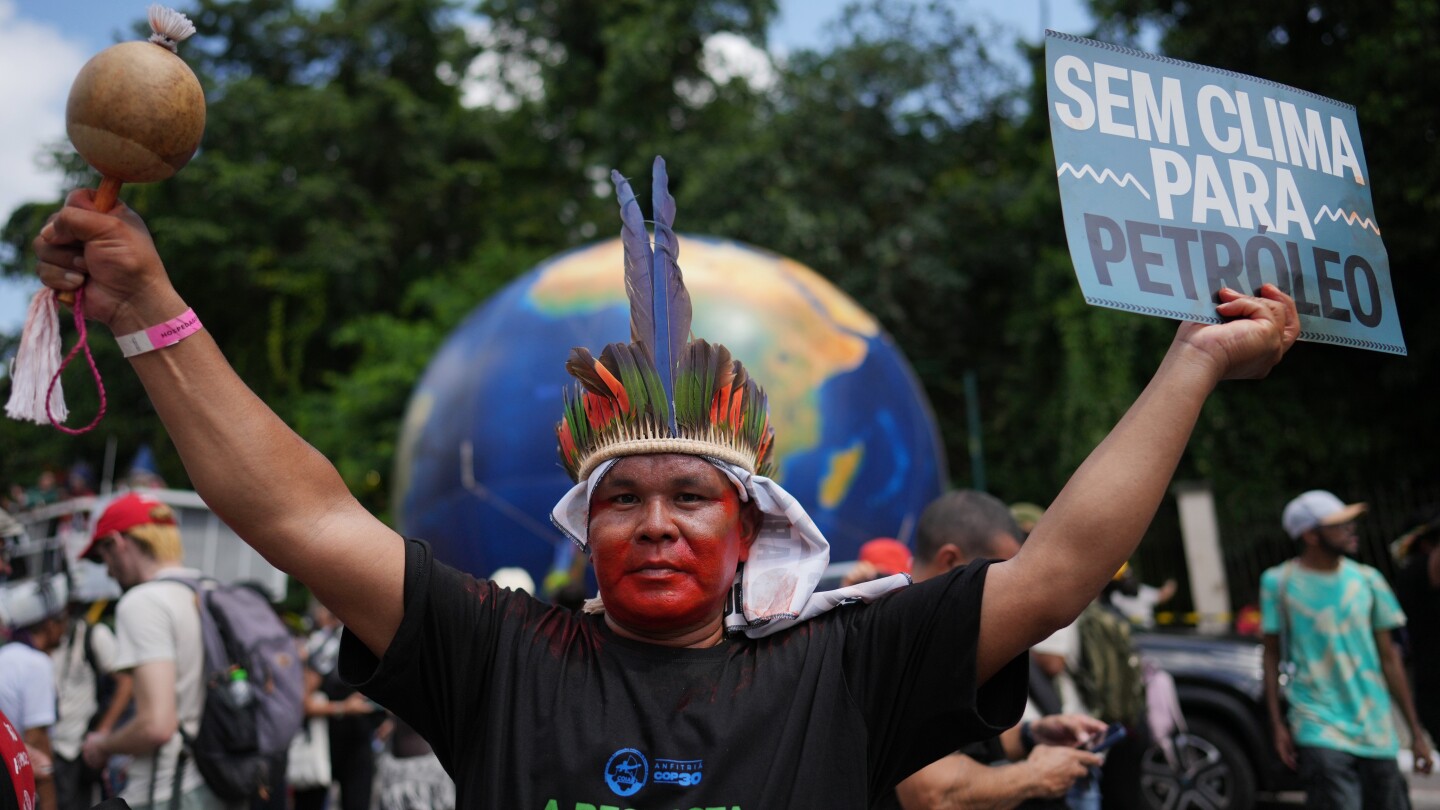
Indigenous peoples made their presence felt throughout the United Nations climate conference in Belem, Brazil, through street demonstrations, waterway protests, and direct actions at the COP30 venue itself. Yet as the conference concluded Saturday, many participants questioned whether their visibility translated into meaningful influence over climate policy decisions.
Brazilian officials had positioned the Amazon-based summit as a watershed moment that would elevate the voices of Indigenous communities who serve as guardians of the world’s largest rainforest—a critical carbon sink in the global fight against climate change.
“This was a COP where we were visible but not empowered,” said Thalia Yarina Cachimuel, a Kichwa-Otavalo member of A Wisdom Keepers Delegation, a coalition of Indigenous representatives from around the world.
The summit did produce some symbolic victories. For the first time, the main political text explicitly acknowledged “the rights of Indigenous Peoples, as well as their land rights and traditional knowledge” in its opening paragraph—a development praised by Taily Terena of Brazil’s Terena nation.
However, the final agreement fell notably short in addressing fossil fuels, a critical issue for many Indigenous communities whose lands and waters face direct impacts from extraction activities. Despite advocacy from numerous nations for a roadmap to phase out oil, gas, and coal, the final text omitted any mention of fossil fuels altogether.
“Countries should have pushed harder for agreements on how to phase out fossil fuels and not to see nature as merchandise, but to see it as sacred,” said Mindahi Bastida, an Otomí-Toltec member of the Wisdom Keepers Delegation.
Brazil introduced a financial mechanism designed to incentivize forest preservation through international donations. While the initiative received funding pledges from several countries, critics like Jacob Johns of the Akimel O’Otham and Hopi nations dismissed carbon markets as “false solutions that don’t stop pollution, they just move it around.”
“They hand corporations a license to keep drilling, keep burning, keep destroying, so long as they can point to an offset written on paper,” Johns explained. “It’s the same colonial logic dressed up as climate policy.”
The question of tokenism versus meaningful participation shadowed the conference from its opening day. While Brazil’s Minister of Indigenous Peoples, Sônia Guajajara, described COP30 as “undeniably the largest and best COP in terms of Indigenous participation and protagonism,” other attendees expressed disappointment.
“What we have seen at this COP is a focus on symbolic presence rather than enabling the full and effective participation of Indigenous Peoples,” said Sara Olsvig, chair of the Inuit Circumpolar Council, after the conference concluded.
Edson Krenak, Brazil manager for Indigenous rights group Cultural Survival and a member of the Krenak people, questioned whether negotiators had made sufficient efforts to understand forest communities. He also expressed concern that the 900 Indigenous people granted access to the main venue represented inadequate representation.
Despite frustrations with the formal proceedings, many participants found strength in collective action. Paulo André Paz de Lima, an Amazonian Indigenous leader, described how demonstrators broke through security barriers during the conference’s first week, helping amplify Indigenous voices.
“After breaking the barrier, we were able to enter COP, get into the Blue Zone and express our needs,” said de Lima, referring to the official negotiation area. “We got closer to the negotiations, got more visibility.”
The protests served not only to capture attention from non-Indigenous delegates but also to foster solidarity among Indigenous peoples from different regions. On the final night before an agreement was reached, a small group carried banners highlighting environmental injustices ranging from the recent killing of a Guarani youth on tribal territory to a proposed gas transmission project in Canada.
“We have to come together to show up, you know? Because they need to hear us,” said Leandro Karaí of the Guarani people. “When we’re together with others, we’re stronger.”
As negotiators remained deadlocked inside conference rooms, demonstrators sang to the rhythm of drums, locked arms, and marched through the venue’s corridors before emerging under the evening sky—a powerful display of unity amid questions about their influence on the climate policies that will shape their homelands’ futures.
Fact Checker
Verify the accuracy of this article using The Disinformation Commission analysis and real-time sources.

12 Comments
While the increased presence of Indigenous voices at COP30 is a positive step, the lingering question of their actual influence on policy decisions highlights the need for more substantive and equitable representation.
I share your concern. Meaningful inclusion requires not just visibility, but the power to shape the outcomes and decisions that impact their communities and lands.
The acknowledgment of Indigenous rights and knowledge in the COP30 text is a welcome development, but the real challenge will be ensuring these principles are consistently applied and lead to tangible changes in climate policy and action.
Absolutely, the rhetoric must be matched by concrete steps to empower Indigenous communities and center their expertise in global climate negotiations and solutions.
This is an important issue that deserves careful attention. While the increased visibility of Indigenous voices at COP30 is a positive step, true empowerment and influence over climate policy decisions remains a critical challenge.
I agree, meaningful inclusion and representation of Indigenous communities is crucial for effective climate action and policy-making.
The acknowledgement of Indigenous rights and knowledge in the COP30 text is a welcome development, but the proof will be in how these principles are actually implemented and translated into tangible outcomes.
Absolutely, the rhetoric must be matched by substantive changes that empower and center Indigenous leadership on climate solutions.
As guardians of the Amazon rainforest, a critical carbon sink, Indigenous voices and participation in COP30 are essential. However, the question of true influence over final policy decisions remains a valid concern.
You raise a fair point. Increased visibility is a start, but true empowerment requires meaningful decision-making power for Indigenous communities.
The summit’s acknowledgment of Indigenous rights and knowledge is an important symbolic victory, but the real test will be whether these principles are robustly implemented in climate action plans and policies going forward.
Exactly, the true measure of progress will be concrete changes that elevate Indigenous leadership and solutions in the global climate agenda.