


Listen to the article
India Delays Climate Pledge Submission, Raising Questions About Global Leadership
India is unlikely to submit its formal climate pledge before the conclusion of the annual United Nations climate summit in Brazil, a move that has sparked concerns about how the world’s most populous nation can effectively influence global climate policy while sitting on the sidelines.
Experts suggest the delay may reflect India’s dissatisfaction with insufficient progress on funding global climate initiatives. However, this strategic decision could potentially undermine India’s leadership position at the COP30 climate talks currently underway in Belem, Brazil.
As a pivotal player in international efforts to combat pollution and address global warming—particularly significant given the United States’ retreat from climate negotiations under the Trump administration—India’s absence from the list of countries submitting their Nationally Determined Contributions (NDCs) has surprised many observers.
During his address to the conference on Monday, India’s Environment Minister Bhupender Yadav highlighted the country’s early achievement of previous climate goals while emphasizing the urgency of the climate crisis. “Climate change is no longer a distant manifestation, but is real and imminent,” Yadav said. “Unsustainable growth and development have placed Mother Earth in deep stress.”
India has made significant progress in its renewable energy transition, with non-fossil fuel sources now accounting for more than half of its electricity generation capacity. The country achieved some of its climate goals for 2030 five years ahead of schedule. On the summit’s sidelines, Yadav indicated that India plans to submit its updated 2035 climate goals by December, according to the Press Trust of India.
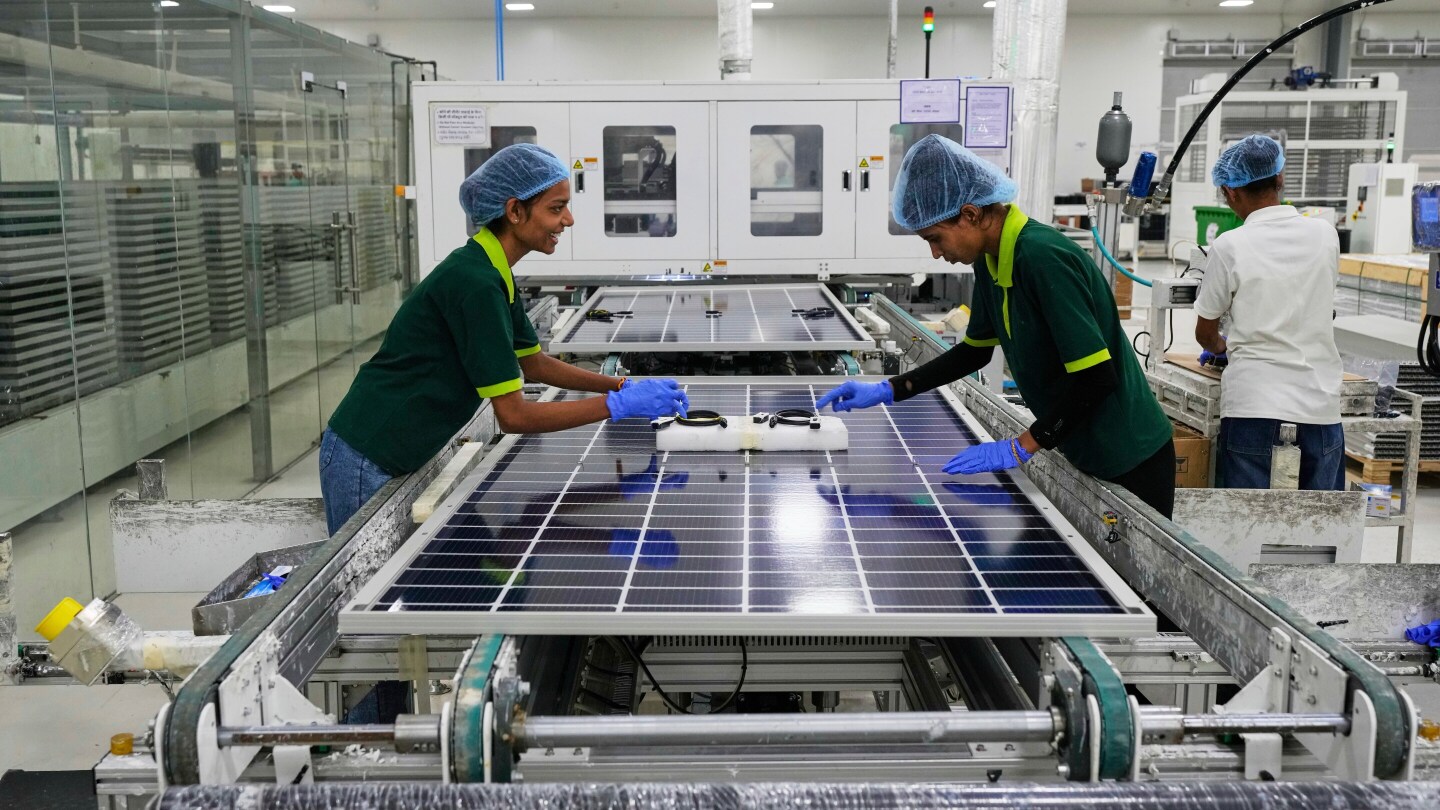
The South Asian nation has established itself as a climate leader by spearheading multiple international climate-focused organizations, including the Coalition for Disaster Resilient Infrastructure and the International Solar Alliance. India’s renewable energy sector has experienced remarkable growth over the past decade, with solar capacity expanding from just 5.7 gigawatts in 2015 to more than 125 gigawatts as of September 2025.
Despite these achievements, environmental watchdog Germanwatch downgraded India in its annual climate change performance index, dropping the country from 10th place last year to 23rd this year. The nonprofit cited India’s continued reliance on coal as a key factor in this decline.
The absence of India’s official climate pledge has become a significant topic of discussion at COP30, according to Aarti Khosla, founder of the New Delhi-based climate consultancy Climate Trends. While acknowledging India’s over-performance on previously established climate goals, Khosla warned that delaying the submission of new targets could negatively impact the country’s international standing at the conference—especially as India bids to host the 2028 climate talks.
Abhiir Bhalla, a youth adviser for the Commonwealth Human Ecology Council, expressed disappointment about the delay but praised India’s expansion of renewable energy capacity.
India has consistently criticized the adequacy of global climate finance arrangements, including the $300 billion deal reached at the previous climate summit. In his Monday address, Yadav called for wealthy nations to “deliver new, additional, and concessional climate finance at a scale of trillions, not billions.”
Harjeet Singh, founding director of Satat Sampada Climate Foundation, interpreted Yadav’s statement as an indication that ambitious global climate plans will remain ineffective without legally binding commitments. He emphasized that India’s voice carries greater weight now as the United States, historically the world’s largest carbon emitter, steps back from its climate commitments.
“Large economies like India face more pressure to fill the void,” said Singh, a veteran attendee of multiple climate summits.
Vaibhav Chaturvedi, senior fellow at the New Delhi-based Council on Energy, Environment and Water, suggested that India is seeking concrete details on global financial commitments. “Something more concrete in terms of delivery of public finance and also adaptation finance is a big concern from India’s side,” he said.
India’s firm stance on climate funding has garnered support from other nations. Iskander Erzini Vernoit, director of Morocco’s Imal Initiative for Climate and Development, noted that wealthy countries’ commitment to climate finance “has been weak at best, and certainly not commensurate with the urgency of keeping global warming to safe levels.”
As the climate talks continue in Brazil, India’s delayed submission highlights the complex interplay between climate ambition, international finance, and diplomatic leverage in addressing one of humanity’s most pressing challenges.
Fact Checker
Verify the accuracy of this article using The Disinformation Commission analysis and real-time sources.

12 Comments
India’s stance on climate finance is reasonable, but the delay in submitting its climate pledge is problematic. As a major emitter and economy, India’s participation and commitment are essential for an effective global response to climate change. I hope they can find a way to break the deadlock soon.
You make a fair point. India’s climate leadership is crucial, and they need to find a way to balance their development needs with ambitious climate action. Constructive dialogue with developed countries on climate finance could help resolve this impasse.
India’s delay in submitting its climate pledge is concerning, as it could undermine the momentum at COP30. While India’s demand for climate finance is understandable, they need to find a way to demonstrate their climate leadership and commitment. Dialogue and compromise will be key to resolving this issue.
This delay raises concerns about India’s leadership on climate action. As a major emitter, India’s participation and commitment are crucial. I hope they can resolve this issue and submit a strong climate pledge soon to set an example for other countries.
That’s a valid concern. India’s climate leadership is important, given its size and influence. Hopefully the negotiations can find a constructive solution that addresses India’s needs while advancing global climate goals.
India’s delay in submitting its climate pledge is understandable given the need for adequate climate funding from rich nations. As a developing economy, India has to balance its development priorities with environmental concerns. Hopefully, the COP30 talks can make progress on this critical issue.
You make a fair point. India has rightly emphasized the responsibility of developed countries to provide climate finance. Equitable burden-sharing is key to an effective global response to climate change.
India’s delay in submitting its climate pledge is concerning, as it could undermine global climate efforts. However, the country’s emphasis on climate finance from rich nations is justified. India must find a way to resolve this impasse and demonstrate its climate leadership.
India’s stance on climate finance is reasonable, but the delay in submitting its climate pledge is concerning. The world needs India’s leadership and commitment to tackle the urgent climate crisis. I hope they can resolve this impasse soon.
India’s decision to delay its climate pledge submission is a strategic move to pressure rich nations on climate funding. While understandable, this could backfire and weaken India’s position as a climate leader. Constructive negotiations are needed to find a balanced solution.
I agree, India needs to strike the right balance between its development needs and climate action. Constructive dialogue with developed countries to secure adequate climate finance is crucial for India to submit an ambitious climate pledge.
India’s demand for climate finance from rich nations is understandable, but the delay in submitting its pledge could undermine the momentum at COP30. As a major economy, India needs to show bold climate action to inspire other developing countries.