


Listen to the article
U.S. and Ukrainian officials reported making progress Sunday in high-stakes Geneva talks aimed at ending the Russia-Ukraine war, though details about specific agreements remained sparse as discussions centered on a controversial U.S.-drafted peace proposal.
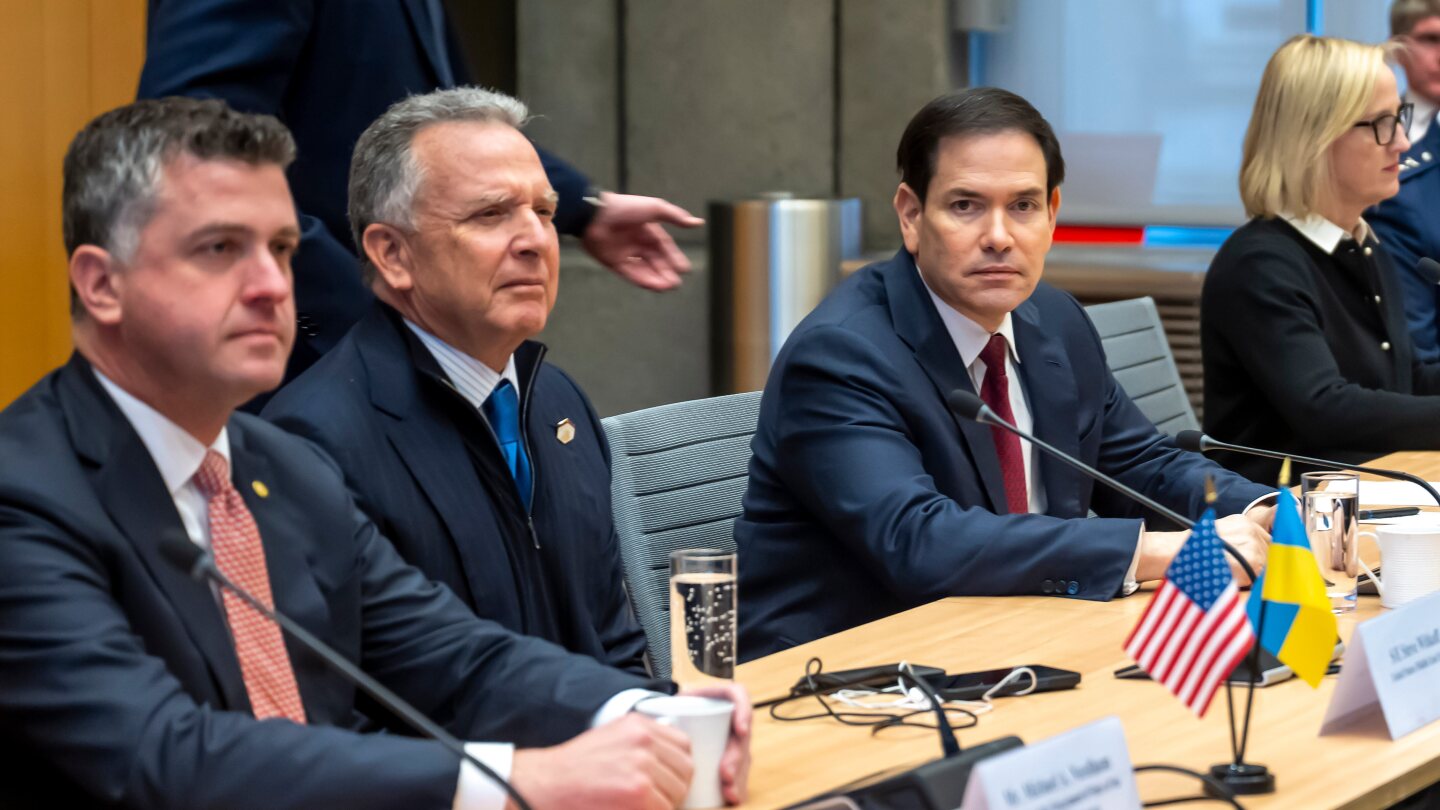
“I feel very optimistic that we can get something done,” U.S. Secretary of State Marco Rubio said after what he described as “very worthwhile” discussions that constituted the most productive day in “a very long time.”
The negotiations focused on a 28-point blueprint developed by the United States that has generated significant concern across European capitals and in Kyiv due to provisions that appear to meet many Russian demands, including potential territorial concessions from Ukraine.
Ukrainian presidential chief of staff Andrii Yermak, who led the Ukrainian delegation, offered a positive assessment, stating: “We have made very good progress and are moving forward to a just and lasting peace.”
In a statement following the talks, the White House said Ukrainian officials “affirmed that all of their principal concerns — security guarantees, long-term economic development, infrastructure protection, freedom of navigation, and political sovereignty — were thoroughly addressed during the meeting.” The administration added that changes had been made to reflect Ukraine’s “national interests.”
President Donald Trump had set a Thursday deadline for Ukraine to respond to the proposal, though Rubio downplayed the timeline, suggesting negotiations could continue “Monday and beyond.” He acknowledged that some issues still required “higher-level decisions and consultations” or “just need more time to work through.”
The diplomatic efforts come amid rising tensions between the Trump administration and European allies over the peace proposal. German Chancellor Friedrich Merz said he had spoken directly with Trump and emphasized that “the sovereignty of this country must not be jeopardized.”
The plan has sparked alarm in Ukraine, where President Volodymyr Zelenskyy has repeatedly rejected Russian demands for territorial concessions. Zelenskyy has warned that Ukraine faces a difficult choice between defending its sovereign rights and maintaining vital American support.
Adding to the confusion, a bipartisan group of U.S. senators claimed Saturday that Rubio had told them the peace plan originated with Russia and represented a “wish list” for Moscow rather than a serious American proposal. A State Department spokesperson called this account “blatantly false,” while Rubio suggested the senators had misunderstood him.
Senator Mark Warner, the top Democrat on the Senate Intelligence Committee, told ABC’s “This Week” that the peace plan appeared to be “almost a series of Russian talking points” and had led to “ferocious pushback” from European allies who “feel like they’ve been totally left high and dry.”
Despite the diplomatic complications, Zelenskyy struck a conciliatory tone Sunday, expressing gratitude “to the United States, to every American heart, and personally to President Trump.” He emphasized that “the crux of the entire diplomatic situation is that it was Russia, and only Russia, that started this war.”
Prior to meeting with U.S. officials, the Ukrainian delegation consulted with national security advisers from the UK, France, and Germany, who have rallied behind Kyiv to seek revisions to the American proposal.
French Defense Ministry official Alice Rufo specifically criticized the plan’s restrictions on the Ukrainian army as “a limitation on its sovereignty,” asserting that “Ukraine must be able to defend itself.”
In a separate diplomatic development, Turkish President Recep Tayyip Erdogan announced he would speak with Russian President Vladimir Putin on Monday about potentially reviving a 2022 agreement that had allowed Ukraine to safely export grain via the Black Sea. The deal collapsed last year when Putin refused to extend it.
Rubio described the U.S. peace proposal as a “living breathing document” that would continue evolving, while noting that “obviously, the Russians get a vote here” in any final agreement.
Fact Checker
Verify the accuracy of this article using The Disinformation Commission analysis and real-time sources.

14 Comments
Achieving a just and lasting peace in the Russia-Ukraine conflict is an immense challenge, but transparency and accountability must be the guiding principles. The world will be watching closely to ensure any agreement upholds Ukraine’s rights and does not set a dangerous precedent of rewarding military aggression.
Well said. Ukraine’s security and territorial integrity should be the non-negotiable foundations of any peace settlement. Partial concessions could undermine long-term stability in the region.
While progress in the Geneva talks is positive, the lack of specifics is concerning. Ukraine’s security and territorial integrity must be the foundational principles of any peace agreement. The international community should closely scrutinize the details to ensure Russia does not gain undue concessions.
Exactly. Partial concessions to Russia could undermine long-term stability in the region. A comprehensive, principled approach is needed to achieve a just and lasting peace.
Cautiously optimistic to hear progress is being made in the high-stakes Geneva talks, though more details would be helpful to assess the merits of any potential agreements. Achieving a just and lasting peace will require careful balancing of Ukraine’s sovereignty and security concerns.
Agreed, the devil is in the details when it comes to peace negotiations. Transparency and accountability will be crucial to ensure any deal truly serves Ukraine’s interests.
The talks in Geneva represent a critical moment, but the details matter immensely. Any proposal that appears to compromise Ukraine’s security or territorial integrity should be viewed with extreme caution. Transparency and accountability will be essential to building trust and lasting peace.
Well said. The international community must remain vigilant to ensure Ukraine’s interests are fully protected in these high-stakes negotiations.
It’s encouraging to see the US and Ukraine working together to find a diplomatic solution, but the details will be critical. Any proposal that appears to compromise Ukraine’s sovereignty or reward Russia’s aggression should be viewed with extreme caution. Lasting peace requires addressing the root causes of this conflict.
It’s encouraging to see the US and Ukraine working together to find a diplomatic solution to end this devastating conflict. However, any proposal that appears to concede territory or meet Russia’s demands raises serious concerns and should be scrutinized closely.
Absolutely, Ukraine’s sovereignty and territorial integrity must be the priority. Partial concessions could set a dangerous precedent and undermine long-term stability in the region.
While progress on negotiations is positive, the lack of specifics is worrying. The world will be watching closely to ensure any agreement truly upholds Ukraine’s rights and does not reward Russia’s aggression. Lasting peace requires addressing the root causes of this conflict.
While progress in the Geneva talks is a positive sign, the lack of specifics raises concerns. Ukraine’s sovereignty and security must be the top priorities in any peace agreement. The international community should closely scrutinize the details to ensure Russia does not gain undue concessions that could jeopardize long-term stability.
Ending the Russia-Ukraine war through diplomacy would be a welcome development, but the devil is in the details. Provisions that meet Russian demands at the expense of Ukraine’s sovereignty raise serious red flags and must be rejected. A just and sustainable peace should be the top priority.