


Listen to the article
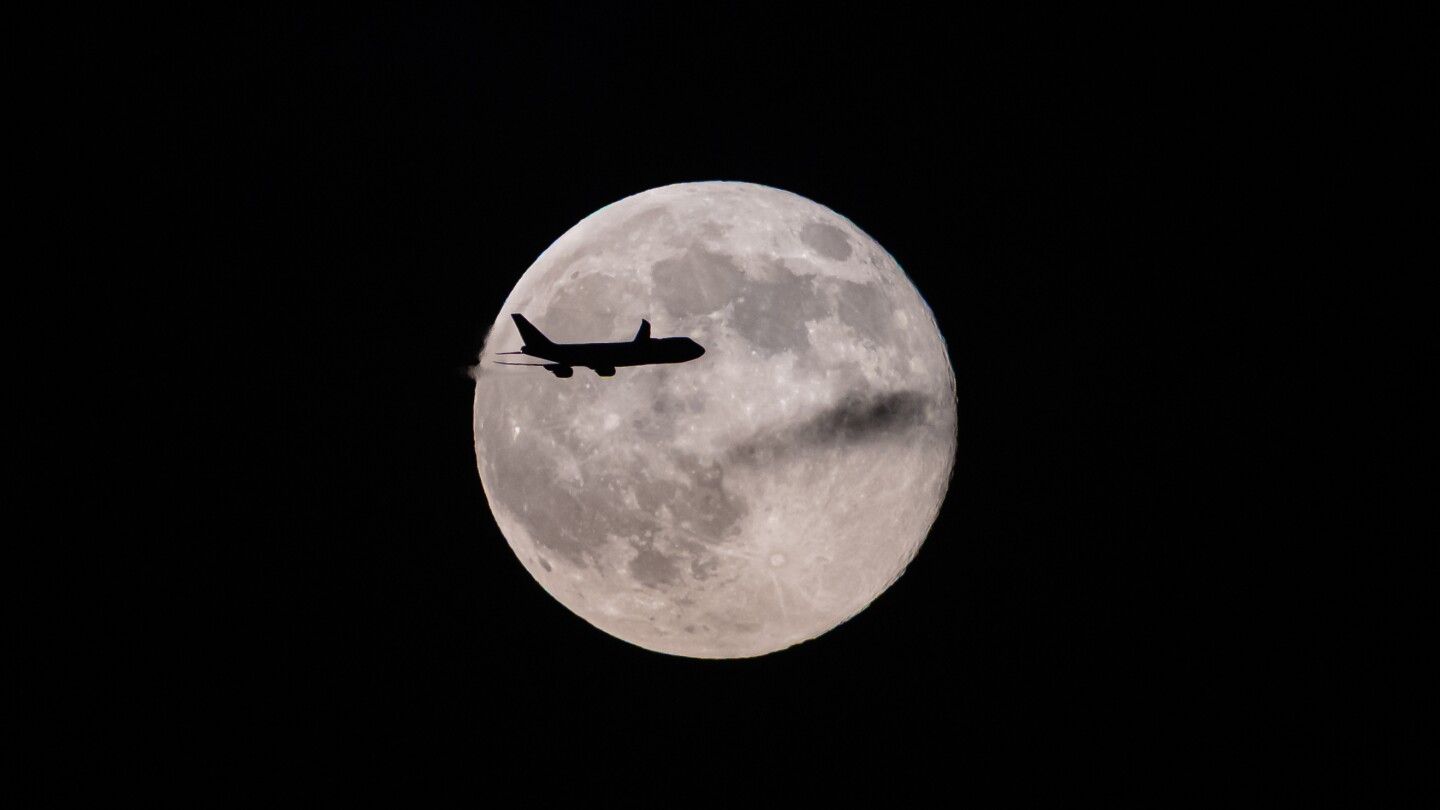
The year’s final supermoon will illuminate December skies this Thursday, concluding a trio of these celestial events for 2025. This astronomical phenomenon occurs when the full moon coincides with the point in the moon’s elliptical orbit that brings it closest to Earth, known to astronomers as perigee.
NASA explains that supermoons can appear up to 14% larger and 30% brighter than when the moon is at its farthest point from Earth. This dramatic difference stems from the moon’s non-circular orbit, which causes its distance from our planet to vary by tens of thousands of miles throughout its monthly cycle.
“When you have a supermoon, that effect is just slightly more striking,” explains astronomer William Alston from the University of Hertfordshire. The visual enhancement is particularly noticeable when the moon is near the horizon, where an optical phenomenon called the “moon illusion” already makes our satellite appear larger.
This perceptual curiosity, which makes the moon seem bigger when viewed near the horizon than when it’s high in the sky, has puzzled scientists for generations. Despite extensive research, experts still cannot fully explain why our brains interpret the moon this way. The supermoon effect amplifies this already mysterious visual experience.
Supermoons typically occur in clusters of two to four throughout the year, as the moon’s orbit creates several opportunities when full moons align closely with perigee. Thursday’s event marks the third and final supermoon of 2025, concluding this year’s sequence of enhanced lunar displays.
Casual observers often find it challenging to detect the subtle differences between a supermoon and regular full moon without direct comparison. However, photography enthusiasts and amateur astronomers frequently capitalize on these events to capture dramatic moonrise images, when the optical illusion combines with the actual size increase to create stunning visual opportunities.
Beyond their aesthetic appeal, supermoons can have minor effects on Earth. Tidal forces are slightly stronger during these events, potentially causing marginally higher tides in coastal areas. However, these differences are generally not dramatic enough to cause concern or significant disruption to coastal communities.
For those interested in witnessing this celestial spectacle, no specialized equipment is necessary. The supermoon will be visible to the naked eye in clear night skies. Optimal viewing typically occurs during moonrise or moonset, when the moon appears near the horizon and the illusion effect is strongest.
Astronomical events like supermoons often serve as gateway experiences that spark wider public interest in astronomy. Local astronomy clubs and observatories frequently organize viewing events during supermoons, providing opportunities for community engagement with science.
While the term “supermoon” has become popular in mainstream culture, it originated relatively recently. Astrologer Richard Nolle coined the phrase in 1979, defining it as a full moon occurring at 90% or more of its closest approach to Earth. Although the term wasn’t initially embraced by the astronomical community, its descriptive nature has helped it gain widespread acceptance in scientific communication.
For those who miss this final supermoon of 2025, the celestial calendar already promises new opportunities in the coming year. Astronomical forecasts indicate several more supermoons will grace our skies in 2026, continuing this regular cycle of enhanced lunar displays.
The predictable nature of these events serves as a reminder of the clockwork precision of our solar system, offering both scientific value and aesthetic pleasure to observers around the world.
Fact Checker
Verify the accuracy of this article using The Disinformation Commission analysis and real-time sources.

12 Comments
I always enjoy learning more about the science behind astronomical events like supermoons. It’s incredible how our perception of the moon’s size can be so strongly influenced by its position in the sky. I’ll have to make sure I step outside on Thursday to catch a glimpse.
Absolutely. Supermoons are a great reminder of how much we still have to discover about the universe, even with all our scientific knowledge. Can’t wait to see this final one of the year!
Fascinating to learn about the moon illusion and how it interacts with supermoons. I’ll have to keep an eye out for this final supermoon of 2025 – it sounds like quite the sight to behold.
Definitely. The moon illusion is such an intriguing visual phenomenon. I’m looking forward to seeing how dramatic the supermoon appears on the horizon this week.
Fascinating to learn more about the science behind supermoons. It’s amazing how the moon’s elliptical orbit and our visual perception create such a dramatic effect. I’ll have to step outside and take a look this Thursday!
Agreed, the moon illusion is really intriguing. I always enjoy seeing a supermoon rise near the horizon – it looks so much larger than when it’s high overhead.
Supermoons are always a fun celestial event to watch for. It’s neat that even with all our scientific understanding, the moon illusion still puzzles experts. Nature can be full of surprises!
Absolutely. There’s still so much we have to learn about the complex relationships between celestial bodies and our visual perception. Observing the moon is a great way to appreciate the wonders of our universe.
I wonder how the brightness and size of this supermoon will compare to previous ones we’ve had this year. It will be interesting to see if it’s noticeably different, or if the effect is relatively consistent.
Good question. I imagine the difference in apparent size and luminosity can vary a bit depending on the moon’s exact perigee distance. But in general, supermoons do provide a pretty dramatic visual spectacle.
I’ll have to remember to step outside and take a look at the supermoon on Thursday. Even though we understand the science behind it, there’s something captivating about seeing the moon appear dramatically larger and brighter in the sky.
Couldn’t agree more. Supermoons are a great reminder of the beauty and mystery that still surrounds our nearest celestial neighbor. Definitely worth taking a moment to appreciate.