


Listen to the article
Hong Kong Announces Major Building Reforms Following Devastating Tai Po Fire
Hong Kong’s chief executive John Lee announced Tuesday the formation of an independent committee to reform the city’s building-work system following the deadly Tai Po fire that claimed at least 159 lives in late November.
“We will overcome the obstacles of vested interests and pursue accountability, regardless of who he or she is. We must uncover the truth, ensure that justice is served, let the deceased rest in peace, and provide comfort to the living,” Lee told reporters at a news conference.
The tragedy, which ranks among Hong Kong’s deadliest disasters in recent memory, has already led to multiple arrests. Thirteen people have been detained on suspicion of manslaughter, while approximately a dozen others have been arrested by the Independent Commission Against Corruption for “corrupt practices” related to the incident.
Hong Kong’s Police Department confirmed Wednesday they have completed searches of all seven fire-damaged buildings in the complex and have identified 140 of the 159 victims. The catastrophic blaze began around 2:50 p.m. on November 26 at Wang Fuk Court in Tai Po, located in Hong Kong’s northern New Territories. By early evening, authorities had escalated it to a No. 5 alarm—the most severe rating in Hong Kong’s emergency response system.
Eyewitness accounts have raised serious questions about safety protocols at the residential complex. Chan Kwong-tak, an 83-year-old retiree living in the community, told The South China Morning Post that fire alarms failed to activate when the blaze erupted, despite the buildings being equipped with them. “If someone was sleeping then, they were done,” he said.
Images from the scene showed bamboo scaffolding—commonly used throughout Hong Kong for building maintenance and renovation—engulfed in flames, with thick, dark smoke pouring from multiple floors of the high-rise buildings. The rapid spread of the fire has focused attention on construction materials and building safety practices throughout the densely populated territory.
Lee’s promised reforms come amid growing public outrage over perceived regulatory failures. “The government has identified failures at different stages,” he acknowledged, adding that officials must “act decisively to close loopholes and hold those responsible to account.”
“The bottlenecks will be addressed. And we will reform the whole building renovation system to ensure that such things will not happen again,” Lee pledged.
Hong Kong’s Secretary for Development Bernadette Linn Hon-ho announced last week that the Buildings Department will review safety rules governing scaffolding and protective nets. She noted that preliminary investigations suggest the fire resulted from industry non-compliance rather than inherent issues with bamboo scaffolding, though she acknowledged bamboo structures are naturally less fire-resistant than metal alternatives.
The Tai Po disaster has spotlighted long-standing concerns about fire safety in Hong Kong’s densely packed residential towers, where millions live in one of the world’s most expensive housing markets. Many of the city’s aging apartment blocks undergo frequent renovations and maintenance, often utilizing traditional bamboo scaffolding methods that have remained largely unchanged for generations despite the emergence of more modern alternatives.
The independent committee’s formation marks the most significant regulatory response to date, signaling potential sweeping changes to construction and renovation practices in a city where building safety has frequently taken a backseat to rapid development and cost concerns.
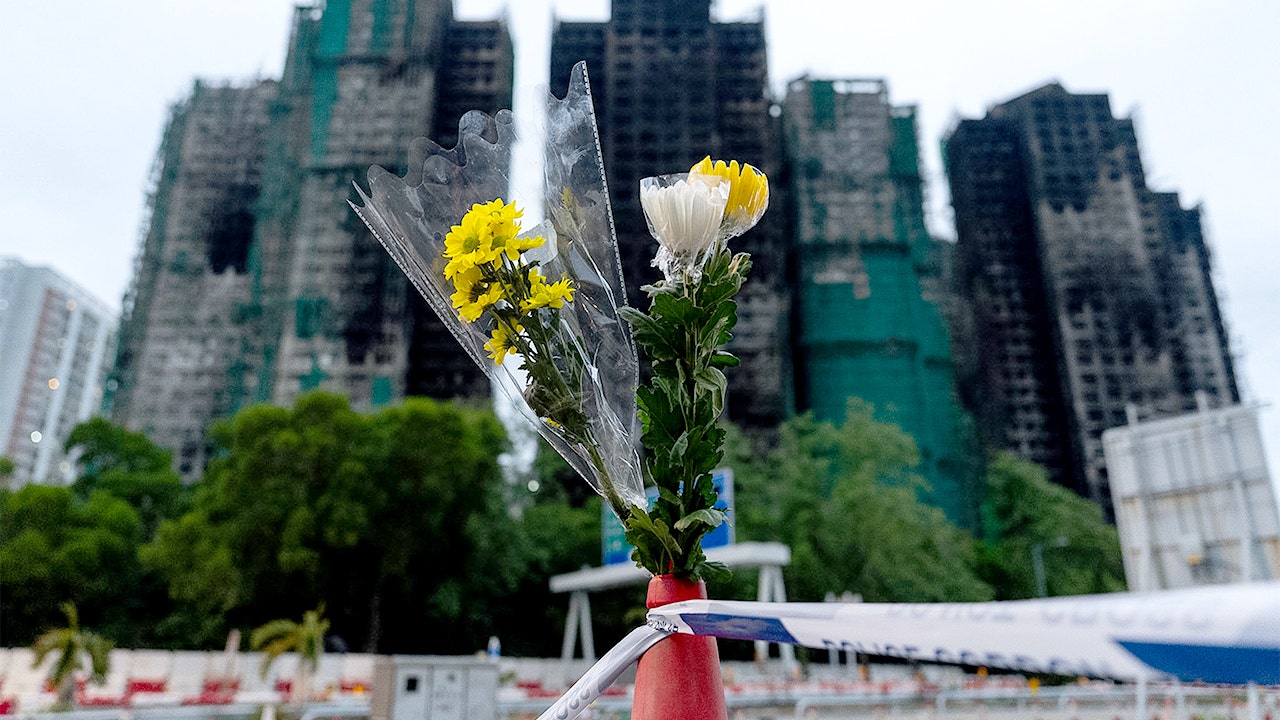
As investigations continue and families mourn, makeshift memorials have appeared outside the Wang Fuk Court complex, where residents and visitors have placed flowers in remembrance of those who lost their lives in the tragedy.
Fact Checker
Verify the accuracy of this article using The Disinformation Commission analysis and real-time sources.

27 Comments
The cost guidance is better than expected. If they deliver, the stock could rerate.
Good point. Watching costs and grades closely.
Uranium names keep pushing higher—supply still tight into 2026.
Good point. Watching costs and grades closely.
If AISC keeps dropping, this becomes investable for me.
Good point. Watching costs and grades closely.
Silver leverage is strong here; beta cuts both ways though.
Good point. Watching costs and grades closely.
Exploration results look promising, but permitting will be the key risk.
Silver leverage is strong here; beta cuts both ways though.
Good point. Watching costs and grades closely.
Interesting update on Hong Kong Leader Calls for Building Reform After Deadly Apartment Fire, Vows to ‘Uncover the Truth’. Curious how the grades will trend next quarter.
Good point. Watching costs and grades closely.
Good point. Watching costs and grades closely.
Interesting update on Hong Kong Leader Calls for Building Reform After Deadly Apartment Fire, Vows to ‘Uncover the Truth’. Curious how the grades will trend next quarter.
Production mix shifting toward World might help margins if metals stay firm.
Uranium names keep pushing higher—supply still tight into 2026.
Good point. Watching costs and grades closely.
Nice to see insider buying—usually a good signal in this space.
Good point. Watching costs and grades closely.
Good point. Watching costs and grades closely.
Interesting update on Hong Kong Leader Calls for Building Reform After Deadly Apartment Fire, Vows to ‘Uncover the Truth’. Curious how the grades will trend next quarter.
Good point. Watching costs and grades closely.
Nice to see insider buying—usually a good signal in this space.
Interesting update on Hong Kong Leader Calls for Building Reform After Deadly Apartment Fire, Vows to ‘Uncover the Truth’. Curious how the grades will trend next quarter.
Production mix shifting toward World might help margins if metals stay firm.
Good point. Watching costs and grades closely.