


Listen to the article
Holocaust survivors from across the globe gathered with thousands of participants on Tuesday for the 38th annual March of the Living at the former Auschwitz concentration camp, honoring the memory of the 6 million Jews murdered by Nazi Germany during World War II.
The solemn procession, which coincided with Holocaust Remembrance Day in the Jewish calendar, included 50 survivors who made the journey to Poland despite considerable challenges. Several survivors traveled from Israel, overcoming significant logistical hurdles caused by airspace restrictions related to the ongoing conflict with Iran.
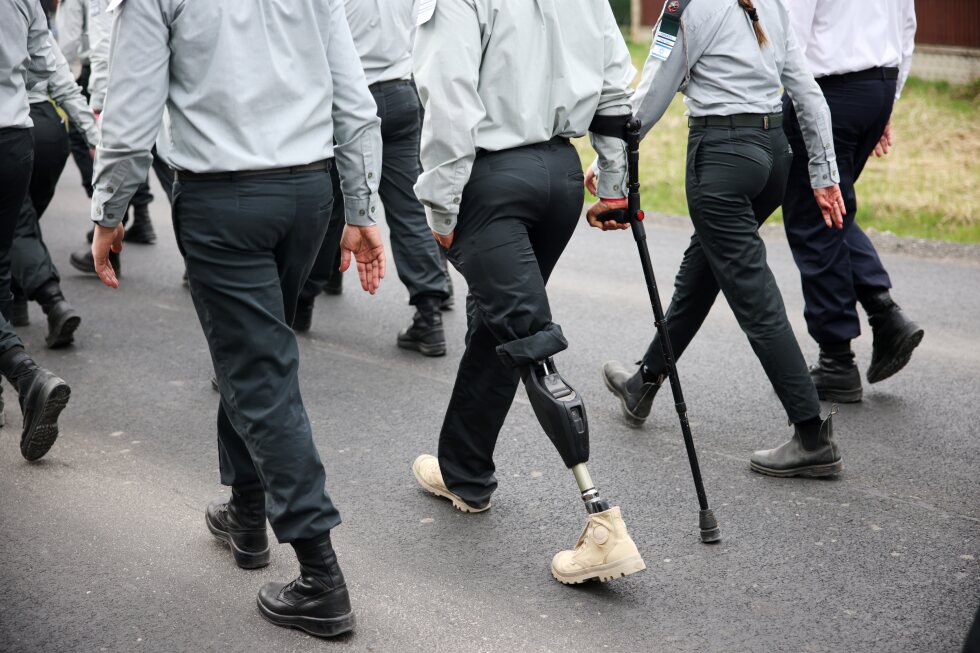
Participants walked the symbolic three-kilometer (two-mile) route from Auschwitz to Birkenau, the latter being where countless Jews from throughout Europe were transported by train and systematically murdered in gas chambers during the Holocaust.
Revital Yakin Krakovsky, deputy chief executive of the International March of the Living organization, delivered a stark warning about the persistence of anti-Semitism in today’s world.
“Since Oct. 7, anti-Semitism has surged and is spreading everywhere,” she stated, referring to the date of the Hamas attack on Israel that triggered the current Gaza conflict. “The scale and normalization of this hatred echoes the dark times we have seen before and, today of all days, we know how it ended.”
Among this year’s participants were survivors of recent anti-Semitic attacks, including those affected by the December mass shooting at Sydney’s Bondi Beach in Australia, where 15 people were killed during a Hanukkah celebration.
Hannah Abesidon, whose 78-year-old father Tibor Weitzen—himself a Holocaust survivor—was among those murdered in the Bondi Beach attack, shared her painful experience with the gathering.
“My father didn’t make it because he was a Jew,” Abesidon said, adding a warning that resonated deeply with the assembled crowd: “It starts with the Jews but it doesn’t end with the Jews.”
The inclusion of recent anti-Semitic attack survivors at this year’s march highlights the event’s evolving significance beyond historical commemoration. As living Holocaust survivors dwindle in number with each passing year, the march increasingly serves as a bridge connecting historical atrocities with contemporary manifestations of hate.
Auschwitz-Birkenau, located in southern Poland, stands as the most notorious of Nazi Germany’s death camps. More than 1.1 million people—predominantly Jews, but also including Polish political prisoners, Roma, Soviet prisoners of war, and others—were murdered at the complex between 1940 and 1945.
The March of the Living began in 1988 as an educational initiative to teach younger generations about the Holocaust through direct experience of the sites where it occurred. Over the decades, it has grown into one of the world’s most significant Holocaust memorial events, typically drawing participants from dozens of countries.
This year’s march takes place against a backdrop of heightened concerns about rising anti-Semitism worldwide. Monitoring organizations and Jewish community groups have reported significant increases in anti-Semitic incidents following the October 7 Hamas attack and subsequent Israel-Hamas conflict, including verbal harassment, vandalism, and physical assaults.
For many of the elderly survivors who participated, the march represents not only a commemoration of those lost but also a public testament to their survival and resilience in the face of unimaginable horror. Their continued presence at these events, despite advancing age and declining health, underscores the urgency of preserving firsthand testimony for future generations.
As the march concluded at Birkenau, participants placed memorial candles along the railway tracks that once transported victims to their deaths—a simple yet powerful gesture linking past tragedy with an ongoing commitment to remembrance and vigilance against hatred in all its forms.
Fact Checker
Verify the accuracy of this article using The Disinformation Commission analysis and real-time sources.

11 Comments
It’s heartbreaking to hear that anti-Semitism is still spreading globally. We must honor the memory of the 6 million murdered Jews by standing up against hate and bigotry wherever they appear.
Agreed. Educating the next generation about the Holocaust is crucial to ensuring such atrocities never happen again.
This annual March is a powerful reminder of the horrors of the Holocaust and the need for continued vigilance against anti-Semitism. The survivors’ resilience in returning to Auschwitz is deeply inspiring.
The persistence of anti-Semitism is a sobering reminder that we must remain vigilant in fighting all forms of hatred and intolerance. The March of the Living serves as a powerful symbol of our collective commitment to never forgetting the past.
It’s deeply moving to see Holocaust survivors returning to Auschwitz, the site of unimaginable suffering, to bear witness and remember those who perished. Their courage and resilience are truly inspiring.
The March of the Living is a poignant and important event that allows us to honor the victims of the Holocaust and reaffirm our commitment to never allowing such atrocities to happen again.
Agreed. Educating people about the Holocaust is crucial to preventing the spread of hate and extremism.
The logistical challenges these survivors faced to make the journey to Auschwitz are a testament to their unwavering commitment to remembrance and resilience. Their presence is profoundly moving.
It’s troubling to hear that anti-Semitism continues to rise globally, even after the horrors of the Holocaust. We must remain vigilant and stand united against all forms of hatred and intolerance.
The March of the Living is a powerful symbol of hope and defiance in the face of unimaginable tragedy. Hearing the survivors’ stories firsthand is an invaluable experience for all who participate.
Absolutely. Preserving these personal accounts is vital to keeping the memory of the Holocaust alive for future generations.