


Listen to the article
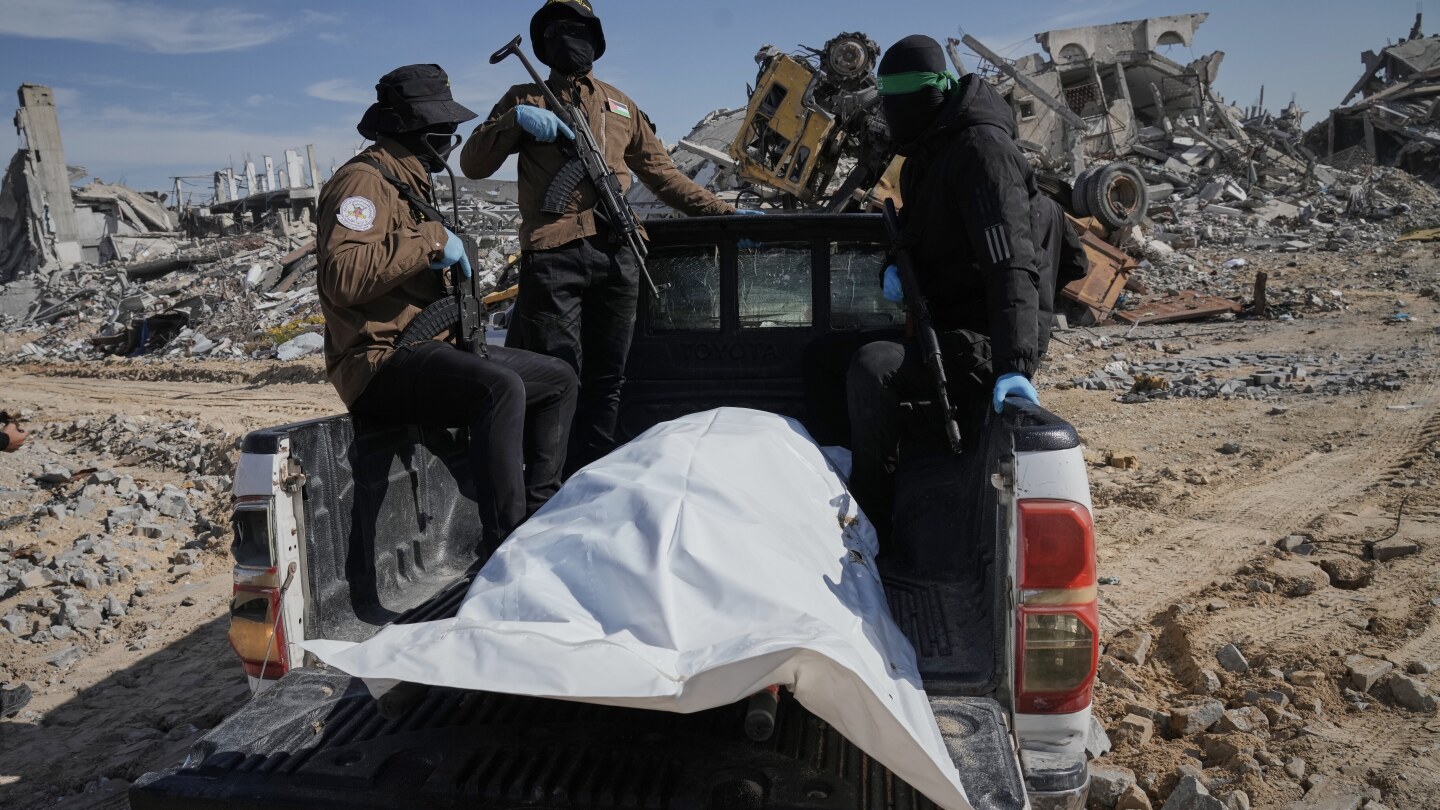
Hamas has agreed to return the remains of a hostage as Israel prepares to reopen the Rafah border crossing for Palestinians leaving Gaza, signaling the U.S.-backed ceasefire is holding despite earlier complications.
The militant group announced it would hand over newly discovered remains on Wednesday, though the identity of the deceased hostage was not immediately clear. Only two hostages are believed to remain in Gaza, with the first phase of the ceasefire agreement set to conclude once both are returned.
An initial complication arose when Prime Minister Benjamin Netanyahu revealed that forensic testing of partial remains returned Tuesday did not match either of the two remaining hostages. Following this revelation, Hamas resumed its search and later claimed to have found a body in northern Gaza.
The two individuals still unaccounted for include Israeli police officer Ran Gvili, who helped people escape the Nova music festival during the October 7 attack before being killed while fighting elsewhere, and Thai agricultural worker Sudthisak Rinthalak, who had been employed at Kibbutz Be’eri, one of the hardest-hit communities in the attack.
Thailand has been disproportionately affected by the conflict, with 31 Thai workers abducted during the October 7 attack—the largest group of foreign nationals taken hostage. Most were released during previous ceasefires, but the Thai Foreign Ministry reports that 46 Thai nationals have been killed during the war.
In a significant development, Israel’s military body COGAT announced that the Rafah border crossing will soon reopen for Palestinians to exit Gaza. Those seeking to leave will require “Israeli security approval” and the process will be coordinated with Egypt under European Union supervision.
An Israeli official, speaking anonymously, clarified that all Palestinians wishing to exit Gaza will be permitted to do so through Rafah, provided Egypt agrees to receive them. However, the crossing will not be open for returns to Gaza—a point disputed by Egypt’s State Information Service, which insists the crossing should facilitate movement in both directions in accordance with the U.S.-backed plan.
The World Health Organization estimates over 16,500 sick and wounded Palestinians need to leave Gaza for medical treatment. The Rafah crossing has been largely sealed since Israeli forces took control of the area in May 2024, with only brief openings during previous ceasefire periods.
In a separate but related development, Netanyahu announced Israel would send an envoy to participate in talks with Lebanese officials, marking an “initial attempt to create a basis for relations and economic cooperation” between the two countries that have technically been at war since 1948. Israeli media identified the envoy as Uri Resnick, a former diplomat and current deputy director for foreign policy at the national security council.
Lebanon’s President Joseph Aoun responded by appointing Simon Karam, an attorney and former ambassador to the U.S., to the previously military-only committee monitoring the U.S.-brokered ceasefire that ended the Israel-Hezbollah conflict a year ago.
Despite the ceasefire, violence continues. A Palestinian hospital reported that a 46-year-old man was killed by Israeli fire in Gaza City’s eastern Zeitoun neighborhood—reportedly within the designated “safe zone” that is not under Israeli military control. The Gaza Health Ministry reports that more than 360 Palestinians have been killed since the ceasefire began on October 11, with the total death toll from the war exceeding 70,100.
The current ceasefire has enabled the exchange of twenty living hostages and the remains of 26 others to Israel. In return, Israel has been releasing 15 Palestinian bodies for the remains of each hostage. According to Gaza health officials, they have received 330 remains from Israel but have struggled to identify many of them due to a lack of DNA testing kits.
The exchanges continue despite mutual accusations of ceasefire violations, with Israel claiming Hamas has returned partial remains in some cases, while Hamas accuses Israel of firing on civilians and restricting humanitarian aid. The broader ceasefire aims to end the war triggered by the Hamas-led attack on southern Israel, which killed approximately 1,200 people and saw 251 taken hostage.
Fact Checker
Verify the accuracy of this article using The Disinformation Commission analysis and real-time sources.

9 Comments
It’s encouraging to see the ceasefire generally holding, but the issues around the hostage remains underscore how much work remains to achieve a durable peace.
The loss of life on both sides is tragic. I hope this exchange of remains can provide closure for the affected families, even as the broader conflict continues.
Agreed, these types of humanitarian gestures can help build trust and lay the groundwork for more substantive progress.
This ceasefire seems fragile, with setbacks around the returned remains. Both parties need to maintain good faith efforts to uphold the agreement and prevent further escalation.
Glad to see progress on the ceasefire, even if with some hiccups. Hopefully this leads to more openings and improved humanitarian conditions for Palestinians in Gaza.
Returning remains of hostages is a sensitive but important step for both sides. Israel opening the Rafah border could provide much-needed relief for Gazans if implemented responsibly.
The return of remains is a sensitive but important part of the ceasefire process. I hope both sides can work constructively to honor their commitments and build momentum.
This is a complex situation with deeply-rooted tensions. Incremental steps like the Rafah border opening, if done responsibly, could provide much-needed relief for Gazans.
Cautious optimism is warranted, as the path to a lasting solution remains uncertain given the history of this conflict.