


Listen to the article
Gaza Set for First Local Elections in 22 Years Amid Concerns Over Hamas Influence
Residents of Deir al-Balah in Gaza will head to polling stations Saturday for the first local elections in 22 years, sparking concerns among regional experts that the vote could provide Hamas with an opportunity to maintain influence despite ceasefire requirements for disarmament.
“When you hold elections in the Palestinian Authority and the timing’s not right and the circumstances are still dicey, you get Hamas victories,” Jonathan Schanzer, Executive Director of the Foundation for Defense of Democracies, told Fox News Digital. He pointed to the 2006 elections advocated by the Bush administration that “led to Hamas winning, and it led to a standoff which led to a civil war.”
The upcoming ballot has raised red flags as Gaza remains divided, with Israel controlling approximately 53% of the territory while Hamas maintains control over the remaining 47%. The militant group has reportedly strengthened its position in recent months by continuing to tax local residents, developing education systems, and deploying police throughout areas under its control.
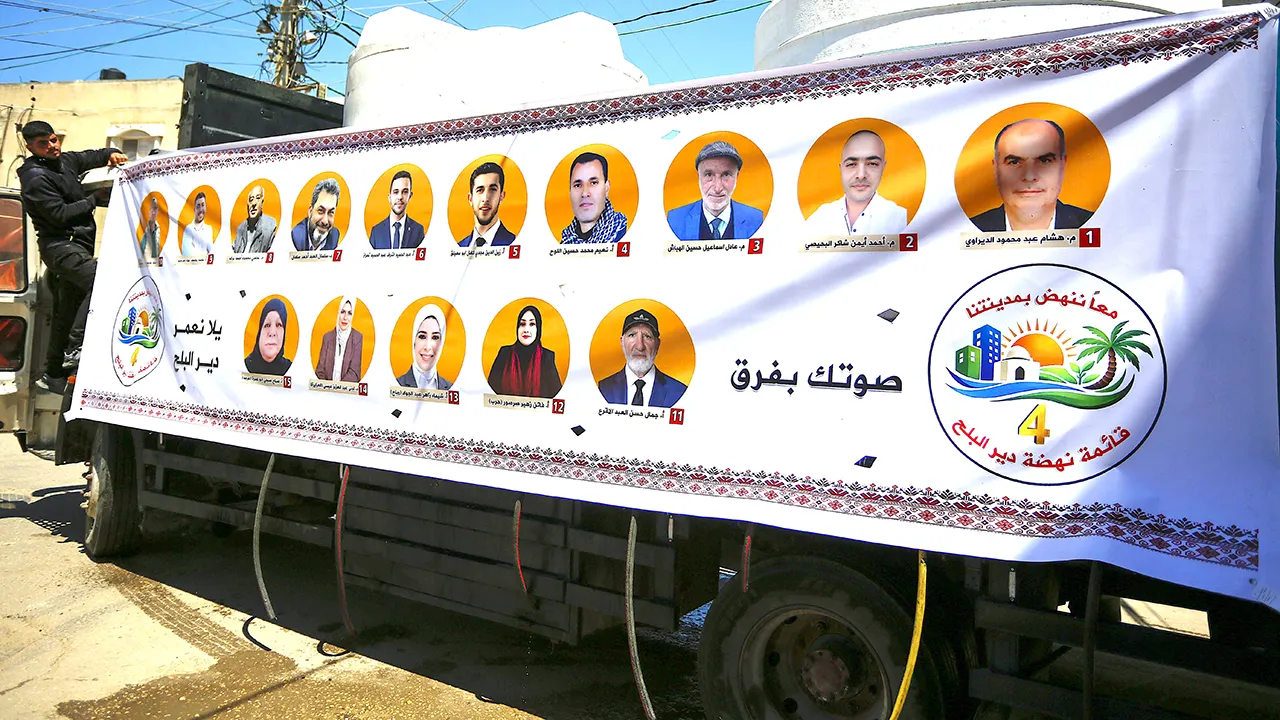
Four political parties are competing in the Deir al-Balah election. To qualify, candidates were required to accept the Palestine Liberation Organization and its previous agreements, including recognition of Israel and endorsement of a two-state solution. However, analysts have expressed concern that one party, “Deir al-Balah Unites Us,” appears to have Hamas affiliations, with two candidates allegedly photographed alongside Hamas officials or police officers.
Ahmed Fouad Alkhatib, a resident senior fellow at the Atlantic Council, described the election timing as “extremely reckless and irresponsible” in a social media post. “Gazans are being arrested, jailed, tortured, shot, and killed daily for social media posts and anything they say that’s perceived as being critical of Hamas,” he wrote, arguing that the elections could interfere with planned transition processes that require Hamas to first disarm and relinquish power.
The disarmament of Hamas remains a central component of President Donald Trump’s ceasefire agreement. The New York Times reported that Hamas officials have offered to surrender “thousands of weapons” from their police force and security institutions, but were unclear whether this would include weapons from their military wing, known as the Qassam Brigades.
Schanzer dismissed claims that Hamas maintains separate political and military operations. “That is a fiction. The idea that they are separate in any way or that there is a firewall between them is asinine,” he said. “It’s a distinction that has been made up by the West in order to be able to have political relations with Hamas, or to justify elections.”
The expert suggested that any disarmament offer from Hamas would likely involve strategic distinctions between weapon types. They might offer to surrender heavy weapons like RPGs while maintaining a substantial arsenal of automatic weapons, allowing them to preserve military capabilities.
Another complicating factor in Gaza is the challenge of distinguishing between civilians and terrorist affiliates. Reports continue to emerge of Gazan journalists and media personnel being posthumously identified as members of terrorist groups, highlighting the complex nature of establishing transparent governance in the territory.
Schanzer proposed that weakening Iran, Hamas’ primary international supporter, could be instrumental in diminishing the militant group’s influence. “The psychological impact of their top patron being defeated on the battlefield, I can’t overstate how important that event could be,” he explained. “It would be a gut punch to Hamas.”
Despite these concerns, election campaigning has been underway in Deir al-Balah since early April, with citizens closely following developments. Campaign posters are visible throughout the city as residents prepare for this significant political event.
The Trump administration has not publicly responded to questions about whether partial disarmament would satisfy its ceasefire terms, nor whether it plans to intervene to delay the elections until Gaza achieves greater stability.
As Israel continues military operations aimed at degrading Hamas capabilities, Schanzer noted that patience remains essential. “We could continue to see the erosion of Hamas control” through the “slow and steady process of Israel winning on the ground,” he said, while cautioning that “the enemies of the United States and Israel and the West have a very different timeline. They want to wait out everybody because they know that we’d like to move on.”
Fact Checker
Verify the accuracy of this article using The Disinformation Commission analysis and real-time sources.

17 Comments
This is a delicate situation that requires careful navigation. While local elections could empower residents, the risk of Hamas consolidating power is concerning. Ensuring a fair and transparent process will be essential.
You make a good point. Balancing the need for political representation with the threat of extremist influence is a difficult challenge. Ongoing international engagement and support will be crucial.
This is a complex situation with potential for both positive and negative outcomes. Local elections could empower residents, but Hamas’ continued control raises red flags. Careful management and international oversight will be critical.
You raise a good point. Ensuring a fair and inclusive process, despite Hamas’ involvement, will be crucial for the long-term stability and development of Gaza.
The threat of Hamas’ influence looms large over the upcoming local elections in Gaza. Achieving a peaceful and democratic transition will require careful negotiation and a firm commitment to the rule of law.
You’re right, the stakes are high. Maintaining stability and ensuring the integrity of the electoral process will be crucial for the future of Gaza and its people.
Interesting developments in Gaza. Holding elections amidst tensions with Hamas could be risky, but may also provide an opportunity for greater political representation. It will be important to monitor the process closely for fairness and transparency.
Agreed, the potential for backlash and unrest is concerning. A peaceful, democratic transition would be ideal, but the influence of Hamas makes that challenging.
This is a concerning development, as Hamas’ continued influence in Gaza could undermine the integrity of the local elections. Ensuring a fair process and preventing further conflict will require a nuanced and diplomatic approach.
Agreed. The international community must remain engaged and apply pressure to all parties to uphold democratic principles and protect the rights of the Gazan people.
Holding local elections in Gaza is a significant step, but the threat of Hamas’ influence looms large. Disarmament and a genuine commitment to democratic principles will be necessary to ensure the integrity of the vote.
Absolutely. The international community should closely monitor the situation and apply pressure to all parties to uphold democratic norms and avoid further conflict.
The prospect of local elections in Gaza is intriguing, but the threat of Hamas’ influence is deeply concerning. Balancing the need for political representation with the imperative of security and stability will be a significant challenge.
Absolutely. Careful diplomacy and international oversight will be crucial to navigating this delicate situation and promoting the best interests of the Gazan people.
This is a complex and potentially volatile situation. While local elections could empower residents, the continued influence of Hamas raises serious concerns about the integrity of the process. Ongoing international engagement and pressure will be essential.
Holding local elections in Gaza amid the ongoing tensions with Hamas is a risky but potentially important step. Ensuring a fair and transparent process will be essential to avoid further conflict and empower local residents.
The upcoming local elections in Gaza are a complex and potentially volatile issue. Maintaining stability and democratic integrity in the face of Hamas’ influence will be a significant challenge for all involved.