


Listen to the article
Guinea-Bissau Military Appoints Prime Minister Following Disputed Election Power Grab
Soldiers in Guinea-Bissau appointed finance minister Ilídio Vieira Té as prime minister on Friday, following a military takeover that has plunged the West African nation into fresh political turmoil just days after a contested national election.
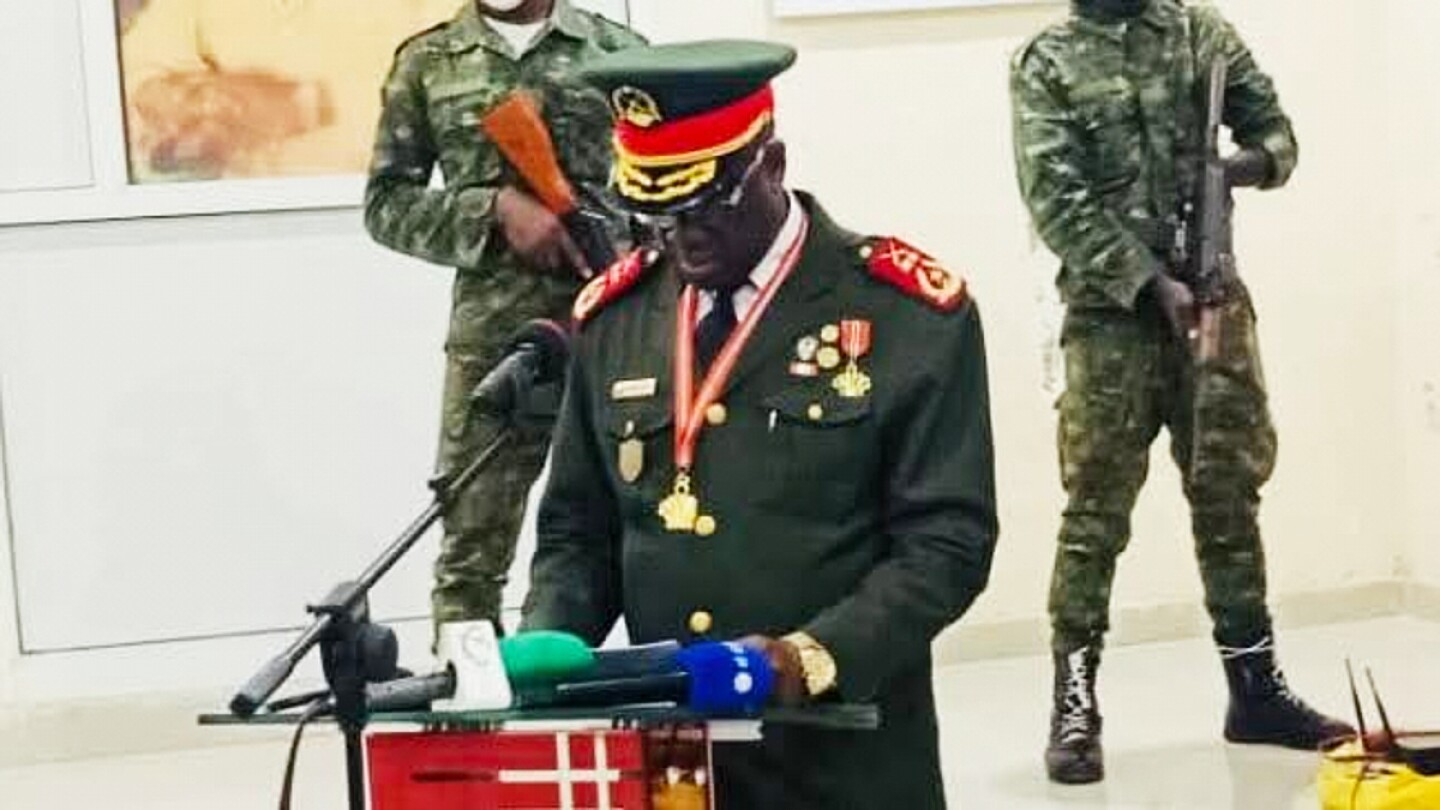
Vieira Té, a close ally of deposed President Umaro Sissoco Embaló and former campaign director for the president’s party, was named to the position by General Horta Inta-a, who has emerged as the country’s new military leader.
The appointment comes amid conflicting narratives about the nature of the power seizure that began Wednesday. President Embaló told French media via telephone that he had been deposed and arrested by military forces. However, opposition figures have alleged the president “fabricated” the coup to avoid acknowledging defeat in Sunday’s legislative elections.
Former Nigerian President Goodluck Jonathan, who was in Guinea-Bissau as head of the West African Elders Forum observer mission, cast doubt on the authenticity of the military intervention. “A military doesn’t take over governments and allow the sitting president that they overthrew to address press conferences and announce that he has been arrested,” Jonathan told reporters on Friday, describing the situation as a “ceremonial coup” designed to keep Embaló in power.
Fernando Dias, Embaló’s political rival, has claimed the military takeover was orchestrated to disrupt election results, with both men asserting victory in the vote.
By Friday, signs of normalcy were returning to the capital Bissau as military authorities lifted a previously imposed curfew and removed army checkpoints. Markets, banks, and the stock exchange have reopened, with residents and vehicles now freely moving throughout the city.
Meanwhile, President Embaló has fled to neighboring Senegal, arriving Thursday on a flight chartered by the Senegalese government. Senegal’s Ministry of Foreign Affairs stated it remains “in direct communication with all concerned Guinea-Bissau actors” and pledged to work with partners to restore democratic governance.
Senegalese Prime Minister Ousmane Sonko reinforced this position on Friday, describing the events in Guinea-Bissau as a “scheme” and calling for the release of arrested opposition members. “The democratic process must be carried through to the end and the results announced,” Sonko said during a parliamentary session.
The Economic Community of West African States (ECOWAS) responded to the crisis Thursday by suspending Guinea-Bissau from its decision-making bodies “until the restoration of full and effective constitutional order.” The 15-nation regional bloc also warned it “reserves the right to use all options” under its rules, including targeted sanctions.
ECOWAS announced plans to send a high-level mediation team to Bissau, led by the body’s chair and including the presidents of Togo, Cabo Verde, and Senegal, to engage with coup leaders and push for restoration of constitutional order.
The regional organization faces significant challenges in its response, having recently seen three member states—Mali, Niger, and Burkina Faso—withdraw from the bloc following sanctions and intervention threats after military takeovers in those countries.
Bakary Sambe, director of the Senegal-based Timbuktu Institute for Peace Studies, described the situation as one of “total uncertainty” caught between “an unfinished electoral process and a disruption of constitutional order.” He suggested ECOWAS appears to be proceeding more cautiously than in previous interventions, having “learned from the mistakes made in Niger.”
Guinea-Bissau, home to 2.2 million people and among the world’s poorest nations, has experienced chronic political instability since gaining independence from Portugal more than five decades ago. The country has weathered numerous coups and attempted coups, including a failed power grab as recently as October.
Experts note that Guinea-Bissau’s position as a transit hub for drug trafficking between Latin America and Europe has exacerbated its political instability, with narcotics money fueling cycles of corruption and violence that undermine democratic institutions and development efforts in the resource-rich but economically struggling nation.
Fact Checker
Verify the accuracy of this article using The Disinformation Commission analysis and real-time sources.

9 Comments
This is a complex and fluid situation in Guinea-Bissau. The military’s actions raise serious questions about the transition of power and respect for democratic processes. I hope the international community can help facilitate a resolution that restores stability and the rule of law.
The appointment of Vieira Té as prime minister by the military raises questions about the legitimacy of the power transition. It’s important that all stakeholders engage in dialogue to find a peaceful resolution that upholds democratic principles.
Agreed. The conflicting narratives highlight the need for an impartial investigation to determine the facts and way forward. A return to constitutional order should be the priority.
This is a concerning development in Guinea-Bissau. It seems the military has intervened to appoint an ally of the deposed president as prime minister, despite conflicting narratives around the nature of the power grab. I hope the situation can be resolved peacefully and with respect for democratic institutions.
You raise a good point. The military’s actions appear to undermine the contested election results. Maintaining stability and the rule of law will be crucial going forward.
The military’s actions in Guinea-Bissau raise serious questions about the integrity of the democratic process. I hope the international community can help facilitate dialogue and a return to constitutional order in the country.
The military’s intervention and installation of a close ally of the deposed president as prime minister is a worrying sign for Guinea-Bissau’s democracy. It’s crucial that all parties engage in dialogue to find a peaceful solution that upholds the will of the people.
This is a complex situation that requires careful navigation. The military’s intervention and installation of a close ally of the deposed president is concerning. Transparent and inclusive political processes are crucial for Guinea-Bissau to move forward.
This is a troubling development that undermines the democratic will of the Guinean people. The military’s appointment of a pro-deposed president figure as prime minister is deeply concerning. I hope a peaceful resolution can be found that respects the rule of law.