


Listen to the article
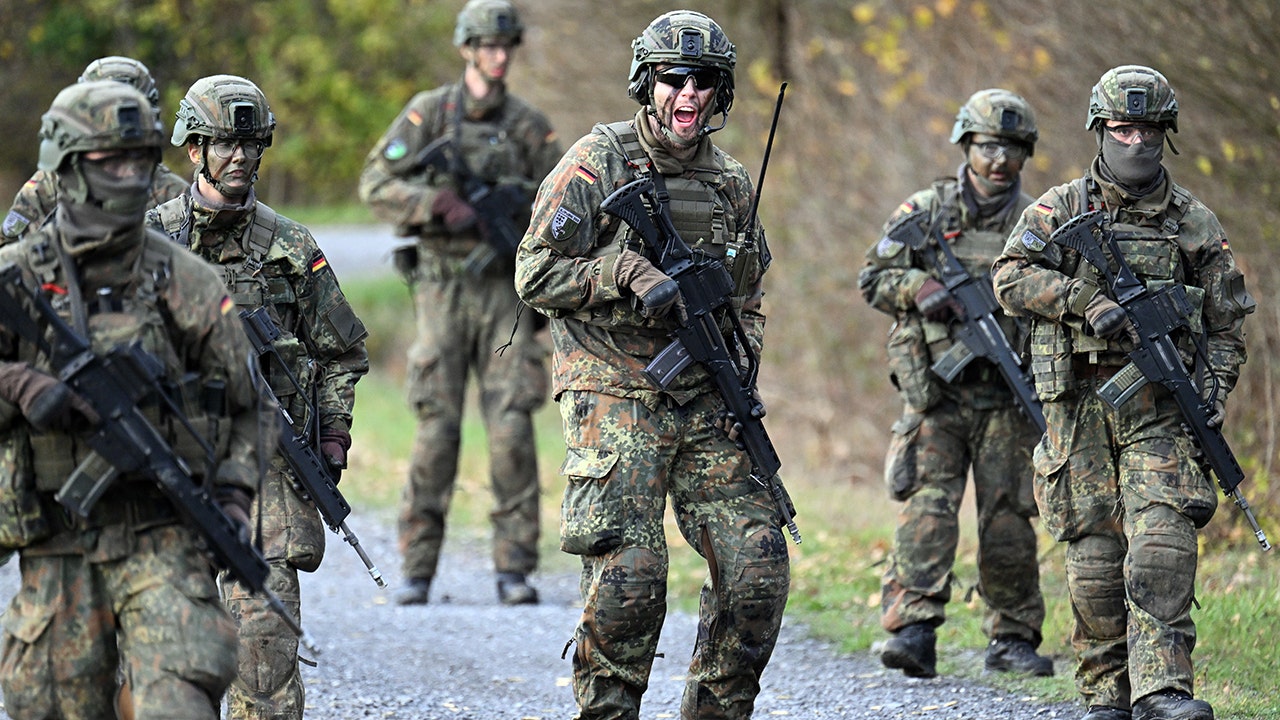
President Trump’s efforts to pressure European nations, particularly Germany, to increase defense spending are showing tangible results as Germany’s coalition government implements new military recruitment incentives amid growing concerns about Russian aggression.
The Christian Democratic Union/Christian Social Union and the Social Democrats have reached an agreement on a voluntary military service program featuring significant incentives to boost recruitment. These include free access to driving licenses—which can cost several thousand dollars—and increased starting salaries of approximately $3,000 per month before taxes.
German Chancellor Friedrich Merz has set an ambitious goal of transforming Germany’s armed forces into “Europe’s strongest conventional army,” according to Jens Spahn, the parliamentary leader of Merz’s CDU party. “We want to win over as many young people as possible for the service for the fatherland,” Spahn told reporters on Thursday.
The CDU leader also indicated that if voluntary recruitment falls short, compulsory service could be on the horizon. “If the voluntary model does not secure sufficient military soldiers and personnel, we’ll need to make it obligatory,” Spahn said, though he acknowledged such a move would require new legislation.
This shift in Germany’s defense posture represents a significant departure from decades of minimal military investment following World War II. Since his first term, President Trump has consistently criticized NATO allies, particularly Germany as Europe’s economic powerhouse, for not meeting their defense spending commitments while relying on American protection.
David Wurmser, a former intelligence officer with the U.S. Navy Reserve and senior advisor to Vice President Dick Cheney, sees this development as part of a broader awakening. “Europe is finally beginning to contemplate defense in a more serious way,” Wurmser told Fox News Digital.
“While it has never been its official policy, over the last few decades, Europeans took for granted the American umbrella and the inconceivability of war to both largely minimize any defense burden they share, as well as placed themselves as some sort of moral conscience lording over the world that ranged into pacifism and impossible moral perfection,” he added.
The timing of Germany’s military reinforcement comes amid heightened tensions with Russia following its 2022 invasion of Ukraine. This conflict has fundamentally altered Europe’s security landscape and forced a reassessment of defense priorities across the continent.
Wurmser points to a significant geopolitical shift, noting that “the center of gravity of European civilization is shifting eastward.” He finds it telling that Germany, rather than traditional military powers like Britain and France, is taking the lead in addressing these new security challenges.
The former Cheney advisor frames these developments within a broader global context, suggesting that Russia’s actions in Ukraine and ongoing conflicts in the Middle East represent “only localized versions of a much larger, dangerous, and potentially deadly global competition that is led by several nations in opposition to western civilization.”
During Trump’s first administration, he repeatedly pressured Germany to increase its NATO contributions and pay more for the U.S. military presence that has helped guarantee German security since the end of World War II. Those efforts appear to be bearing fruit as Germany now takes concrete steps to rebuild its military capabilities in the face of evolving threats.
While Germany’s new recruitment incentives represent a significant step, they are just the beginning of what security experts view as a necessary rearmament process for a country that has maintained relatively modest defense capabilities for decades despite being Europe’s largest economy.
Fact Checker
Verify the accuracy of this article using The Disinformation Commission analysis and real-time sources.

7 Comments
The free driver’s licenses and high starting salaries are certainly eye-catching recruitment incentives from Germany. I wonder if this signals a broader shift in attitudes towards military service, or if it’s more a pragmatic response to current threats.
As Germany looks to become a military powerhouse in Europe, I’m curious to see how this affects the regional geopolitical landscape. Will other nations follow suit, or will Germany’s moves create imbalances that need to be addressed?
That’s a good point. Germany’s actions could spur a wider shift in European defense postures. It will be important to monitor the ripple effects and how it impacts the regional security environment.
Germany’s plan to transform its military into Europe’s strongest conventional army is ambitious. Free driver’s licenses and high starting salaries could certainly help with recruitment, but I’m curious to see how the voluntary program plays out.
Agreed. Voluntary recruitment can be tricky, so the option of compulsory service is noteworthy. It will be interesting to monitor Germany’s progress in meeting their recruitment goals.
The growing Russian threat is no doubt a major driver behind Germany’s military recruitment push. Offering such incentives shows they’re taking this seriously and want to build up their forces. I wonder how this will impact defense spending and capabilities across Europe.
Interesting move by Germany to boost military recruitment. With tensions rising, strengthening their armed forces makes sense, though the incentives seem quite generous. I wonder how effective they’ll be in attracting new recruits.