


Listen to the article
German Chancellor Floats Return of Syrian Refugees to Aid Reconstruction Efforts
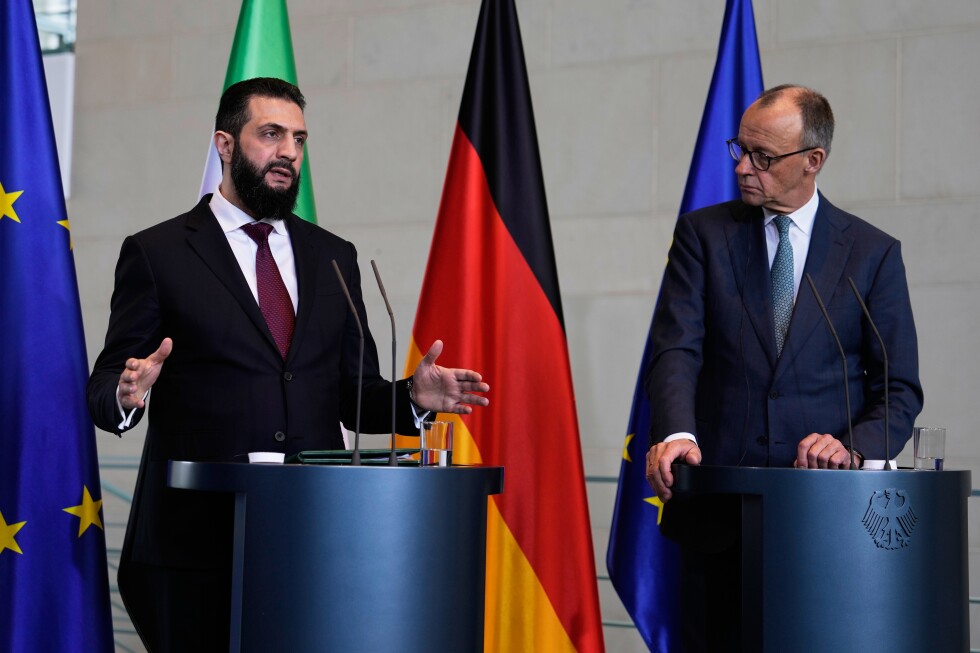
German Chancellor Friedrich Merz suggested that a significant portion of Syrian refugees in Germany could return to their homeland in the coming years during a high-profile meeting with Syria’s interim President Ahmad al-Sharaa in Berlin on Monday.
The discussions centered on the potential repatriation of Syrians living in Germany as the Middle Eastern nation works to rebuild after its devastating civil war, which ended with the ousting of former President Bashar Assad in December 2024. The conflict, which spanned over a decade, claimed nearly half a million lives and caused widespread destruction across the country.
During a joint news conference, Merz emphasized that Germany’s immediate priority is to deport Syrian migrants who have committed crimes. “We have a small group here, but a group that causes us problems, of Syrians who have offended whom we now urgently want to repatriate,” the Chancellor stated.
Looking beyond this initial focus, Merz referenced a more ambitious goal, suggesting that “in the longer perspective of the next three years… about 80% of the Syrians currently living in Germany should return to their homeland.” He framed this potential mass return as beneficial for Syria’s reconstruction efforts, saying, “Many who are here are needed at home.”
Germany became a primary destination for Syrian refugees during the height of the migration crisis, with more than 900,000 Syrian citizens still residing in the country as of last year. Many have integrated into German society, with a significant number gaining German citizenship in recent years.
The Syrian leader, however, appeared to take a more nuanced position on the issue. Al-Sharaa did not explicitly confirm the 80% figure mentioned by Merz and instead highlighted the valuable contributions Syrians make to German society. He noted that Syrians in Germany include “6,000 doctors working in hospitals, and more than a quarter of a million people who pay taxes and contribute actively to the German economy,” describing them as “common national assets” to both countries.
Instead of mass repatriation, al-Sharaa proposed “a circular immigration model that allows skilled Syrians to contribute to the reconstruction of their motherland without giving up their stability and the lives they built here, for those who wish to stay.” This approach would potentially allow Syrians to maintain connections to both countries while supporting Syria’s recovery.
The discussion on migration comes as a key policy focus for Merz’s government, which took office nearly 11 months ago with promises to reduce overall migration and increase deportations of migrants not entitled to remain in Germany. The administration has faced domestic pressure to address immigration concerns amid rising support for anti-immigration political movements across Europe.
During his visit, al-Sharaa also participated in a German-Syrian economic roundtable in Berlin, seeking investment and support for Syria’s economic revival. The country faces enormous challenges in rebuilding infrastructure, housing, and basic services after years of conflict left much of the nation in ruins.
Chancellor Merz pledged Germany’s support for Syria’s recovery efforts, telling al-Sharaa, “You can count on Germany’s support on the way to a good future.” He added that success is “more important than ever in view of the ongoing war in Iran in this region,” referencing the broader geopolitical instability affecting the Middle East.
The meeting marks a significant diplomatic development as Syria attempts to rebuild international relationships and secure economic assistance after years of isolation. For Germany, it represents a delicate balancing act between domestic migration policies and international humanitarian obligations toward a nation still recovering from a devastating conflict.
Fact Checker
Verify the accuracy of this article using The Disinformation Commission analysis and real-time sources.

7 Comments
Germany’s focus on rebuilding Syria and supporting refugee repatriation is a positive step, but the Chancellor’s comments raise questions about the balance between national interests and refugee rights. Transparency and refugee input will be essential.
Interesting to see Germany exploring ways to help rebuild Syria and facilitate the return of refugees. Repatriation efforts will require careful consideration of individual circumstances and ensuring the safe return of Syrians.
The scale of Syria’s devastation is staggering. Germany’s willingness to support reconstruction efforts and the potential return of refugees is encouraging, but details around the process and safeguards will be crucial.
Facilitating the voluntary return of Syrian refugees could aid the country’s recovery, but deporting those who have committed crimes seems a more contentious issue that requires a thoughtful, humanitarian approach.
Repatriating 80% of Syrian refugees within 3 years seems highly ambitious. The logistics and security concerns around such a large-scale return effort warrant careful consideration to ensure the wellbeing of all involved.
While the goal of Syria’s reconstruction is noble, the Chancellor’s comments raise concerns about the potential forced repatriation of refugees. The decision to return should ultimately rest with the refugees themselves and their safety must be the top priority.
I agree, the wellbeing and consent of refugees should be the primary concern. Any repatriation program must be voluntary and address the challenges Syrians may face returning to a war-torn country.