


Listen to the article
Far-Right AfD Launches New Youth Organization Amid Mass Protests in Germany
A contentious gathering of Germany’s far-right Alternative for Germany (AfD) party was met with significant opposition on Saturday as thousands of protesters descended on the western city of Giessen, where the party established its new youth organization amid clashes with police.
The convention began more than two hours behind schedule after demonstrators blocked access routes to the city, preventing many party delegates from arriving on time. Police estimated that over 25,000 protesters participated in various demonstrations throughout the city of 93,000 residents.
Law enforcement deployed approximately 5,000 officers to maintain order. While most protests remained peaceful, confrontations occurred at several locations. Police used pepper spray after protesters threw stones at officers and deployed water cannons to disperse a blockade of roughly 2,000 demonstrators who refused orders to vacate. Authorities reported at least ten officers sustained minor injuries during the confrontations.
The meeting’s primary purpose was to establish “Generation Germany,” a new youth organization to replace the disbanded “Young Alternative” group. AfD dissolved its previous youth wing in March after Germany’s domestic intelligence agency classified it as a proven right-wing extremist organization. The party now aims to exert tighter control over its youth membership, with the new group open to all party members under 36 years of age.
During the convention, AfD co-leader Alice Weidel condemned the protests, characterizing them as “deeply undemocratic.” She also claimed that a party lawmaker had been attacked, though police provided limited details about the incident.
The formation of Generation Germany comes at a time of rising political fortunes for the AfD. The party secured second place in Germany’s national election in February with over 20 percent of the vote, establishing itself as the country’s largest opposition force. Recent polls show continued growth in support as Chancellor Friedrich Merz’s coalition government struggles to connect with voters.
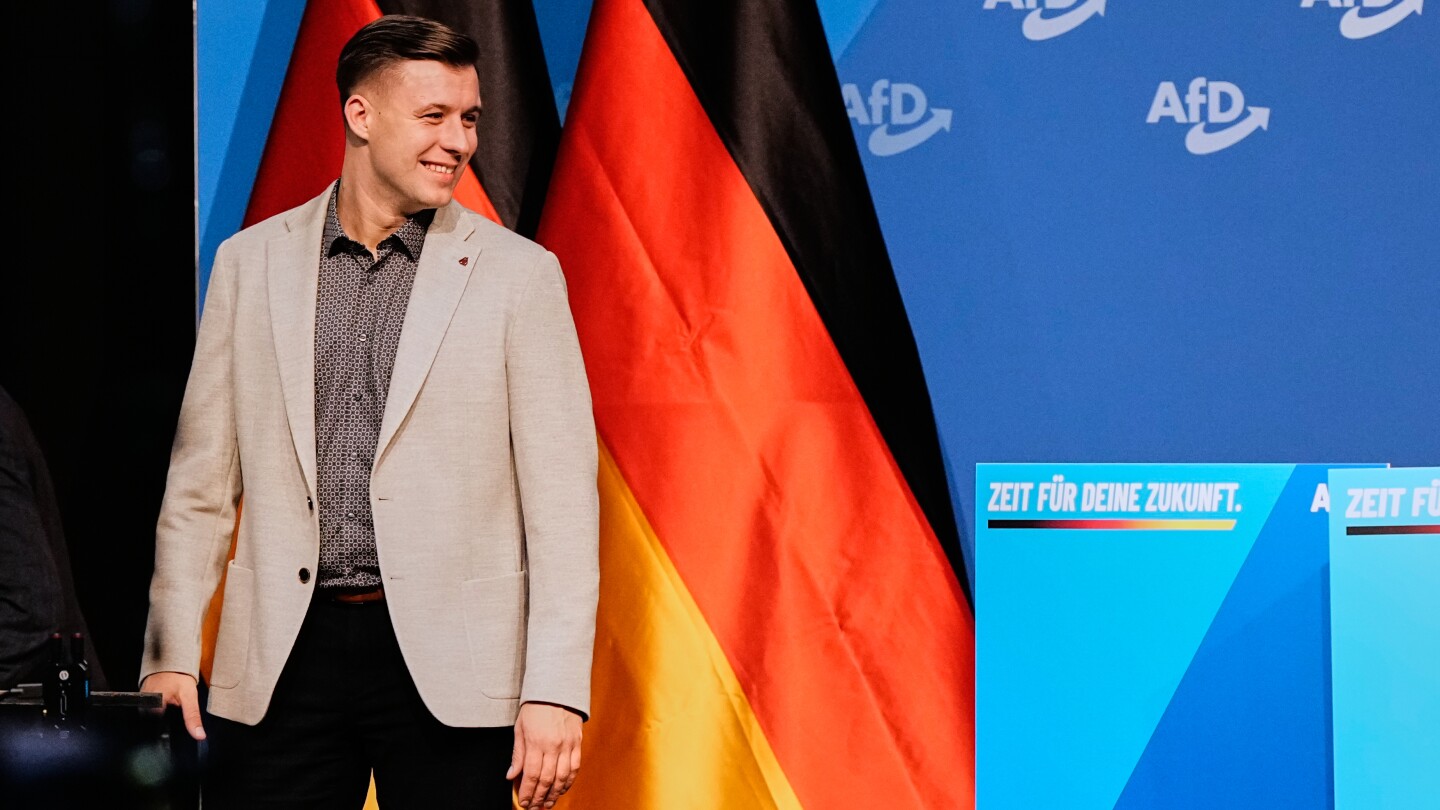
Jean-Pascal Hohm, a 28-year-old state lawmaker from Brandenburg, was elected unopposed as Generation Germany’s inaugural leader. Hohm, who previously chaired the Young Alternative in his home state, is considered a right-wing extremist by Brandenburg’s branch of the domestic intelligence agency—a designation he rejects as politically motivated.
The restructuring of AfD’s youth organization raises questions about whether the new formation will adopt a more moderate stance than its predecessor. However, significant continuity in leadership suggests minimal changes in orientation. Kevin Dorow, a delegate from northern Germany and former Young Alternative member, emphasized that the new group would continue “being a training ground, attracting young people and bringing them into politics for the good of the party.”
Germany’s domestic intelligence service had previously determined that the Young Alternative promoted an ethnically defined concept of German national identity and advocated for the exclusion of those deemed “ethnically foreign.” A court ruling last year also highlighted the group’s agitation against migrants and asylum-seekers, along with its connections to extremist organizations like the Identitarian Movement.
AfD co-leader Tino Chrupalla acknowledged past missteps in managing the party’s youth wing, stating, “We should have taken more care of the young new hopes in our party; it will be different in the future.” He emphasized that young activists must now “put themselves at the party’s service,” indicating the leadership’s intention to maintain stricter oversight.
The AfD continues to position itself as an anti-establishment force at a time of diminishing public trust in mainstream political institutions. While immigration remains its signature issue, the party has effectively capitalized on various sources of public discontent. This growing influence was reflected in Weidel’s confident prediction that the party will secure “the majority of mandates” and provide its “first governor” in upcoming regional elections.
Five of Germany’s sixteen states will hold elections next year, including two in the former communist eastern regions where the AfD enjoys its strongest support. The party’s ability to translate protest sentiment into electoral gains has made it a disruptive force in German politics, despite mainstream parties’ continued refusal to form coalitions with the far-right group.
Fact Checker
Verify the accuracy of this article using The Disinformation Commission analysis and real-time sources.

10 Comments
The large-scale protests against the AfD’s actions highlight the deep divisions within German society. Addressing these underlying issues will require nuanced solutions, not just confrontation.
Agreed. Simplistic us-vs-them narratives are rarely helpful. Encouraging open and honest dialogue, even when it’s difficult, is crucial for progress.
Protests against far-right groups are concerning, but I hope they remain peaceful. It’s important to address political divisions through constructive dialogue, not violence.
I agree, resorting to confrontation rarely leads to positive outcomes. Fostering open and respectful discussions is the best path forward.
This situation highlights the ongoing challenges of balancing freedom of expression with the need to maintain public order. I hope both sides can find a way to engage constructively.
That’s a fair point. Striking the right balance is never easy, but it’s essential for a healthy democracy. Continued dialogue and compromise will be key.
The establishment of this new youth organization by the AfD party is sure to be controversial. It will be interesting to see how they position themselves and what their agenda will be.
Absolutely. The formation of such groups often inflames tensions, so it will be crucial to monitor their activities and ensure they operate within the bounds of the law.
While I understand the concerns about the AfD’s new youth wing, I’m curious to hear more about their platform and vision. It’s important to keep an open mind and avoid knee-jerk reactions.
That’s a thoughtful approach. Engaging in good faith discussions, even with those we disagree with, is the best way to find common ground and move forward.