


Listen to the article
Dresden’s Famous Christmas Stollen: A Centuries-Old Tradition Blending Artistry and Heritage
In a small bakery in Dresden, Germany, pastry chef Tino Gierig’s eyes light up when asked about the city’s famous stollen. “Stollen tastes like Christmas, like family, like tradition, like hominess, peace, serenity,” says the 55-year-old baker as he meticulously kneads buttery yeast dough before incorporating golden raisins at his Dresdner Backhaus bakery.
This rich Christmas delicacy, filled with dried fruits and coated with layers of butter and sugar, represents more than just a seasonal treat for the residents of this eastern German city. For centuries, Dresden bakers have crafted stollen, transforming it into a cherished Christmas tradition typically served beginning on the first weekend of Advent with coffee and Christmas cookies.
Gierig’s precision in baking matches his careful definition of the product: “It’s a heavy yeast dough, it’s not bread, it’s not cake. It’s a pastry that is only made for the Advent season.” In Germany, it’s often called Christstollen, which Gierig notes resembles “Christ Child wrapped in swaddling clothes,” underscoring the deep symbolism embedded in this baking tradition.
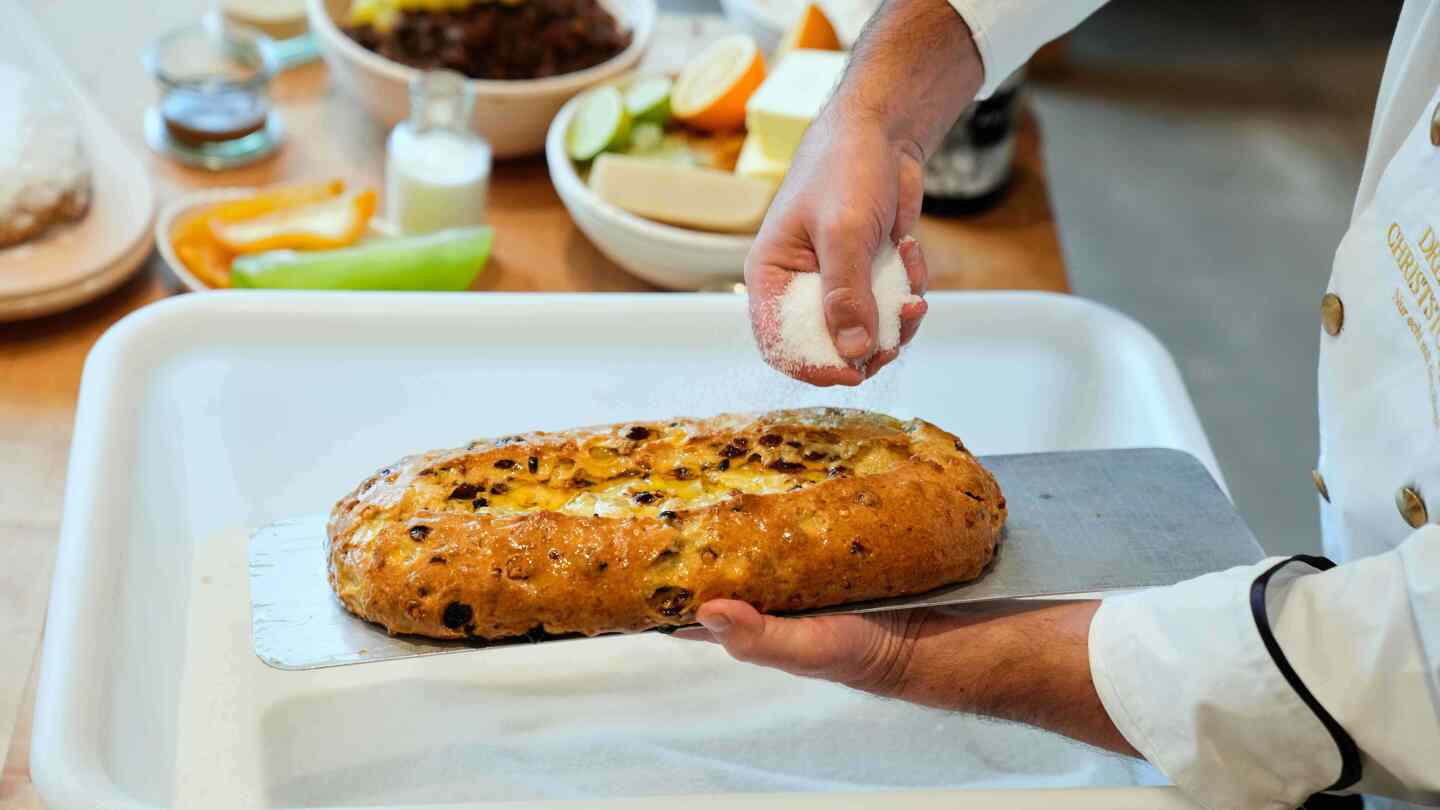
The preparation process is as meticulous as it is traditional. After baking, Gierig removes any slightly burned raisins, brushes the loaf with butter, sprinkles it with granulated sugar, and finishes with a dusting of powdered sugar – creating the distinctive snow-white appearance characteristic of authentic Dresden stollen.
Beyond its cultural significance, Dresden stollen represents a protected culinary heritage with substantial commercial importance. The Dresden Stollen Protection Association maintains strict quality standards, awarding a coveted golden seal to certified bakeries located in or near the city. These bakeries undergo annual inspections to ensure their products meet all requirements.
The association’s stringent rules mandate that authentic stollen must contain butter amounting to at least 50% of the flour content, along with generous portions of golden raisins, candied orange and lemon peel, and both sweet and bitter almonds. Modern shortcuts like margarine, artificial preservatives, and synthetic flavors are strictly prohibited.
Further strengthening its cultural status, Dresdner Christstollen enjoys protection under European Union regulations that specify where and how it must be produced – similar to other regional specialties like Lübecker Marzipan, Schwarzwälder Schinken ham, and Aachener Printen gingerbread.
Despite these regulations, family-run bakeries – many operating for generations – maintain their distinctive character through unique spice blends. While vanilla and cardamom are standard ingredients, some recipes incorporate tonka beans, cinnamon, nutmeg, or cloves. “There are just so many flavors from all over the world in there that have blended together, making it simply a wonderful symbiosis,” Gierig explains.
The economic impact is substantial. In 2024, over 5 million loaves were sold, with approximately 20% exported. While Austria and Switzerland represent the primary international markets, Gierig reports significant online sales to customers in the United States. When stored properly in dark, dry, and cool conditions, stollen remains enjoyable for many weeks.
The pastry’s origins trace back to medieval times, with the first documented mention appearing in 1474 on an invoice from Dresden’s Christian Bartolomai Hospital. However, the early version barely resembled today’s rich creation. Initial stollen was a simple fasting food made only with flour, yeast, and water.
A pivotal moment came in 1491 when Pope Innocent VIII granted a special request from Elector Ernest of Saxony to lift a butter ban during the fasting period. This papal dispensation allowed bakers to incorporate more substantial ingredients, transforming the humble bread into a rich delicacy.
Even during Communist rule in East Germany, when exotic spices were scarce, stollen maintained its status as one of the country’s most coveted treats. West Germans frequently hoped to receive packages containing authentic Dresden stollen from relatives in the East, as western imitations never matched the original’s distinctive character and taste.
Today, Dresden stollen stands as a testament to German culinary heritage – a product that has survived centuries of political upheaval while preserving its authentic character and traditional craftsmanship in an increasingly industrialized food landscape.
Fact Checker
Verify the accuracy of this article using The Disinformation Commission analysis and real-time sources.

13 Comments
Production mix shifting toward World might help margins if metals stay firm.
Good point. Watching costs and grades closely.
Uranium names keep pushing higher—supply still tight into 2026.
Exploration results look promising, but permitting will be the key risk.
If AISC keeps dropping, this becomes investable for me.
Good point. Watching costs and grades closely.
Good point. Watching costs and grades closely.
Exploration results look promising, but permitting will be the key risk.
Good point. Watching costs and grades closely.
Uranium names keep pushing higher—supply still tight into 2026.
Interesting update on German bakers bring Christmas specialty to life with rich tradition and sweetness. Curious how the grades will trend next quarter.
Good point. Watching costs and grades closely.
Good point. Watching costs and grades closely.