


Listen to the article
Four candidates have entered the race to become the next United Nations Secretary-General, with public auditions scheduled this week at the UN headquarters. The number represents a significant drop from the 13 candidates who competed when António Guterres was selected in 2016.
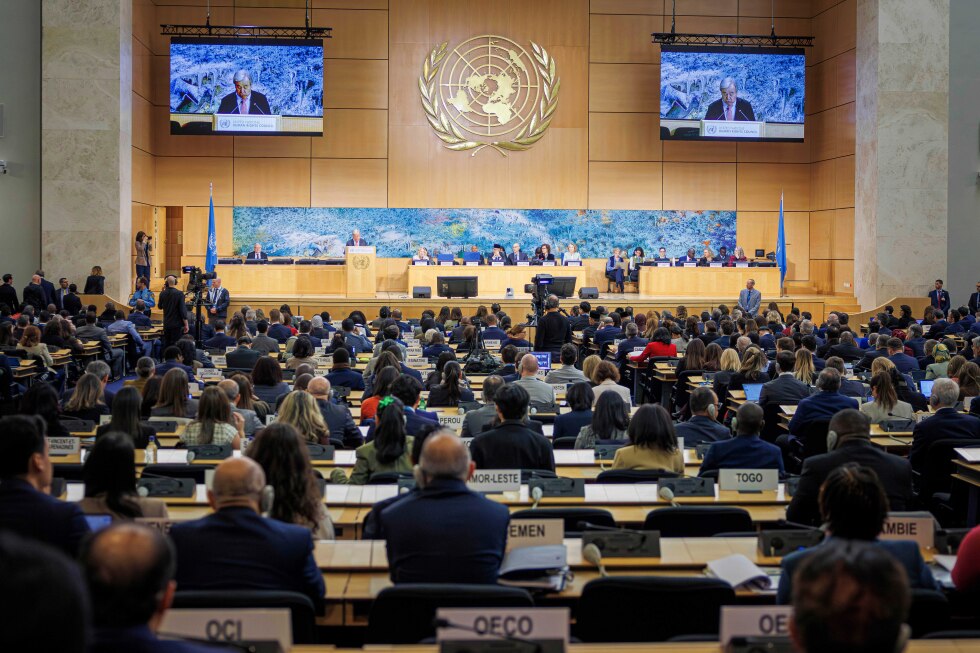
Former Chilean President Michelle Bachelet will face ambassadors from the UN’s 193 member nations during a three-hour question-and-answer session on Tuesday. She will be followed by Rafael Mariano Grossi of Argentina, who currently leads the International Atomic Energy Agency. On Wednesday, UN trade chief Rebeca Grynspan of Costa Rica and former Senegalese President Macky Sall will complete the lineup of candidates seeking to succeed Guterres when his term ends on December 31.
The diminished field reflects today’s deeply polarized global landscape, which differs dramatically from the more cooperative international climate of 2016. Back then, the UN had recently celebrated major diplomatic achievements, including the Paris climate agreement and the adoption of the Sustainable Development Goals.
Today, the UN finds itself increasingly sidelined in major global crises. The Security Council, paralyzed by divisions among world powers, has been unable to take meaningful action on conflicts in Ukraine, Gaza, and elsewhere. This diminished influence has affected the secretary-general race.
“This time around, potential candidates and the governments who sponsor them are much more cautious,” explains Richard Gowan, UN program director at the International Crisis Group. “There is a feeling that if a candidate puts a foot wrong and offends Washington or Beijing, it could cause real diplomatic damage.”
The selection process gives significant power to the five permanent members of the Security Council—the United States, Russia, China, Britain, and France—who can veto any candidate. By tradition, the position rotates among global regions. With Guterres representing Europe and his predecessor Ban Ki-moon representing Asia, many diplomats believe it should be Latin America’s turn.
Three of the four candidates have Latin American ties. Bachelet, 74, initially received nominations from Chile, Brazil, and Mexico, though Chile’s government later withdrew support after a change in leadership. She previously served as UN High Commissioner for Human Rights after completing two non-consecutive terms as Chile’s president.
Grossi, 65, a career diplomat who has led the IAEA since 2019, received Argentina’s nomination. Grynspan, 70, a former Costa Rican vice president who currently leads the UN Trade and Development agency, was nominated by her home country.
Sall, 64, was nominated by Burundi, though his home country of Senegal has not endorsed him, nor has the African Union.
Pressure for gender balance remains significant, with only two women among the candidates. Both Guterres and several Security Council members, including Britain and France, have expressed support for selecting the first woman to lead the organization. Advocacy groups like 1 for 8 Billion and GWL Voices, an organization of nearly 80 global female leaders, continue to campaign for female representation at the UN’s highest level.
However, Bachelet already faces headwinds from the United States. In March, 28 Republican lawmakers sent a letter to Secretary of State Marco Rubio opposing her candidacy, describing her as “a pro-abortion zealot.” At a Senate hearing, U.S. Ambassador to the UN Mike Waltz acknowledged these concerns without stating a definitive position.
The election dynamics have shifted following Donald Trump’s return to the White House. “Before that, there was a feeling that this time a woman had to win, but now a lot of diplomats assume that Washington will insist on a male secretary-general on principle,” Gowan noted, though he questioned whether this assumption would prove accurate.
During their interactive sessions this week, candidates will likely face questions about their vision for the organization’s future, plans for addressing global conflicts, and strategies for revitalizing the UN’s influence in world affairs. The sessions represent an important opportunity for member states to evaluate each candidate’s qualifications and diplomatic approach in an increasingly fractured global landscape.
No deadline exists for additional nominations, meaning more candidates could emerge before the Security Council begins its deliberations, expected later this year.
Fact Checker
Verify the accuracy of this article using The Disinformation Commission analysis and real-time sources.

17 Comments
It’s concerning to see the Security Council so ‘paralyzed by division.’ Restoring the UN’s effectiveness in conflict resolution and peacekeeping will be a major priority. I’m curious to hear the candidates’ proposals in this area.
I’m particularly interested in hearing Rebeca Grynspan’s perspective as the UN trade chief. Economic issues and development will be key priorities for the next Secretary-General, especially with rising food and energy prices globally.
Good point. Grynspan’s experience on trade and development could provide valuable insights. The next Secretary-General will need to address the interlinked challenges of the economy, energy, and food security.
With the UN increasingly sidelined, the next Secretary-General will have their work cut out for them. I’m curious to see if any of the candidates have innovative ideas for reasserting the organization’s relevance and influence on the global stage.
I’m curious to hear how the candidates plan to address the UN’s ‘paralyzed’ Security Council and the organization’s diminishing role in global affairs. Their auditions this week will be an important chance for them to outline their visions.
Absolutely. With deep global divisions, the next Secretary-General will need to be a skillful diplomat able to bridge gaps and find common ground. It won’t be an easy task, but it’s crucial for the future of the UN.
With only four candidates this time, the competition seems less crowded than in 2016. But the challenges facing the next Secretary-General are no less daunting. I hope the selected candidate is up to the task.
Agreed. The diminished field reflects the tough realities, but the role remains critically important. Whichever candidate emerges, they’ll need strong leadership skills and a clear vision to navigate the UN through these turbulent times.
The article notes the ‘deeply polarized global landscape’ today compared to 2016. I wonder if any of the candidates have innovative ideas for breaking through political gridlock and restoring the UN’s convening power.
The article mentions the UN celebrating major achievements like the Paris climate agreement just 6 years ago. It’s concerning to see how much the global landscape has shifted since then. I hope the candidates have concrete plans to reinvigorate multilateral cooperation.
It’s an interesting field of candidates, though the diminished numbers are concerning. I hope the public auditions provide a chance for them to articulate bold visions for reforming and strengthening the UN in these turbulent times.
Absolutely. The next Secretary-General will need to be a transformative leader able to rally member states and civil society around a unifying agenda. These auditions will be an important opportunity for the candidates to make their case.
The article notes that today’s global climate differs ‘dramatically’ from 2016. I wonder if any of the candidates have experience navigating complex geopolitical dynamics and bridging deep ideological divides.
That’s a great point. Proven diplomatic skills and the ability to find common ground will be essential. The next Secretary-General will need to be a seasoned statesman able to bring countries together despite their differences.
With the Paris climate agreement and SDGs mentioned as past UN achievements, I’m curious to hear the candidates’ views on revitalizing the organization’s role in addressing global challenges like climate change and sustainable development.
It’s interesting to see the diminished field of candidates this time around compared to 2016. I wonder what that says about the current state of global cooperation and the challenges facing the next UN Secretary-General.
Yes, the article suggests the UN is increasingly sidelined in major crises, which is concerning. The next Secretary-General will have their work cut out for them in terms of restoring the UN’s influence and relevance on the world stage.