


Listen to the article
Former Honduran President Freed After Trump Pardon, Sparking Political Controversy
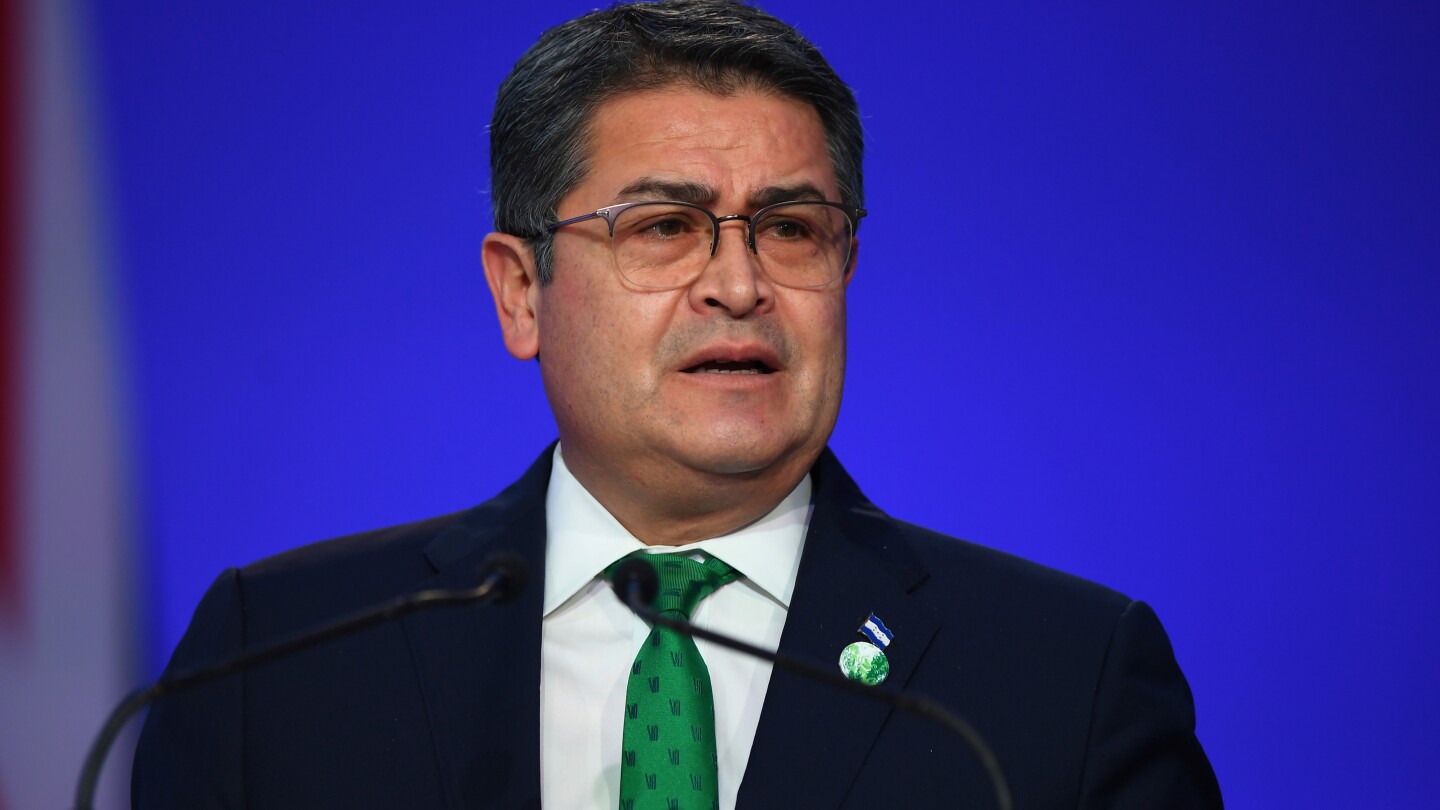
Former Honduras President Juan Orlando Hernández was released from a U.S. federal prison Monday following a surprise pardon from outgoing President Donald Trump, officials confirmed. Hernández had been serving a 45-year sentence for his role in a massive drug trafficking operation that moved approximately 400 tons of cocaine to the United States.
The U.S. Bureau of Prisons confirmed that Hernández was released from the U.S. Penitentiary in Hazelton, West Virginia. His inmate status was updated to “released” on the bureau’s website, ending his incarceration after less than a year of his lengthy sentence.
Hernández’s wife, Ana García, publicly thanked Trump on social media platform X. “After almost four years of pain, of waiting and difficult challenges, my husband Juan Orlando Hernández RETURNED to being a free man, thanks to the presidential pardon granted by President Donald Trump,” García wrote, attaching documentation of his release.
When questioned by reporters aboard Air Force One about his decision to pardon the disgraced former president, Trump claimed he was responding to appeals from Hondurans. “The people of Honduras really thought he was set up, and it was a terrible thing,” Trump stated. “They basically said he was a drug dealer because he was the president of the country. And they said it was a Biden administration set-up. And I looked at the facts and I agreed with them.”
Hernández’s attorney, Renato Stabile, declined to disclose his client’s current whereabouts but expressed gratitude to Trump “for correcting this injustice.” Stabile added that the former president is relieved the “ordeal” has concluded.
The pardon marks a stunning reversal for Hernández, who was arrested in February 2022 at the request of U.S. authorities, just weeks after current Honduran President Xiomara Castro took office. His subsequent extradition and trial in New York revealed damning evidence that he accepted bribes from drug traffickers to ensure safe passage of narcotics through Honduras to the United States.
During Hernández’s sentencing earlier this year, U.S. Federal Judge P. Kevin Castel delivered a scathing rebuke, saying the punishment should warn “well educated, well dressed” powerful individuals that their status wouldn’t shield them from justice. The judge dismissed Hernández’s claims of innocence, stating that trial evidence proved he employed “considerable acting skills” to present himself as an anti-drug crusader while secretly deploying Honduras’ police and military to protect trafficking operations.
Throughout his legal proceedings, Hernández maintained his innocence, portraying himself as a victim of revenge by drug traffickers he had helped extradite to the United States. He repeatedly emphasized his cooperation with American authorities across three U.S. presidential administrations.
The former president’s return to Honduras is not guaranteed to be straightforward. Honduras Attorney General Johel Zelaya quickly responded to Trump’s pardon announcement, stating on social media that his office remains “obligated to seek justice and put an end to impunity.” While Zelaya did not specify what charges Hernández might face in Honduras, various corruption investigations from his two terms in office could potentially lead to prosecution.
The timing of Trump’s pardon has significant political implications in Honduras, where it was announced days before the country’s presidential election. Political analysts suggest the pardon may have boosted support for National Party candidate Nasry Asfura as vote counting proceeded Tuesday.
Hernández’s case represents one of the most dramatic falls from power in Latin American politics in recent years. Once a close U.S. ally in regional anti-narcotics efforts, his conviction exposed the deep connections between political power and drug trafficking in Central America, a region that serves as a crucial transit corridor for drugs destined for North American markets.
The pardon also highlights the sometimes unpredictable nature of U.S. foreign policy in the region, where anti-corruption and counter-narcotics efforts have been cornerstone policies across multiple administrations.
Fact Checker
Verify the accuracy of this article using The Disinformation Commission analysis and real-time sources.

16 Comments
I like the balance sheet here—less leverage than peers.
I like the balance sheet here—less leverage than peers.
Good point. Watching costs and grades closely.
The cost guidance is better than expected. If they deliver, the stock could rerate.
I like the balance sheet here—less leverage than peers.
Good point. Watching costs and grades closely.
Good point. Watching costs and grades closely.
Nice to see insider buying—usually a good signal in this space.
Production mix shifting toward World might help margins if metals stay firm.
If AISC keeps dropping, this becomes investable for me.
Nice to see insider buying—usually a good signal in this space.
Good point. Watching costs and grades closely.
Good point. Watching costs and grades closely.
If AISC keeps dropping, this becomes investable for me.
Good point. Watching costs and grades closely.
Good point. Watching costs and grades closely.