


Listen to the article
Hungary’s Péter Magyar Seeks Swift Transition to Power After Historic Election Victory
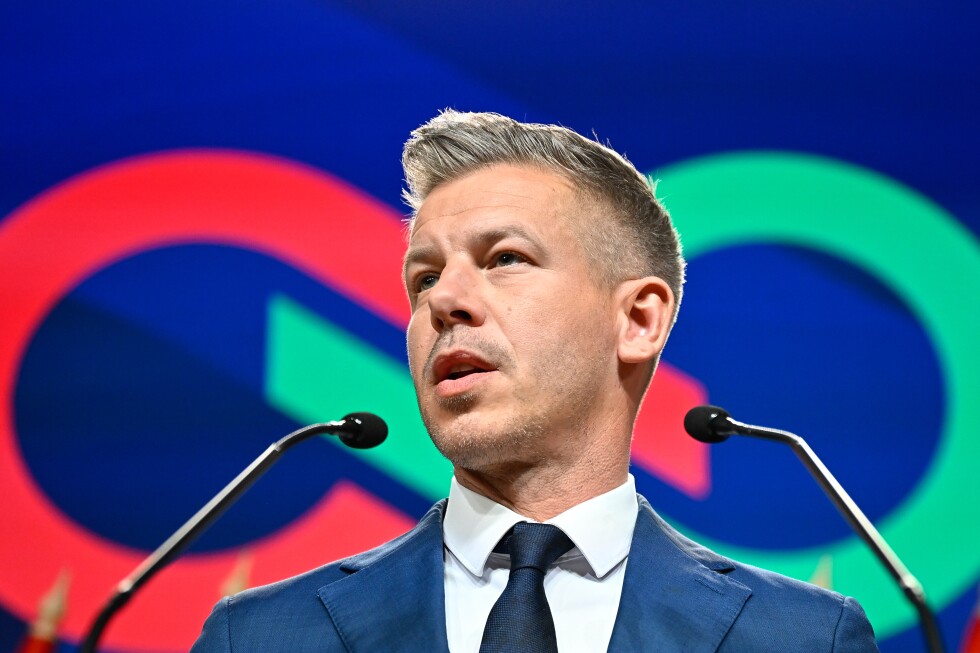
Hungary’s election winner Péter Magyar called on the country’s president Monday to convene parliament “as quickly as possible,” aiming to replace Viktor Orbán as prime minister by May 5. Following his party’s unprecedented electoral triumph, Magyar outlined his vision for a dramatic shift in Hungarian governance and foreign policy.
“The Hungarian people didn’t vote for a simple change of government, but for a complete change in regime,” Magyar declared at a press conference in Budapest, acknowledging the sweeping mandate given to his Tisza party, which secured 138 of parliament’s 199 seats in Sunday’s election.
The results give Magyar’s party the same two-thirds supermajority that Orbán wielded to reshape Hungary’s constitution, electoral system, and judiciary during his long tenure. This constitutional majority grants Magyar extraordinary power to reverse many of Orbán’s controversial policies that critics say undermined democratic institutions.
Magyar pledged to restore the rule of law and overhaul government structures to increase independence and combat corruption. He also announced plans to create new ministries focused on addressing critical issues in public health, environmental protection, and education—areas that have suffered under Orbán’s administration, according to critics.
In a significant foreign policy shift, Magyar promised greater cooperation with European partners, signaling an end to Orbán’s frequent obstruction of EU-wide policies. While opposing fast-track EU membership for Ukraine during wartime, he suggested a less confrontational approach than his predecessor, proposing Hungary “opt out” of participating in a €90 billion EU loan for Ukraine rather than vetoing it outright.
“Hungarians said yesterday they will write their history, not in Moscow, not in Beijing, not in Washington,” Magyar stated, acknowledging congratulatory messages from Russia and China while emphasizing Hungarian sovereignty.
The election results triggered jubilant celebrations across Budapest, with tens of thousands of citizens—many of them young people—flooding the streets. Adrien Rixer, who returned from London specifically to vote, expressed his elation: “Finally I can say that I’m a proud Hungarian, finally after 16 years.”
However, challenges remain for the incoming administration. Bulcsú Hunyadi, an analyst with the Budapest-based think tank Political Capital, noted that despite Tisza’s constitutional majority, Hungary’s key institutions are “led by people who are cemented in their position for many years.” As part of Orbán’s consolidation of power, loyal allies were installed at the helm of critical institutions including the media authority, public prosecutor’s office, and Constitutional Court, often with extended mandates specifically designed to outlast potential changes in government.
Magyar has called for these officials—including Hungary’s president—to voluntarily resign. Beyond such appeals, Hunyadi observed, “they don’t really have any other tools to remove these people.”
The new government will face immediate pressure to implement reforms necessary to unfreeze billions in European Union funding currently withheld due to rule-of-law concerns. Magyar campaigned heavily on recovering these funds, which are crucial for Hungary’s struggling economy, and has pledged to introduce the euro by 2030—a move Orbán consistently opposed.
“There are deadlines in terms of unfreezing the funds. They will have to deliver certain laws and reforms by August this year, which is only a few months away,” Hunyadi explained.
Magyar’s victory has raised hopes throughout the European Union that Hungary will adopt a more constructive approach to Ukraine after years of Orbán’s obstruction. The outgoing prime minister repeatedly used his veto power to impede sanctions against Russia and block crucial aid to Kyiv.
Ukrainian Foreign Minister Andrii Sybiha expressed optimism that the election results would “contribute to a normalization of political relations” now that Orbán’s campaign, “which unfortunately was marked by manipulative rhetoric about Ukraine, is now behind us.”
As Magyar prepares for the transition of power, he has pledged to create an Office for the Recovery and Protection of National Assets to reclaim what he describes as the ill-gotten wealth accumulated by Orbán’s allies through systematic corruption—setting the stage for what could be a contentious period of accountability for the previous administration.
Fact Checker
Verify the accuracy of this article using The Disinformation Commission analysis and real-time sources.

10 Comments
This election outcome marks a pivotal moment for Hungary. The new government’s ability to deliver on its promises of restoring the rule of law and combating corruption will be closely scrutinized, both domestically and internationally. The stakes are high for the country’s future direction.
Agreed, the Tisza party has a significant mandate for change, but translating that into tangible reforms will be a major challenge. The international community will be watching closely to see if they can successfully navigate this critical transition period.
The Tisza party’s victory represents a clear repudiation of Orbán’s approach. However, implementing their reform agenda may prove challenging, given the entrenched power structures and potential resistance from pro-Orbán factions. Careful management of the transition will be crucial.
This election marks a dramatic turning point for Hungary. The Tisza party’s supermajority gives them broad powers to reshape the country’s governance and policies. I’m curious to see their specific plans and how they execute on their reform agenda.
You’re right, the Tisza party’s sweeping victory has clearly given them a strong mandate for change. It will be crucial to monitor how they balance their reform priorities with maintaining political and economic stability.
This election outcome is a significant development in European politics. Hungary’s shift away from Orbán’s policies could have ripple effects across the region, especially if the new government pursues a more pro-EU stance. It will be important to see how they manage foreign relations.
Absolutely, the foreign policy implications of this election are worth watching closely. Hungary’s regional and global positioning could see major changes under the new leadership.
The election results highlight the Hungarian public’s desire for a new direction. However, the Tisza party’s plans to rapidly overhaul the system could face obstacles and backlash. Careful navigation of the transition will be key.
Intriguing developments in Hungary. It will be interesting to see how the new government navigates the transition and delivers on its reform promises. A shift away from Orbán’s policies could have broader regional implications.
Agreed, the election results represent a significant political change for Hungary. It remains to be seen how the new leadership will approach issues like rule of law and democratic institutions.