


Listen to the article
More than 80 people have lost their lives as devastating floods swept through southern Thailand, affecting over 3 million residents across 12 provinces, officials reported Thursday.
The flooding, which began last weekend following torrential monsoon rains, has started to recede in most areas, though water levels remain dangerously high in provinces including Pattani and Nakhon Si Thammarat.
Government spokesperson Siripong Angkasakulkiat announced during a Bangkok press conference that Songkhla province alone recorded 55 deaths, a dramatic increase from the six previously reported. The death toll across seven affected provinces has now reached at least 82 victims.
“We expect water levels to drop below river banks in all affected areas by this evening,” Siripong stated, offering a glimmer of hope to residents who have endured nearly a week of crisis conditions.
The catastrophe prompted Prime Minister Anutin Charnvirakul to declare a state of emergency earlier this week in Songkhla province, home to Hat Yai, southern Thailand’s largest urban center. The prime minister cited the “unprecedented severity” of the disaster in his declaration, mobilizing additional government resources to the region.
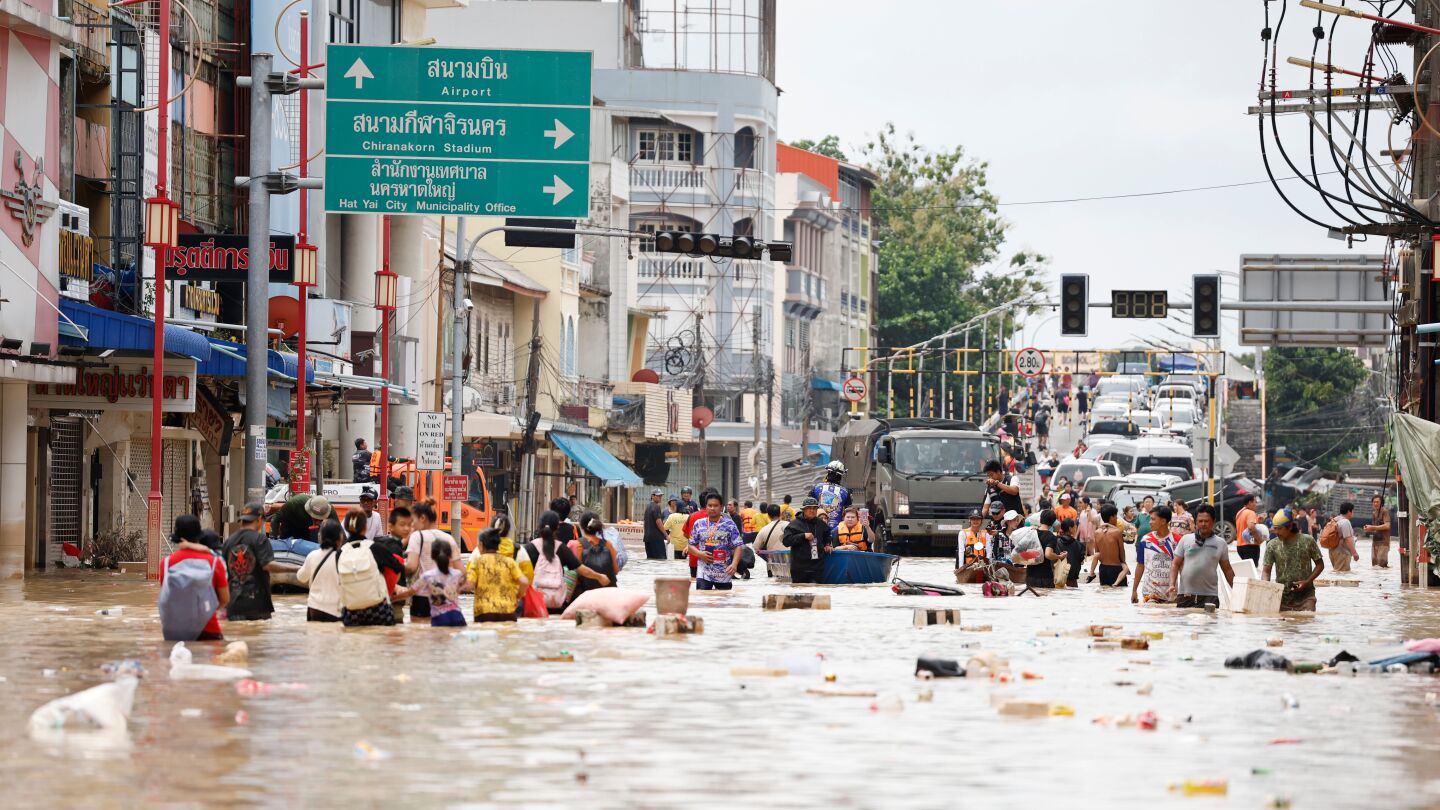
In Hat Yai, receding waters have revealed extensive damage throughout the city. The flooding paralyzed infrastructure, leaving thousands of residents stranded in their homes. Crucial utilities including electricity and water supplies were cut off, while communication networks failed across much of the affected region, hampering rescue efforts.
Thailand’s southern provinces typically experience heavy rainfall during the monsoon season, but meteorological experts note this year’s precipitation has been exceptionally intense. The disaster highlights the increasing vulnerability of Thailand’s coastal regions to extreme weather events, which climate scientists have linked to warming global temperatures.
The healthcare system has been severely strained by the crisis. The Public Health Ministry reported that Hat Yai Hospital, the region’s main medical facility, remains unable to operate at full capacity despite emergency measures. Eight field hospitals have been established to supplement medical care, while authorities airlifted 20 critically ill patients to facilities outside the disaster zone on Thursday.
Relief workers also delivered additional food supplies to medical staff and patients who remained at the partially functioning hospital.
The economic impact on Thailand’s south, an important region for rubber production and tourism, is expected to be substantial. The Department of Disaster Prevention and Mitigation is currently assessing damage to agriculture, infrastructure, and businesses in preparation for recovery efforts.
Thailand’s military has deployed personnel and equipment to assist in rescue operations, with helicopters delivering supplies to isolated communities where road access remains impossible. Neighboring Malaysia has also offered assistance to Thai authorities, particularly in border areas where flooding has affected both countries.
The Thai Meteorological Department has warned that while the immediate crisis appears to be easing, the ongoing monsoon season could bring additional rainfall to already saturated areas in the coming weeks.
As the floodwaters recede, local authorities are preparing for the complex recovery phase, which will include clearing debris, restoring utilities, and preventing potential disease outbreaks in standing water.
The current flooding represents one of Thailand’s most severe natural disasters since the 2011 floods that affected much of the country, including parts of Bangkok, and caused estimated economic damages of $46 billion.
Fact Checker
Verify the accuracy of this article using The Disinformation Commission analysis and real-time sources.

17 Comments
This disaster is a sobering reminder of the impacts that climate change can have on vulnerable communities. I hope the international community steps up to assist Thailand with the long-term recovery and resilience-building efforts.
While the flooding situation remains dangerous, it’s good to hear that water levels are starting to recede in most areas. Providing timely aid and support to the millions of displaced residents will be critical in the coming weeks.
Absolutely, the immediate humanitarian response and long-term resilience efforts will be essential to help these communities recover and rebuild.
The Thai government’s declaration of a state of emergency in Songkhla province seems warranted given the unprecedented nature of this flooding disaster. I hope the emergency response and recovery plans are well-coordinated.
Tragic news to hear about the devastating floods in southern Thailand. My condolences to the families of the 80+ victims. I hope the recovery and rebuilding efforts can get underway quickly as the floodwaters subside.
Yes, the scale of this disaster is heartbreaking. Effective disaster response and aid will be crucial in the coming weeks and months.
The death toll of over 80 people is simply devastating. My heart goes out to the families and communities that have been devastated by these floods. Disaster response and aid will be critical in the coming weeks.
Agreed. The scale of this flooding disaster underscores the need for greater investment in climate adaptation and disaster preparedness infrastructure.
This flooding disaster is a tragic reminder of the growing impacts of climate change. My condolences go out to the families and communities impacted. Effective disaster response and long-term resilience planning will be crucial.
You’re right, this event highlights the urgent need for greater global action on climate change adaptation and mitigation efforts.
It’s encouraging to hear that the floodwaters are starting to recede, though the recovery efforts will be immense. I hope the Thai government is able to mobilize the necessary resources and support for affected residents.
While the flooding situation remains dangerous, it’s encouraging to hear that water levels are starting to recede in most affected areas. The priority now must be providing aid and support to the millions of displaced residents.
Absolutely, the immediate needs for shelter, food, and medical care for flood victims should be the top priorities.
Eighty-plus lives lost is a devastating toll. I hope the Thai government is able to provide robust emergency assistance and support to the affected regions as the recovery process begins.
This flooding disaster in southern Thailand is a sobering example of the growing impacts of climate change. My condolences to the families and communities affected. Effective disaster response and long-term adaptation planning will be crucial.
It’s concerning to see the death toll climbing in response to these extreme weather events. Climate change appears to be a major factor behind the intensity of recent flooding in Thailand and other parts of the region.
I agree, the frequency and severity of these floods underscores the urgent need for greater climate adaptation and disaster preparedness efforts.