


Listen to the article
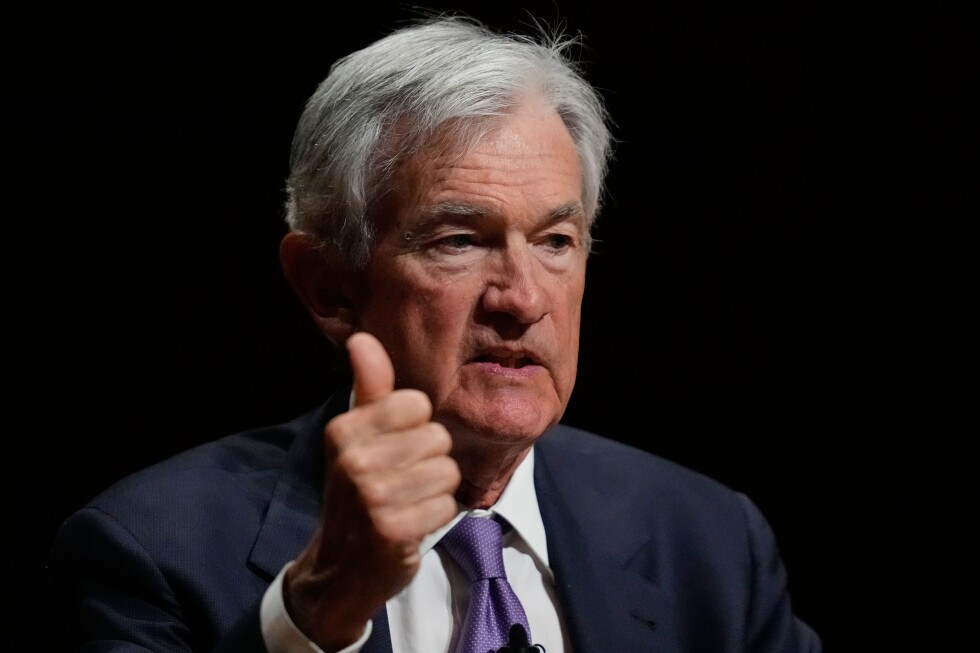
Federal Reserve Chair Jerome Powell warned Monday that monitoring inflation is critical as energy prices surge amid the ongoing Iran conflict, with U.S. gas prices approaching $4 per gallon.
Speaking to nearly 400 students at Harvard University, Powell acknowledged that the Fed’s ability to respond to immediate energy price shocks is limited since these disruptions “tend to come and go pretty quickly,” while monetary policy works over longer timeframes. However, he expressed concern about potential cascading effects.
“You have to carefully monitor inflation expectations because you could have a series of big supply shocks and that can lead the public generally, businesses, price setters, households… to start expecting higher inflation over time. Why wouldn’t it?” Powell said.
The national average for gasoline reached $3.99 per gallon overnight, according to AAA, reflecting the market’s sensitivity to Middle East tensions. Energy analysts note this increase comes at a particularly challenging time for the U.S. economy, which is already navigating multiple headwinds.
Powell’s comments touched on broader economic challenges facing young graduates, particularly in a labor market he described as historically tight yet paradoxically stagnant. “There is very little job creation right now,” Powell noted, highlighting an unusual economic phenomenon that has persisted throughout 2025.
The job market has been notably weak over the past year, with employers adding fewer than 10,000 jobs monthly in 2025 – the weakest non-recession hiring since 2002. After starting 2026 with 126,000 new jobs in January, the economy unexpectedly shed 92,000 positions in February, creating what economists call a “low-hire, low-fire” environment.
This labor market dynamic has made entry-level positions particularly scarce. Some analysts point to artificial intelligence as potentially displacing work traditionally available to new graduates, while others suggest companies are hesitating to hire until they better understand how to integrate AI into their operations.
Despite these challenges, Powell expressed optimism about long-term prospects. “History has shown that technological innovations have repeatedly raised living standards and increased production,” he said, noting that large-language models make people, including himself, more productive.
“You’re in a situation where you need to really invest the time to master the use of these new technologies,” Powell advised students. “There’s no denying it’s a challenging time to enter the labor market. It may take some patience and all that, but in the longer term, this economy is going to give you great opportunities. Just be a little optimistic.”
While neither Powell nor students directly mentioned President Donald Trump during the question-and-answer session, Powell emphasized the importance of the Federal Reserve’s independence – a principle that has been tested under the current administration.
“It’s very hard to build great democratic institutions and much easier to bring them down,” Powell remarked, in what some observers interpreted as an indirect reference to the pressure the Fed has faced.
Trump has repeatedly urged Powell to cut interest rates, which would reduce borrowing costs across the economy. The president escalated tensions in January when the Department of Justice served the central bank with subpoenas and threatened it with criminal indictment regarding Powell’s testimony about Fed building renovations.
Adding complexity to the Fed’s mandate of price stability and maximum employment are new tariffs imposed on U.S. trading partners, which can increase consumer prices, alongside energy price pressures from the Iran conflict.
Trump has nominated former Fed official Kevin Warsh to succeed Powell, though Warsh’s confirmation has stalled amid the Justice Department investigation. Senator Thom Tillis (R-NC) has stated he won’t vote to confirm any Fed nominees until the investigation is dropped.
Without naming his potential successor, Powell offered pointed advice: “It’s very important to stick to your knitting and to stick to the things that were actually assigned.”
“We have very powerful tools. They’re supposed to be for maximum employment and price stability and financial stability,” Powell concluded. “We just have to be careful to stick to what we’re doing.”
Fact Checker
Verify the accuracy of this article using The Disinformation Commission analysis and real-time sources.

10 Comments
It’s a tricky situation for the Fed. Monitoring inflation expectations is prudent, but their policy tools may have limited impact on immediate energy price shocks driven by geopolitics. Curious to see their approach.
Agreed, the Fed has to be measured in its response. Overreacting could risk further economic disruption, while underreacting could allow inflation to become entrenched.
Powell’s acknowledgment of the Fed’s limitations in addressing energy price spikes is refreshingly candid. Managing inflation expectations will be critical, even if their direct policy levers are constrained.
Exactly. The Fed has to be realistic about what it can and can’t control, and focus on its core mandate of price stability.
Interesting dynamics at play – the Fed grappling with short-term energy shocks while trying to maintain longer-term stability. Powell’s caution is warranted, as cascading effects on inflation could be challenging to rein in.
Agreed. The Fed will need to walk a careful line, using its tools judiciously to anchor expectations without over-reacting to volatile energy prices.
The surge in gas prices to nearly $4/gallon is certainly concerning, especially with the economy already facing other headwinds. Powell’s caution around potential cascading effects on inflation expectations is warranted.
Absolutely. The Fed will need to walk a fine line – responding forcefully enough to anchor inflation expectations, but not over-reacting to transitory price spikes.
Interesting insight from Powell on the Fed’s limited ability to respond to short-term energy price shocks. Monitoring inflation expectations is crucial, as cascading effects could take hold if the public starts anticipating higher prices over time.
Agreed, the Fed’s role is more about managing longer-term trends rather than immediate disruptions. Curious to see how they balance that challenge going forward.