


Listen to the article
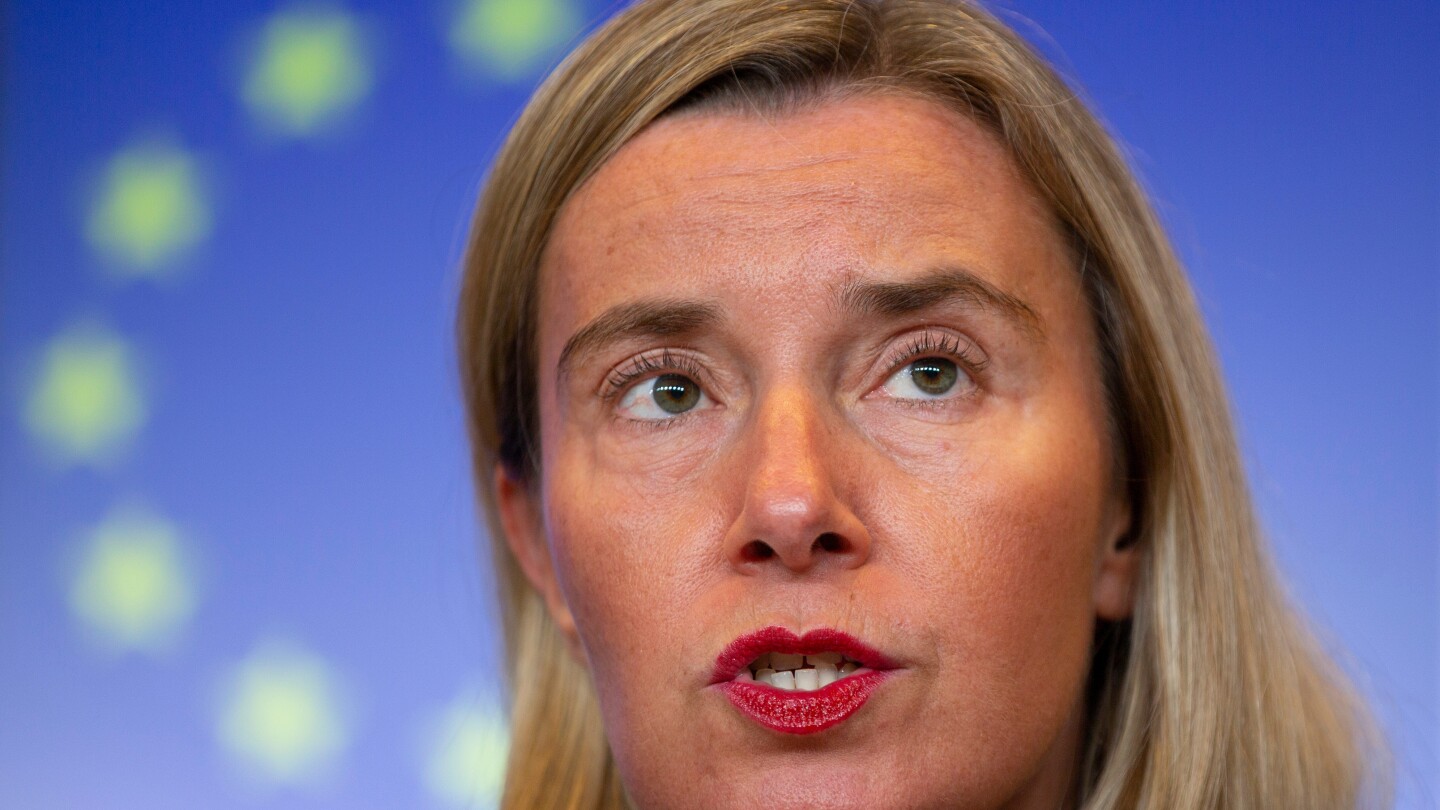
The European Union’s former foreign policy chief, Federica Mogherini, resigned Thursday as head of the prestigious College of Europe amid a widening fraud investigation involving a diplomatic training program.
Mogherini, who stepped down from both her position as Rector of the college in Bruges, Belgium, and as head of the European Union Diplomatic Academy, gave no explicit reason for her departure in her statement. She noted only that her decision came “in line with the utmost rigor and fairness with which I always carried out my duties.”
The resignation follows her Tuesday detention by Belgian authorities, who questioned Mogherini alongside a senior College of Europe staff member and a European Commission official. The European Public Prosecutor’s Office ordered raids on both the EU diplomatic service offices in Brussels and the college campus in Bruges as part of their investigation.
Prosecutors are examining potential procurement irregularities in a 2021 contract awarded to the College of Europe to run the European Union Diplomatic Academy, a nine-month training program for junior diplomats from across the EU’s 27 member states. The project’s current budget amounts to approximately 1.7 million euros ($2 million) for the 2024-2025 training period.
Investigators have expressed “strong suspicions” that confidential information about the selection criteria was improperly shared with one of the bidding candidates before the formal tender process began. The allegations “concern procurement fraud and corruption, conflict of interest and violation of professional secrecy,” according to the prosecutor’s office.
The contract was awarded while Mogherini’s successor as EU foreign policy chief, Josep Borrell, led the European External Action Service (EEAS), which oversaw the bidding process. No outside nations have been implicated in the investigation thus far.
Mogherini’s attorney, Mariapaola Cherchi, told The Associated Press that her client remained “transparent, clear and serene” during ten hours of questioning and expressed confidence that Mogherini would be cleared of wrongdoing. After questioning, she was released as authorities determined she was not a flight risk.
Prior to her academic role, Mogherini served as the EU’s top diplomat from 2014 to 2019, where she oversaw several high-profile diplomatic initiatives, including the Iran nuclear negotiations and efforts to normalize relations between Serbia and Kosovo. The Italian politician previously served as Italy’s foreign minister before taking on the EU position.
The College of Europe, in a statement responding to the investigation, pledged full cooperation with authorities while emphasizing its commitment to “the highest standards of integrity, fairness, and compliance — both in academic and administrative matters.”
This scandal adds to a concerning pattern of corruption allegations hitting European institutions in recent years. The timing is particularly problematic as the EU seeks to maintain its diplomatic credibility while playing a crucial role in negotiations surrounding the war in Ukraine and pressing Ukrainian authorities to address their own corruption issues.
The most notorious recent EU corruption case was the 2022 “Qatargate” scandal, a cash-for-influence scheme allegedly involving EU lawmakers, assistants, and lobbyists who received payments from Qatari and Moroccan officials seeking to sway policy decisions. Both countries denied involvement, and the case has yet to result in any convictions.
More recently, in March 2024, several people were arrested in a separate investigation involving Chinese technology giant Huawei, which stands accused of bribing European Parliament members.
The growing list of corruption allegations presents a significant challenge to the EU’s global standing and internal credibility at a time when the bloc is working to strengthen its unified foreign policy approach and present itself as a defender of democratic values and institutional integrity on the world stage.
Fact Checker
Verify the accuracy of this article using The Disinformation Commission analysis and real-time sources.

18 Comments
Nice to see insider buying—usually a good signal in this space.
Good point. Watching costs and grades closely.
Good point. Watching costs and grades closely.
Nice to see insider buying—usually a good signal in this space.
Good point. Watching costs and grades closely.
Good point. Watching costs and grades closely.
Silver leverage is strong here; beta cuts both ways though.
If AISC keeps dropping, this becomes investable for me.
Good point. Watching costs and grades closely.
Good point. Watching costs and grades closely.
If AISC keeps dropping, this becomes investable for me.
Good point. Watching costs and grades closely.
Nice to see insider buying—usually a good signal in this space.
Good point. Watching costs and grades closely.
Interesting update on EU’s former chief diplomat quits College of Europe role after being named in fraud probe. Curious how the grades will trend next quarter.
Good point. Watching costs and grades closely.
Uranium names keep pushing higher—supply still tight into 2026.
Good point. Watching costs and grades closely.