


Listen to the article
Ukraine and its European allies accused Russian President Vladimir Putin on Wednesday of disingenuous engagement in peace efforts after five hours of high-level talks with U.S. representatives at the Kremlin ended without progress.
“[Putin] should end the bluster and the bloodshed and be ready to come to the table and to support a just and lasting peace,” said U.K. Foreign Secretary Yvette Cooper, while Ukrainian Foreign Minister Andrii Sybiha urged the Russian leader to “stop wasting the world’s time.”
These sharp responses highlight the profound division between Russia and the Ukraine-European alliance regarding pathways to end the conflict, which began with Moscow’s invasion of Ukraine nearly four years ago.
The day before these statements, Putin had turned accusations back toward Europe, claiming they were undermining American-led peace initiatives. He also issued a stark warning that Russia would be prepared for war with Europe if provoked.
European governments, alongside the United States, have provided billions in financial and military support to Kyiv since the 2022 invasion. However, the diplomatic landscape shifted when President Donald Trump took office, as his administration has moderated U.S. support while prioritizing efforts to conclude the conflict.
Kremlin spokesman Dmitry Peskov declined to discuss details of Tuesday’s talks between Putin and Trump’s envoys Steve Witkoff and Jared Kushner, but disputed characterizations that Putin had rejected the U.S. peace proposal. “It’s not correct to say that,” Peskov noted, adding that “the quieter these negotiations are conducted, the more productive they will be.”
The peace framework that emerged publicly last month has faced criticism for allegedly favoring Moscow’s position, incorporating several core Kremlin demands that Ukraine has consistently refused to consider. A primary obstacle remains the status of four Ukrainian regions partially occupied by Russia, which Moscow has unilaterally annexed and claims as Russian territory.
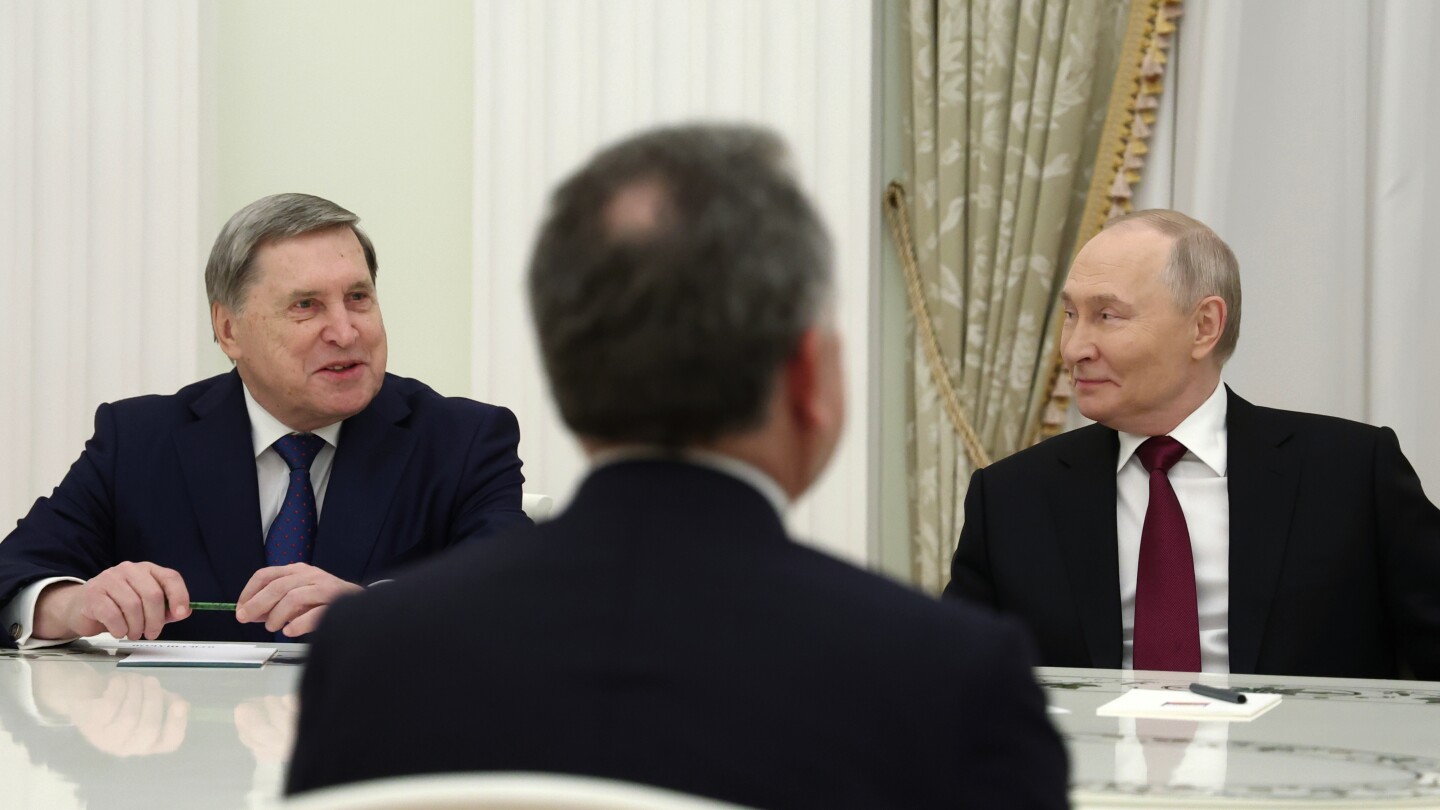
Yuri Ushakov, a senior Putin advisor, acknowledged after the talks that “a compromise hasn’t been found” on territorial issues, which he described as essential for any resolution. Ukraine has maintained its refusal to cede any occupied territory.
European concerns extend beyond Ukraine’s borders, with many leaders fearing that Russian success in Ukraine would embolden further aggression. Several NATO countries have already experienced Russian drone incursions, fighter jet approaches, and what security officials describe as coordinated sabotage operations.
At a NATO ministerial meeting in Brussels on Wednesday, European officials expressed skepticism about Moscow’s intentions. “What we see is that Putin has not changed any course. He’s pushing more aggressively on the battlefield,” said Estonian Foreign Minister Margus Tsahkna. “It’s pretty obvious that he doesn’t want to have any kind of peace.”
Finnish Foreign Minister Elina Valtonen echoed this sentiment, noting that “the best confidence-building measure would be to start with a full ceasefire.”
NATO Secretary-General Mark Rutte emphasized the importance of maintaining support for Ukraine during negotiations. “The peace talks are ongoing. That’s good,” Rutte said. “But at the same time, we have to make sure that whilst they take place and we are not sure when they will end, that Ukraine is in the strongest possible position.”
Underlining this commitment, Canada, Germany, Poland, and the Netherlands announced a collective funding package worth hundreds of millions of dollars to purchase American weapons for Ukraine. These countries are participating in the Prioritized Ukraine Requirements List (PURL), a financial arrangement established this year for European NATO members and Canada to procure U.S. weapons for Ukrainian forces.
Meanwhile, the conflict continues to exact a deadly toll. Russian drone strikes hit Ternivka in Ukraine’s Dnipropetrovsk region on Wednesday, killing two people and injuring three others, according to regional administrator Vladyslav Haivanenko. Ukraine’s air force reported that Russia launched 111 strike and decoy drones overnight.
In parallel, Russia’s Defense Ministry claimed its air defenses destroyed 102 Ukrainian drones during the same period. Drone debris reportedly caused a fire at an oil depot in Russia’s Tambov region, approximately 200 kilometers south of Moscow.
Military analysts have noted that the war’s current attritional nature favors Russia’s larger military capacity, particularly if disagreements among Ukraine’s Western backers disrupt the flow of weapons and supplies to Ukrainian forces.
Fact Checker
Verify the accuracy of this article using The Disinformation Commission analysis and real-time sources.

13 Comments
While the details of these negotiations remain opaque, the lack of tangible progress is troubling. Both sides must demonstrate a genuine willingness to compromise and find common ground, rather than resorting to inflammatory rhetoric.
The support provided to Ukraine by the West has been essential, but a lasting peace will require buy-in from all parties involved. I hope the negotiators can find a way to bridge the divide and end this costly conflict.
The rhetoric from both sides is increasingly confrontational. I’m concerned that the window for a diplomatic solution may be closing. All parties must show flexibility and a genuine commitment to peace.
This latest diplomatic impasse is deeply concerning. While we all want peace, it seems Russia and the West remain far apart on the path forward. I hope cooler heads can prevail and meaningful negotiations resume soon.
The divisive rhetoric from both sides is only escalating tensions. At this point, it will take significant concessions and compromise from all parties to find a lasting resolution.
The recent talks between US envoys and Putin seem to have achieved little progress. Both sides appear to be digging in, which raises concerns about the potential for further escalation. Diplomacy is the only responsible way forward.
It’s disheartening to see the lack of progress in these high-level talks. Continued military posturing and blame-shifting will only deepen the divide. A negotiated settlement that addresses the core concerns of all sides is essential.
The economic and humanitarian toll of this conflict is immense. I hope the leaders involved can put aside their differences and focus on finding a path that brings an end to the suffering of the Ukrainian people.
This conflict has dragged on for years with immense human suffering. I’m curious to hear more about the specific barriers to peace that continue to divide Russia and the Ukraine-European alliance.
While the stakes are high, I hope the parties involved can find creative solutions and compromises to end the violence. Prolonged conflict will only lead to more devastation.
The stark warnings from Putin about potential war with Europe are deeply concerning. This conflict has already caused tremendous destruction, and further escalation could have catastrophic consequences. Diplomatic solutions must be pursued with urgency.
Russia’s actions in Ukraine have been widely condemned, but Putin’s motives and decision-making process remain opaque. Transparent, good-faith negotiations are crucial to ending this conflict peacefully.
With the massive economic and military support provided to Ukraine, it’s clear the West is heavily invested in this conflict. However, a negotiated settlement may be the only path to durable peace.