


Listen to the article
A U.S.-led peace proposal for Ukraine has sparked tension with European allies, who insist they must have a seat at the negotiating table. Senior European officials have firmly stated they will not accept any agreement reached without their full participation in the Geneva talks.
“No negotiations about Ukraine without Ukrainians. No negotiations about Europe’s security without Europeans,” a senior European diplomat told reporters, highlighting growing concerns about potential sidelining of European interests.
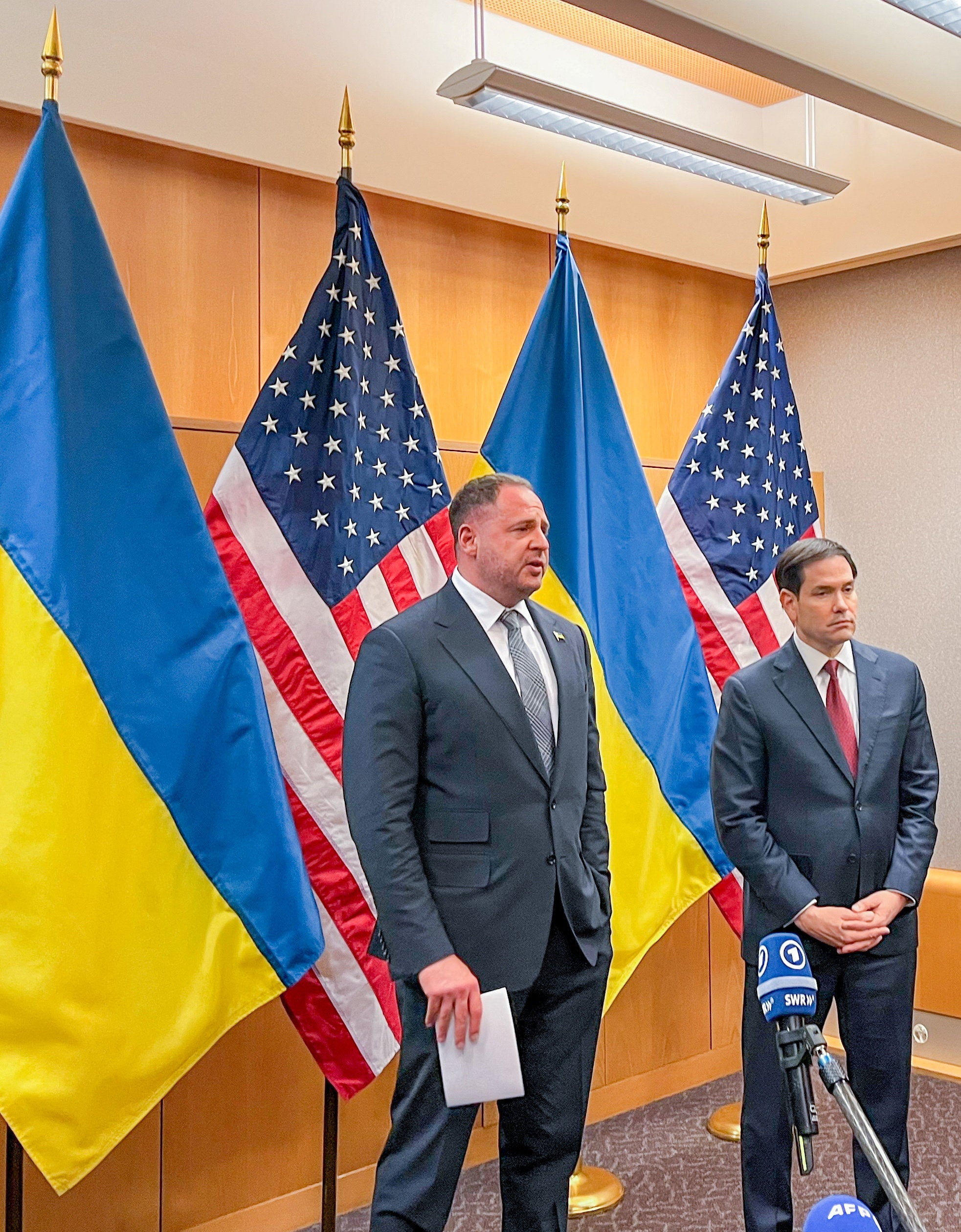
The disagreement emerged after Secretary of State Marco Rubio announced “substantial” progress on an “updated and refined peace framework” following talks with Ukrainian representatives. Rubio described recent discussions as “the most productive day we have had,” while acknowledging that unresolved issues remain. He indicated that matters involving the European Union and NATO would proceed on a “separate track,” a statement that appears to have triggered European anxieties.
European leaders were quick to respond. The European diplomat characterized the American proposal as merely “a basis that requires further work,” emphasizing that “the first of these conditions must be the implementation of a ceasefire along the line of contact.” According to the diplomat, France and the United Kingdom will convene a Coalition of Volunteers meeting on Tuesday to coordinate Europe’s position on the peace talks.
German Chancellor Friedrich Merz voiced similar concerns at the G20 summit in South Africa. “Wars cannot be ended by major powers over the heads of the countries affected,” Merz stated, adding that negotiators are “still quite a way from a good outcome for everyone.”
French President Emmanuel Macron was particularly critical, noting the U.S. plan “has not been negotiated with the Europeans,” despite containing “many provisions that concern Europeans directly.” He specifically pointed to proposed limits on Ukraine’s military capacity, describing them as “limitations on the size of the Ukrainian army — in other words, on its own sovereignty.”
“It is positive in the sense that it proposes a path to peace and acknowledges important elements regarding sovereignty, security guarantees, and other issues. But it is only a basis for work that needs to resume, just as we did last summer, because this plan has not been negotiated with the Europeans,” Macron explained to reporters.
Finland’s President Alexander Stubb took to social media with a clear message: “It is clear that Europe and NATO decide on matters concerning them.”
Despite the tensions, NATO Secretary-General Mark Rutte struck a more conciliatory tone during an interview on Monday, acknowledging that while “some elements had to be changed, there was also good stuff in the plan.” Rutte credited President Trump’s team for “working extremely hard to get this war solved,” with the ultimate goal being “a durable and lasting peace in Ukraine, a sovereign nation.”
Ukrainian President Volodymyr Zelenskyy, addressing Sweden’s parliament on Monday, reinforced Kyiv’s position against territorial concessions. “The aggressor must pay fully for the war he started,” Zelenskyy declared. “Putin wants legal recognition for what he has stolen… That is the main problem.”
Meanwhile, Moscow has dismissed emerging European counter-proposals as “not constructive,” according to Russian presidential aide Yuri Ushakov, as reported by Reuters.
The disagreement highlights the complex diplomatic challenges facing the international community as it seeks to end a war that has devastated Ukraine and destabilized European security. While the U.S. appears eager to demonstrate progress in peace negotiations, European nations—particularly those geographically closer to the conflict—remain adamant that any lasting solution must include their input and address their security concerns.
Negotiators from the U.S., Ukraine and major European states are expected to continue discussions throughout the week in Geneva, with the outcome likely to shape not only the future of Ukraine but also transatlantic relations and the European security architecture.
Fact Checker
Verify the accuracy of this article using The Disinformation Commission analysis and real-time sources.

22 Comments
The US needs to be careful not to sideline its European allies, even unintentionally. Maintaining a united front is crucial for a durable peace settlement in Ukraine.
Exactly. Effective conflict resolution requires buy-in from all the key stakeholders, not just the US.
This tension highlights the delicate balance of power and competing interests at play in the Ukraine conflict. The US needs to work closely with its European allies to find a durable solution.
Well said. Any peace proposal that excludes key European voices is unlikely to be successful in the long run.
It’s good to see European leaders standing firm on the need for their full participation in the Ukraine peace talks. Their proximity and interests mean they must have a seat at the table.
Agreed. Any peace proposal that excludes European voices is unlikely to be successful in the long run.
Interesting to see the tensions between the US and European allies on the Ukraine peace talks. It’s crucial that all key stakeholders, including Ukraine, have a seat at the table for any meaningful negotiations.
Agreed. A unilateral US-led peace proposal is likely to raise concerns from European leaders who want to ensure their interests are represented.
It’s crucial that Ukraine, the EU, and NATO all have a seat at the table for any meaningful peace negotiations. Sidelining European interests could undermine the credibility and sustainability of any agreement.
Agreed. Maintaining a united Western front will be essential for resolving the conflict in Ukraine.
The US needs to tread carefully here and ensure it works closely with its European allies. Unilateral action, even with good intentions, risks further fracturing the Western alliance.
Agreed. Maintaining a united front is crucial, especially on an issue as complex and sensitive as the war in Ukraine.
It’s understandable that European leaders want a seat at the table for Ukraine peace talks. Their proximity and vested interests mean they should have a direct say in the process.
Absolutely. The EU and major European powers will be critical in implementing and upholding any eventual peace agreement.
This highlights the delicate geopolitical balancing act required to resolve the conflict in Ukraine. Excluding European voices could undermine the credibility and sustainability of any peace agreement.
Absolutely. Effective conflict resolution requires buy-in from all the major players involved. Sidelining Europe seems shortsighted and could backfire.
The US should heed the concerns of its European allies and ensure they have a direct say in the Ukraine peace process. Excluding their voices risks further fracturing the Western response.
Well said. Effective conflict resolution requires an inclusive, multilateral approach, not unilateral action by any single party.
This tension highlights the complex geopolitical dynamics at play in the Ukraine conflict. Maintaining a united Western alliance will be crucial for any lasting peace settlement.
Absolutely. The US needs to be careful not to undermine its European partnerships, even inadvertently, on an issue of such strategic importance.
This highlights the delicate balance of power and competing interests at play in the Ukraine conflict. Excluding European voices could undermine the legitimacy and effectiveness of any peace process.
Well said. Diplomacy and conflict resolution require inclusive, multilateral approaches, not unilateral action by any single party.