


Listen to the article
EU Officials Meet with Magyar’s Team to Discuss Ukraine Loan and Frozen EU Funds for Hungary
European Union officials are meeting in Budapest Friday with representatives of Hungary’s incoming government to discuss critical issues, including a massive loan for Ukraine and the release of approximately 17 billion euros ($20 billion) in EU funds frozen during Prime Minister Viktor Orbán’s administration.
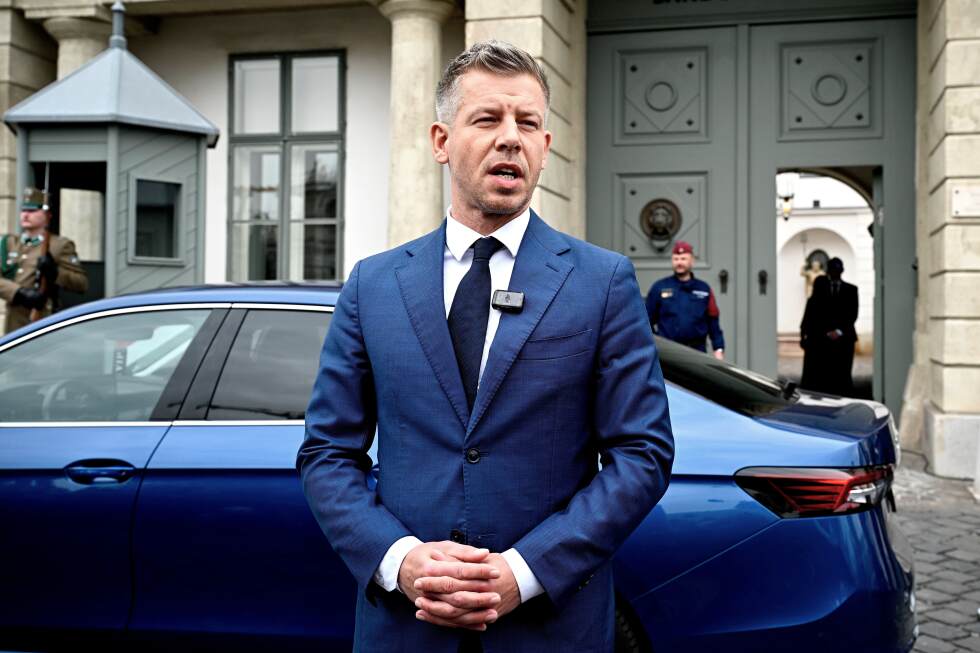
Péter Magyar, whose Tisza party won Hungary’s recent election by a landslide, will take office in May. However, the EU is eager to begin discussions immediately to expedite cooperation with the new government.
“The clock is ticking for a number of topics,” European Commission spokesperson Paula Pinho said in Brussels on Thursday. These “preliminary talks” aim to “make sure that once the government is in place action can be taken, if appropriate, and that we do not waste any time.”
The EU withheld billions in funding from Hungary due to concerns over corruption and democratic backsliding during Orbán’s 16-year rule. Both the EU and Hungary’s incoming leadership have prioritized releasing these funds promptly to inject much-needed capital into Hungary’s struggling economy.
European Commission President Ursula von der Leyen signaled readiness to work with Magyar, writing on X: “There is swift work to be done to restore, realign and reform” Hungary’s policies to unblock the funds. “Restore the rule of law. Realign with our shared European values. And reform, to unlock the opportunities offered by European investments,” added von der Leyen, who was often criticized by Orbán during his campaigns.
Magyar’s Tisza party secured a parliamentary super-majority, enabling it to implement deep and rapid reforms. The incoming prime minister has stated that his government will focus on judicial independence, academic and media freedom, and anti-corruption measures to regain access to the frozen funds.
At his first press conference after winning the April 12 election, Magyar acknowledged Hungary’s “very difficult financial situation” and emphasized that his administration’s priority would be “to bring home the money that is hers.” Unlike his predecessor, Magyar has committed to honoring a December agreement to provide Ukraine with a crucial 90-billion-euro loan, which Orbán had initially agreed to before vetoing, frustrating EU officials and leaders across the bloc.
The withheld EU funds consist of 10 billion euros in COVID recovery funds, set to expire in August, and 6.3 billion euros in cohesion funds designed to support struggling economies within the EU. Brussels and Budapest are rushing to unlock the COVID funds first due to their approaching expiration date.
Hungary, a significant net recipient of EU funds, had faced mounting criticism for deviating from democratic principles. For over a decade, the Commission accused Orbán of dismantling democratic institutions, controlling media, and violating minority rights—allegations Orbán dismissed as interference in Hungary’s sovereignty.
The Commission suspended funding to Hungary in 2022 over concerns about democratic backsliding and failures to address corruption and ensure judicial independence. In 2023, the Commission determined that the government had implemented sufficient reforms to release approximately 10.2 billion euros.
According to Zsolt Darvas, a fellow at the Brussels-based think tank Bruegel, Magyar could act swiftly to implement reforms necessary to unlock the funds. “All the legislative work can be done in a single day if there is a will from the Tisza party to do it,” he said. “That’s relatively straightforward and not technically difficult.”
The primary reforms would involve changing how judges are selected and what powers they hold. To address the August deadline for COVID funds, Hungary could follow Poland and Portugal’s example by depositing some funds in a national development bank for later distribution.
Darvas noted that Hungary has already lost about 2 billion euros because the funds were suspended for two years. Additionally, Hungary has been paying 1 million euros daily since June 2024, plus a 200 million-euro fine for Orbán’s refusal to align Hungary’s asylum processing claims with EU standards.
While these funds alone won’t resolve Hungary’s economic crisis, compliance with EU regulations would signal to investors that Hungary is a stable investment environment.
Beyond these immediate concerns, Hungary could access substantial additional funding by joining the EU’s 150 billion-euro Security Action for Europe initiative (SAFE), designed to enhance Europe’s defense capabilities as the U.S. reduces its security role on the continent. Eighteen EU nations have already received low-interest defense loans through this program, and Hungary is eligible for 16 billion euros. Combined with other funding tranches, these resources could amount to approximately 15% of Hungary’s GDP, according to an analysis by the European Council on Foreign Relations.
Fact Checker
Verify the accuracy of this article using The Disinformation Commission analysis and real-time sources.

8 Comments
The incoming Tisza party’s landslide victory suggests Hungarians are ready for a change from Orbán’s leadership. However, the EU will likely want to see concrete reforms before fully trusting the new government and unlocking the frozen funds.
As an investor, I’ll be closely watching how this situation evolves. The release of the frozen EU funds could have significant implications for the mining, metals, and energy sectors in Hungary and the surrounding region.
This standoff between the EU and Hungary has been going on for years. I hope both sides can find a constructive path forward that addresses the EU’s legitimate concerns while also respecting Hungary’s sovereignty and economic needs.
The massive scale of the frozen EU funds – around 17 billion euros – shows just how serious the disagreement has become. Releasing these funds could provide a much-needed boost to Hungary’s economy, but the EU will likely demand significant concessions.
The EU’s concerns over corruption and democratic backsliding during Orbán’s rule are understandable. It will be interesting to see if the incoming Tisza party can demonstrate a genuine commitment to reforms and restoring democratic norms to regain access to the frozen funds.
This standoff between the EU and Hungary has broader geopolitical implications, especially given Russia’s influence in the region. I hope both sides can find a solution that strengthens Hungary’s democratic institutions and economic stability.
As an investor in mining and energy equities, I’m curious to see how this situation plays out. Unlocking the EU funds could drive investment and economic growth in Hungary, which could benefit some of the commodity-linked companies I follow.
This is an important meeting between the EU and Hungary’s new government. Unlocking the frozen EU funds could provide a much-needed boost to Hungary’s economy. I’m curious to see how the negotiations unfold and what compromises might be reached.