


Listen to the article
Trump Administration Targets DEI Programs with Executive Orders, Raises Legal Concerns
The Trump administration has intensified its campaign against diversity, equity, and inclusion (DEI) initiatives through a series of executive orders that could dramatically reshape compliance requirements for federal contractors and trigger new litigation risks.
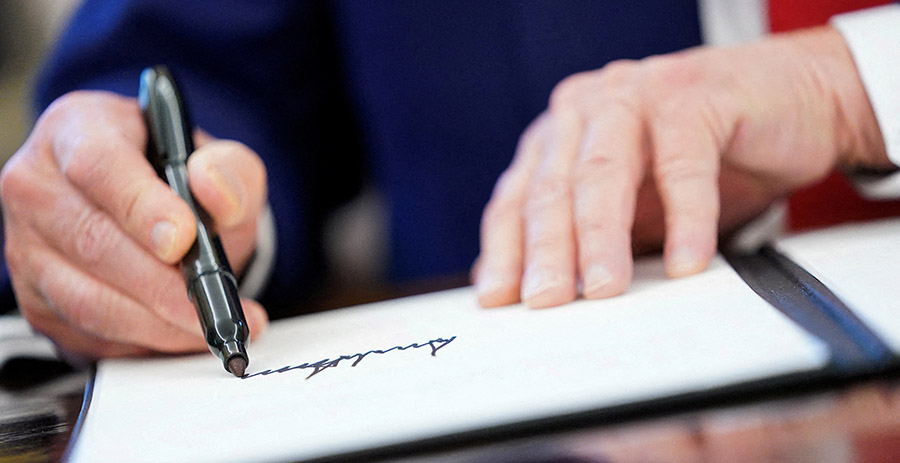
In late March, the White House issued an executive order titled “Addressing DEI Discrimination by Federal Contractors,” the latest in a series targeting what the administration considers discriminatory DEI practices. The move builds upon Executive Order 14173, “Ending Illegal Discrimination and Restoring Merit-Based Opportunity,” signed by President Trump on January 21, 2025.
These orders mandate the elimination of DEI programs deemed discriminatory within federal agencies and among government contractors. The administration specifically targets race and ethnicity-related initiatives that utilize protected characteristics for hiring or contracting preferences.
Significantly, the January order revoked Executive Order 11246, a cornerstone of affirmative action policy that had been in place for more than six decades. The order had mandated affirmative action for women and minorities in federal contracting. However, legal obligations regarding affirmative action for individuals with disabilities and protected veterans remain unchanged.
The Department of Justice issued guidance in March 2025 to assist with the dismantling of targeted programs, underscoring the administration’s commitment to enforcing these new directives.
Chad Blumenfield, a partner at Minneapolis-based Greene Espel and former federal prosecutor, notes that the Trump administration has been using executive orders to encourage whistleblowers to bring more cases under the False Claims Act since early 2025.
“Executive Order 14173 requires the head of each agency to put language in every grant contract stating that the recipient is in compliance with all federal anti-discrimination laws,” Blumenfield explained. “These would be a trigger for potential false claims issues.”
The most recent executive order, EO 14398, grants the attorney general authority to bring civil enforcement actions—a move Blumenfield describes as “notable in and of itself.” The order includes “prompt review” language, directing Department of Justice attorneys to give special attention to False Claims Act cases related to DEI violations.
“This is the latest and clearest signal to relators [whistleblowers] that if they bring False Claims Act cases premised on DEI violations, they will receive special attention from DOJ,” said Blumenfield. “Since DOJ intervention can go a long way toward determining the ultimate success of a qui tam case, this is a big deal.”
Despite this encouragement, Blumenfield questions whether lawyers who typically handle False Claims Act cases will pursue DEI-related violations. Traditionally, false claims cases have centered on healthcare and defense procurement, not DEI practices.
“One important takeaway is that while DEI is the term they are using, they are really talking about something they consider to be illegal discrimination—using race or gender to preference certain groups,” Blumenfield added. “If a company is trying to have a quota or ‘thumb on the scale’ to promote someone, the government will take a critical look at that.”
Beyond the False Claims Act implications, DEI initiatives face mounting legal challenges on other fronts. Matthew Bodie, a law professor at the University of Minnesota, points to a rise in lawsuits against mandatory DEI training, with claims centered on hostile work environments, forced speech, and violations of Title VII or the First Amendment.
“Under the opposition clause of Title VII, if you opposed practices you believe are unlawful, you are entitled to raise those objections. If adverse employment action has been taken against you, then you can bring a claim under Title VII,” Bodie explained.
Looking ahead, Bodie anticipates increased religious accommodation requests related to DEI training. “I think you’ll see more people saying ‘My religion prevents me from participating actively in the training.'” In such cases, employers would need to provide reasonable accommodations unless doing so would create an undue burden.
The threshold for what constitutes adverse discipline against an employee is relatively low, Bodie noted, which could increase the litigation risk for employers implementing DEI programs.
Meanwhile, the federal Equal Employment Opportunity Commission is developing new regulations to enforce Title VII and other discrimination protections, which may further complicate the legal landscape for employers navigating DEI compliance.
As these executive orders take effect and legal challenges mount, companies with federal contracts face a period of significant uncertainty and potential liability regarding their diversity and inclusion initiatives.
Fact Checker
Verify the accuracy of this article using The Disinformation Commission analysis and real-time sources.

10 Comments
These developments around DEI policies are likely to be closely watched by the mining, metals, and energy sectors given their reliance on federal contracts. Companies will need to adapt their practices accordingly.
Absolutely, any changes to DEI requirements will have major implications for these industries given their close ties to government procurement. Careful navigation of the new landscape will be critical.
The administration’s targeting of race and ethnicity-based initiatives raises questions about the future of affirmative action policies in federal contracting. This could have ripple effects across many industries.
Indeed, the elimination of Executive Order 11246 is a significant move that could reshape the landscape. Contractors will need to reevaluate their hiring and contracting practices accordingly.
It will be important for companies to closely monitor how these executive orders are interpreted and implemented by the government. Careful compliance will be key to avoid potential False Claims Act risks.
The potential increase in False Claims Act litigation is a serious concern that companies will need to address. Thorough audits of DEI programs and contracting practices will be prudent.
It will be interesting to see how the courts interpret and apply these executive orders, especially given the potential conflicts with longstanding civil rights laws. This is likely to be a complex and evolving legal landscape.
Agreed, the interplay between these orders and existing legislation will be crucial. Careful legal analysis will be needed to ensure compliance and mitigate risks.
These executive orders could have significant implications for federal contractors and their compliance obligations. It will be important to closely monitor how they are interpreted and implemented.
Agreed, the legal risks and potential for false claims litigation are concerning. Companies will need to carefully review their DEI programs to ensure they comply with the new requirements.