


Listen to the article
Senate Democrat Seeks to Repeal Federal Education Freedom Tax Credit
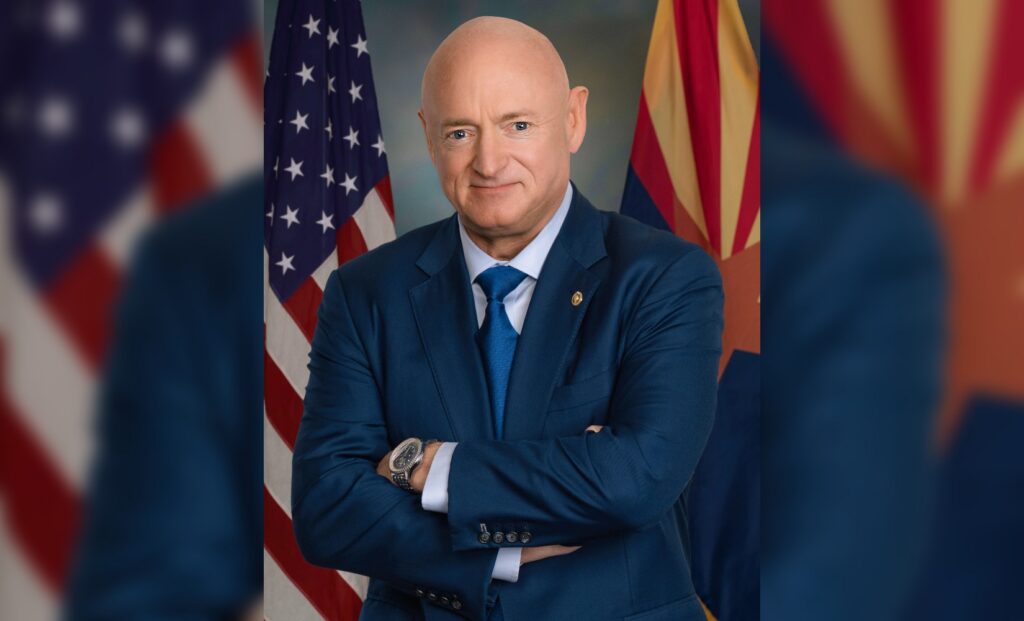
Senator Mark Kelly of Arizona has introduced legislation to repeal the federal Education Freedom Tax Credit, a school choice initiative passed during the Trump administration last year. The bill, called the Keep Public Funds in Public Schools Act, faces significant pushback from school choice advocates who dispute the senator’s claims about the program’s impact.
In an op-ed announcing the legislation, Kelly argued that school choice programs are “busting our state budget” and forcing public schools to close. These assertions were quickly challenged by Jenny Clark, a former member of Arizona’s State Board of Education and school choice advocate.
“There was a surplus last year in the Department of Education, and the ESA program is only $7,500 per student, while Arizona public school students receive closer to $15,000 per student,” Clark stated in a video response. She explained that the education savings account program represents 90% of state funding per public school pupil and excludes federal money, making the program cost-effective for taxpayers.
Clark also refuted Kelly’s claim that Empowerment Scholarships are causing public school closures, citing data indicating most students are transferring to other public schools rather than private institutions.
The senator characterized Arizona’s program as a “failed experiment” that shouldn’t expand nationally. However, Clark pointed to its growth to over 100,000 participants as evidence of success. The program has become one of the most expansive school choice initiatives in the country, with Arizona leading a national trend toward educational alternatives.
Kelly’s op-ed claimed that “most working families aren’t benefiting and the program is a magnet for waste, fraud and abuse,” referencing a news story suggesting 20% of program spending goes toward unauthorized purchases. Clark countered that the actual figure is closer to 1%, with consequences for fraudulent users making it more efficient than many other state government programs.
“The Common Sense Institute report showed that, based on ZIP code data, actually the majority of ESA parents are from middle-income households,” Clark noted, questioning whether Kelly had reviewed available data on the program’s demographics.
The debate extends to special education as well. While Kelly correctly stated that students using school choice to attend private schools lose protections under the federal Individuals with Disabilities Education Act (IDEA), Clark highlighted that ESA participation among special needs students is higher (19%) than in public schools (14%).
“Those families are saying, ‘My kid is not getting what my child needs in the traditional system, so I don’t really care about IDEA, because my child’s not benefiting from it,'” Clark explained.
School choice advocate Corey DeAngelis attributed Kelly’s opposition to teachers’ union influence, noting the senator “has been endorsed and bankrolled by the teachers’ unions for years.” DeAngelis claimed the National Education Association directs over 98% of its political contributions to Democrats.
DeAngelis also criticized Kelly for what he views as hypocrisy, pointing out that while Kelly identifies as “a product of public schools,” he reportedly sent his daughter to The Gregory School, a private academy in Tucson.
The federal Education Freedom Tax Credit, set to take effect in January, has already been embraced by 29 states. The program would make students in participating states eligible for scholarships that could be used for private school tuition or other educational expenses, including tutoring for public school students. An analysis suggests states not participating could forfeit up to $23 billion in potential benefits.
Kelly’s bill has garnered support from “more than 160 education and disability rights organizations,” according to the senator. However, with a closely divided Senate, the legislation faces long odds of passage before the November elections, which will determine control of the chamber for the following two years.
The debate over school choice continues to be a polarizing issue in American education policy, with strong advocates on both sides arguing over the proper allocation of public education funding and the role of private options in the nation’s educational system.
Fact Checker
Verify the accuracy of this article using The Disinformation Commission analysis and real-time sources.

14 Comments
This proposed bill raises some valid concerns, but the counterarguments also seem persuasive. I’d caution against making sweeping changes without a comprehensive analysis of the actual financial and educational impacts. Maintaining quality public schools is crucial, but school choice programs may also serve important needs.
Well put. Balancing school choice with public education funding is a nuanced challenge. I hope policymakers can find common ground and solutions that work for all students, regardless of their educational path.
Interesting proposal, though the claims about budget and school closures seem overstated. Surely there’s room for a balanced approach that maintains strong public schools while also allowing parental choice in education. I’d like to see more data and stakeholder input before rushing to repeal the program.
Well said. Any changes should be based on a thorough, objective assessment – not partisan rhetoric. Striking the right balance is crucial for supporting all students and families.
This is a complex issue with valid arguments on both sides. While protecting public school funding is important, school choice programs can empower parents and provide more educational options. It would be helpful to see a detailed analysis of the actual financial impact and student outcomes before making a decision.
I agree, the financial details and real-world impacts need to be carefully evaluated. Reasonable people can disagree on the best approach to balancing school choice with public education funding.
The senator’s claims seem somewhat exaggerated. While protecting public school budgets is important, the data appears to show school choice programs can be cost-effective. I’d encourage a closer look at the actual tradeoffs and impacts before rushing to repeal the federal initiative.
Agreed. Objective analysis, not partisan rhetoric, should guide any changes to education policy. Preserving quality public schools while enabling parental choice is a complex but important goal.
While I understand the senator’s desire to support public schools, the claims about budget impacts and school closures seem exaggerated. A closer look at the data is warranted before repealing the federal school choice program, which may be providing valuable options for families. Balanced reforms, not knee-jerk decisions, are needed.
Agreed. Maintaining strong public education is crucial, but school choice programs can also serve important needs if designed and implemented effectively. An objective, fact-based review should guide any policy changes in this complex area.
This is a complex issue with valid concerns on both sides. I’d encourage a thorough, balanced review of the program’s financial and educational impacts before making any hasty decisions. Protecting public schools is crucial, but school choice may also serve important needs for some families.
Well said. Reasonable people can disagree, but the priority should be ensuring all students have access to high-quality education, whether through public schools or choice programs. An evidence-based, bipartisan approach is needed.
School choice is a polarizing issue, but the facts seem to contradict the senator’s claims. If the program is indeed cost-effective and provides more options for families, then it’s worth keeping, with potential tweaks. I hope this gets a fair, evidence-based review before any rash decisions.
Agreed. Knee-jerk policy changes rarely solve complex problems. A measured, data-driven approach is needed to ensure any reforms actually benefit students and communities.