


Listen to the article
FBI Director Kash Patel Files $250 Million Defamation Lawsuit Against The Atlantic
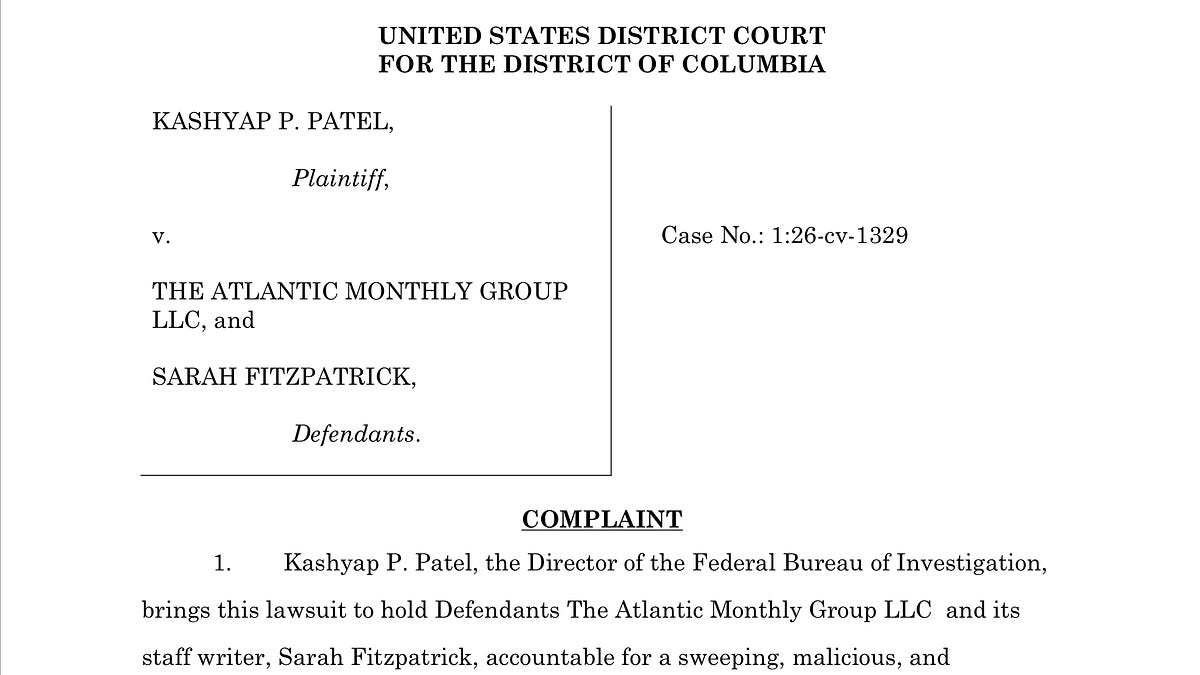
FBI Director Kash Patel filed a defamation lawsuit Monday against The Atlantic magazine and reporter Sarah Fitzpatrick over an article that portrayed him as “an incompetent drunk who is jeopardizing national security.” The lawsuit, filed in the District of Columbia, seeks $250 million in damages plus any proceeds generated from the publication.
The legal action follows through on Patel’s weekend promise to challenge the publication after it released a story titled “Kash Patel’s Erratic Behavior Could Cost Him His Job.” According to Patel’s complaint, the article’s headline clearly signaled it “was not journalism about a subject; it was advocacy against Director Patel.”
In the lawsuit, Patel alleges The Atlantic published numerous false claims about his personal conduct and professional performance. The complaint details over a dozen specific allegations from the article, including claims that he “drinks to the point of obvious intoxication” at private clubs in Washington D.C. and Las Vegas, that meetings needed rescheduling due to “alcohol-fueled nights,” and that his security detail once requested “breaching equipment” after he was unreachable behind locked doors.
The lawsuit also challenges assertions that Patel’s alleged alcohol consumption has negatively impacted law enforcement investigations, that he is “often away or unreachable, delaying time-sensitive decisions,” and that he improperly used his position to “target political or personal adversaries of the president.”
To prevail in the case, Patel faces a significant legal hurdle. As a public figure, he must prove not only that the statements were false but also that they were published with “actual malice” — meaning The Atlantic either knew the information was false or acted with reckless disregard for the truth. This represents a higher standard than in ordinary defamation cases involving private citizens.
The FBI director’s complaint argues The Atlantic demonstrated such malice by conducting what he calls a “grossly deficient” investigation. According to the filing, the publication “did not pursue obvious investigative leads, did not engage with publicly available counter-evidence,” and failed to conduct “basic fact-checking” even after the FBI officially denied the claims.
The Atlantic, which reportedly based its article on information from approximately two dozen anonymous sources, likely anticipated legal action. The magazine was contacted by Patel’s lawyers before publication but proceeded with the story, allowing sources to remain unnamed due to the sensitive nature of the information they provided.
The lawsuit begins with a lengthy recitation of Patel’s claimed accomplishments as FBI director, including overseeing the capture of eight of the FBI’s 10 Most Wanted fugitives and more than 40,000 violent crime arrests, which the complaint describes as a 112% increase. The filing also credits Patel with locating 6,300 child victims and arresting over 2,200 child predators.
The case represents an unusual scenario in which a sitting FBI director is suing journalists for defamation. Legal experts note that The Atlantic now has 21 days from being served to respond to the allegations, likely by denying both the falsity of the reporting and any reckless disregard for truth.
The backdrop to this legal battle includes an already controversial public image of Patel. Critics have pointed to incidents such as his widely circulated photo drinking beer in the U.S. Men’s Hockey Team’s locker room after their Olympic victory — behavior some observers contrast with the more reserved public personas of previous FBI directors like Robert Mueller, Louis Freeh, James Comey, and Christopher Wray.
The lawsuit comes at a time when tensions between government officials and media organizations continue to intensify, raising questions about press freedoms, journalistic standards, and the boundaries of reporting on public figures’ personal conduct when it potentially intersects with matters of national security.
Fact Checker
Verify the accuracy of this article using The Disinformation Commission analysis and real-time sources.

9 Comments
Given the high-profile nature of this case, I’m curious to see how it plays out. Defamation suits can be tricky, and I hope the courts take a measured, impartial approach in evaluating the merits of the claims on both sides.
Agreed. This will be an interesting test case for the boundaries of press freedoms versus personal reputational protections. The outcome could have broader implications.
This lawsuit seems like a concerning overreach by a government official. The press should be able to report on potential misconduct without facing such aggressive legal action. I hope the courts will protect the media’s role in holding public figures accountable.
Interesting that this complaint is coming from a former Trump aide. I’d like to know more about the broader context and potential political motivations behind this lawsuit. Responsible journalism should be safeguarded, but false claims also shouldn’t be published uncritically.
This case highlights the delicate balance between press freedom and protecting individual reputations. I hope the courts can carefully evaluate the merits and ensure a fair outcome that upholds democratic principles.
Well said. It’s a complex issue without easy answers. The public has a right to know, but personal attacks also need to be scrutinized.
This lawsuit raises important questions about the limits of free speech, especially when it comes to reporting on public figures. I hope the courts can provide clarity and set reasonable boundaries that protect both individual rights and press freedoms.
Clearly there are two sides to this story. While I’m concerned about potential overreach, I also want to see the specific evidence behind the claims against this government official. Rigorous journalism and due process are both important here.
While defamation claims can be legitimate, $250 million seems like an exorbitant amount. I wonder if this is more about intimidation than seeking actual damages. Transparency around government officials’ conduct is crucial for a healthy democracy.