


Listen to the article
European Union Official Warns Against Impunity for Russia in Ukraine Peace Talks
As President Donald Trump’s administration intensifies efforts to broker peace between Russia and Ukraine, European Union officials are raising concerns about accountability for alleged Russian war crimes, potentially setting up a conflict in diplomatic approaches.
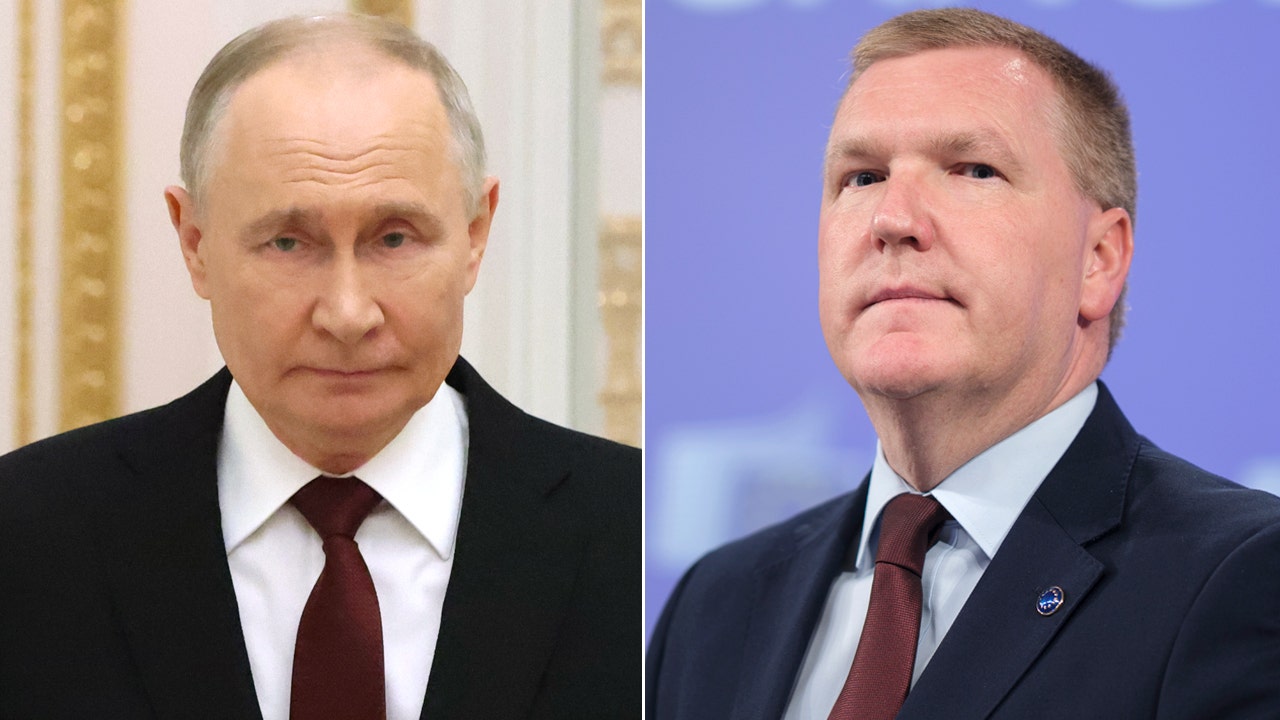
European Commissioner for Democracy, Justice, the Rule of Law and Consumer Protection Michael McGrath delivered a stark warning this week against allowing Russia to evade responsibility for its actions in Ukraine, calling such a move “a historic mistake of huge proportions.”
“I don’t think history will judge kindly any effort to wipe the slate clean for Russian crimes in Ukraine,” McGrath told Politico. “They must be held accountable for those crimes and that will be the approach of the European Union in all of these discussions.”
McGrath’s comments come as the Trump administration engages in preliminary discussions with both Russian and Ukrainian officials about potential peace frameworks. The EU commissioner emphasized that accountability must remain central to any negotiated settlement.
“Were we to do so, to allow for impunity for those crimes, we would be sowing the seeds of the next round of aggression and the next invasion,” he noted. “We cannot give up on the rights of the victims of Russian aggression and Russian crimes.”
The nearly three-year conflict has resulted in tens of thousands of casualties on both sides and displaced millions of Ukrainians. The International Criminal Court has issued an arrest warrant for Russian President Vladimir Putin on allegations of war crimes related to the forced deportation of Ukrainian children to Russia.
These diplomatic tensions highlight the competing priorities that may complicate peace negotiations. While the Trump administration appears focused on achieving a rapid resolution to the conflict, European officials remain concerned about setting dangerous precedents regarding international law and sovereignty.
Despite these potential friction points, Ukrainian President Volodymyr Zelenskyy has expressed appreciation for the Trump administration’s engagement. “I am grateful to the United States, to President Trump’s team, and to the President personally for the time that is being invested so intensively in defining the steps to end the war,” Zelenskyy wrote in a recent social media post.
The peace discussions come at a critical juncture in the conflict. After initial Russian advances were halted by Ukrainian forces backed by Western military aid, the war has settled into a grinding stalemate along a 600-mile front line in eastern and southern Ukraine. Recent months have seen Russia making incremental territorial gains as Ukrainian forces struggle with ammunition shortages and manpower issues.
For the EU, which has provided billions in financial and military aid to Ukraine while imposing unprecedented economic sanctions on Russia, any settlement that fails to address accountability could undermine its broader security framework and principles of territorial integrity.
Security analysts note that these diverging approaches reflect fundamental differences in how the U.S. and EU view international relations. The Trump administration appears to favor a more transactional approach focused on ending hostilities, while European officials emphasize rules-based international order and consequences for violations of international law.
As negotiations continue, bridging these different perspectives may prove to be one of the most significant challenges in reaching a sustainable peace agreement that addresses both immediate security concerns and long-term accountability for actions during the conflict.
Fact Checker
Verify the accuracy of this article using The Disinformation Commission analysis and real-time sources.

15 Comments
The EU is right to insist on accountability. Russia’s actions in Ukraine cannot be whitewashed, even if that makes diplomacy more challenging. Justice and long-term stability are at stake.
Holding Russia accountable for war crimes is crucial for justice and a lasting peace in Ukraine. The EU’s stance on this issue is understandable and necessary, even if it complicates negotiations.
Agreed. Impunity would only embolden Russia to continue its aggression. Accountability must be part of any peace settlement.
The EU’s position reflects the importance of justice and rule of law. However, the primary goal should be restoring stability and peace in the region. A balanced approach is needed to achieve both objectives.
The EU’s stance is understandable, but it risks making negotiations more contentious. Ultimately, a pragmatic solution that addresses both accountability and lasting peace may be required.
You make a fair point. Diplomacy often requires compromise, but core principles of justice cannot be abandoned entirely. A balanced approach is needed.
It’s a complex issue without easy answers. While accountability is crucial, the primary goal should be restoring peace and stability in the region. Careful diplomacy is needed to balance these competing priorities.
The EU’s stance on accountability is commendable, but it risks complicating the path to peace. Negotiations may require some flexibility on this issue, while still upholding core principles of justice.
This is a challenging situation with no easy answers. The EU’s position on accountability is understandable, but it may need to be balanced against the realities of the negotiation process.
I agree. Achieving a sustainable peace requires compromise, but not at the cost of ignoring Russia’s transgressions. A careful balance must be struck.
Holding Russia accountable is important, but it shouldn’t come at the expense of achieving peace. The EU and other parties will need to find a way to address both concerns effectively.
This is a delicate balance – pursuing justice while also achieving a workable peace agreement. The EU’s position reflects the need to send a strong message, but flexibility may also be required.
You raise a fair point. Negotiations often require compromise, but the fundamental principles of human rights and rule of law must not be abandoned.
Accountability for war crimes is essential, but it shouldn’t be a deal-breaker in the pursuit of peace. The EU and other parties will need to find a way to address both concerns effectively.
Well said. Pragmatism and principled negotiation will be key to reaching a lasting resolution that satisfies the needs of all stakeholders.