


Listen to the article
Conservationists are sounding the alarm on the growing exotic pet trade, calling for stronger regulations to protect vulnerable wildlife species increasingly marketed online and popularized through social media. The issue is a central focus at the two-week Convention on International Trade in Endangered Species of Wild Fauna and Flora (CITES) in Samarkand, Uzbekistan, which concludes Friday.
Several proposals addressing the pet trade will be considered, including tighter regulations or outright bans on trading Galapagos iguanas, Latin American tarantulas, and an unusual turtle species from Africa.
“What we’re seeing is the pet trade much more looking at reptiles, amphibians. People want rare species and they don’t have to go into a pet shop,” explained Susan Lieberman, vice president for international policy at the Wildlife Conservation Society. “They go online and there are thousands of animals, including endangered species, illegally obtained species, all available on the internet.”
The nature of wildlife trafficking has evolved significantly in recent years. While trade in animal parts like elephant ivory and tiger bones once dominated illegal wildlife commerce, live animals for the pet market increasingly appear in online marketplaces.
Matt Collis, senior director of international policy at the International Fund for Animal Welfare (IFAW), emphasized how technology has transformed wildlife trafficking: “The dramatic growth in online marketplaces has put consumers directly in touch with wildlife traders and criminals around the world. In today’s society where pretty much anything can be bought with a click of a button and shipped anywhere in the world in a matter of days, no wildlife is safe.”
Social media influencers showcasing exotic pets have further fueled demand, Collis noted. The trend is particularly concerning in Latin America, where an IFAW report documented over 100,000 animals seized or poached between 2017 and 2022, with annual seizures rising steadily.
The report highlighted that reptiles constitute roughly 60% of the live pet trade, while birds account for nearly 30% and amphibians over 10%. Although many animals are traded locally or regionally, evidence suggests significant trafficking to collectors in Europe, Asia, and the United States. More than 90% of wildlife seized en route to Europe were live animals, confirming the pet trade as a primary driver of illegal trafficking.
Among the species being considered for enhanced protection is the Home’s Hinged-back Tortoise, a critically endangered turtle from West Africa with a unique shell that allows it to close off its back legs and tail. Other proposals target two Ethiopian viper species, two Mexican rattlesnake species, the Australian leaf-tailed gecko, and two South American sloth species that increasingly appear in themed cafes across Asia.
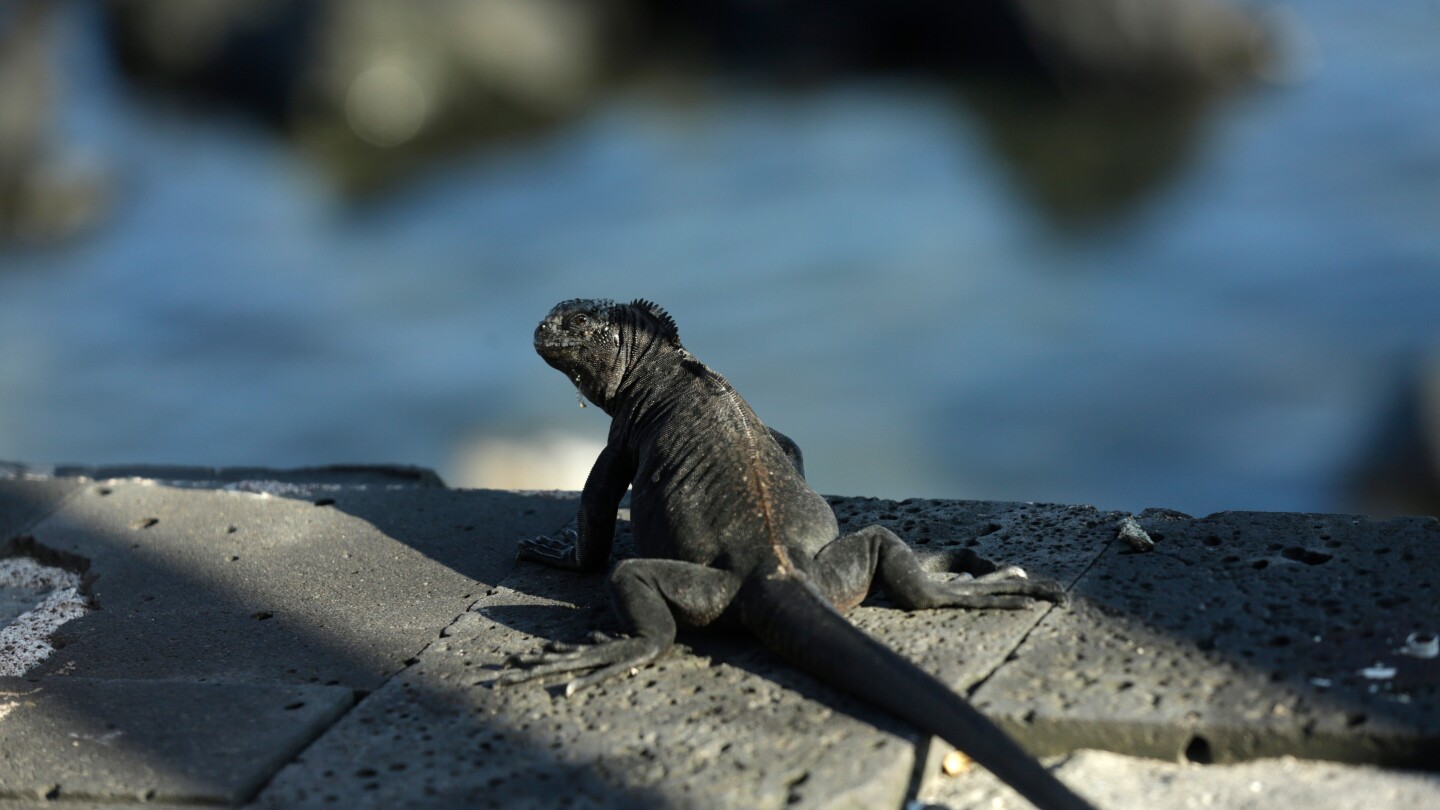
Ecuador has proposed banning trade in marine and land iguanas from the Galapagos Islands, which are listed as critically endangered or vulnerable by the International Union for Conservation of Nature. Although Ecuador prohibits commercial export of these iguanas, and collecting them from the Galapagos has long been illegal, traders reportedly capture young iguanas and transport them by boat or overland, mislabeling them as captive-bred. Most are destined for Japan and other Asian markets, where they can fetch up to $25,000 on the black market.
While the United States supports many of these proposals, including those for iguanas, sloths, vipers, tortoises, and geckos, it opposes the rattlesnake listing.
Experts point to significant loopholes in the current regulatory framework. Species banned from trade in their native habitat can still appear online through traders who manipulate CITES permits and captive breeding regulations, exploiting importing countries that fail to verify whether animals are truly captive-bred or wild-caught.
“In theory, under CITES rules, the countries issuing export permits should be checking that these animals, and crucially their parentage all the way back to the founder stock, were legally acquired,” Collis explained. “But that is not happening.” Countries often issue permits without verifying animal origins, enabling traffickers to launder animals from illegal sources.
Lieberman highlighted a fundamental misconception in the original CITES framework: “When the treaty was drafted in the early 1970s, there wasn’t a lot of captive breeding and people thought, ‘Well, if they’re bred in captivity, it’ll take pressure off the wild.’ Sounds good, except it doesn’t work that way. Breeding in captivity also creates a market, but they’re cheaper from the wild. And also it’s a great way to launder.”
The pet trade industry has pushed back against some proposals. The United States Association of Reptile Keepers opposes the tarantula listing, which would regulate trade in more than a dozen species, calling it “incongruous” for combining many species into a single proposal. The association also contends that current iguana regulations “provide adequate protection.”
A forthcoming report from the Center for Biological Diversity, however, identifies the United States as one of the largest markets for the pet trade, importing approximately 90 million live amphibians, arachnids, birds, aquarium fish, mammals, and reptiles annually. The report warns that wildlife exploitation for the pet trade significantly contributes to the global extinction crisis, with one million species at risk of extinction without immediate action.
Fact Checker
Verify the accuracy of this article using The Disinformation Commission analysis and real-time sources.

16 Comments
The growing online exotic pet market is definitely worrying. Endangered species shouldn’t be commodified and traded so freely. Hopefully CITES can develop effective policies to curb the illegal wildlife trafficking fueled by social media hype.
Absolutely. Cracking down on the online exotic pet trade is critical to protect vulnerable species. Stronger international cooperation and enforcement will be key.
The growing online exotic pet market is definitely worrying from a conservation standpoint. Endangered species shouldn’t be so readily available for purchase. I hope CITES can develop policies that protect vulnerable wildlife while also recognizing the needs of legitimate pet owners.
This is a complex issue with valid concerns on both sides. The exotic pet trade provides enjoyment for many, but the ease of obtaining endangered species online is extremely worrying. CITES will have their work cut out for them trying to develop effective policies.
Protecting endangered species is crucial, but the exotic pet trade also provides enjoyment for many. I’m curious to see the solutions CITES proposes to balance these competing interests and effectively regulate online sales of rare wildlife.
Agreed, it’s a delicate balance. Stronger policies are needed, but shouldn’t overly restrict responsible pet owners. Effective enforcement against illegal trafficking will be key.
This is an important issue that needs to be addressed. While the exotic pet trade provides enjoyment for many, it’s alarming how easy it is to obtain endangered species online. CITES should focus on solutions that protect wildlife while also recognizing the needs of responsible pet owners.
This is a complex issue without easy solutions. While the exotic pet trade provides enjoyment for many, the ease of obtaining endangered species online is extremely concerning. I’m curious to see what policies CITES proposes to address this growing threat to vulnerable wildlife.
Agreed, it’s a difficult balance to strike. Stronger regulations are needed, but shouldn’t unfairly impact responsible pet owners. Effective enforcement against illegal trafficking will be critical.
This is a complex issue with valid concerns on both sides. While protecting endangered species is critical, regulating the exotic pet trade could also restrict access for responsible owners. I’m curious to see what solutions CITES proposes to balance these interests.
Agreed, striking the right balance will be challenging. Online sales make this trade harder to monitor, so stronger regulations may be needed, but shouldn’t overly burden legitimate pet owners.
The proposals from CITES to regulate the exotic pet trade seem reasonable given the scale of the problem. Endangered species need stronger protections, but I hope the policy changes don’t unfairly impact hobbyists who care for their pets responsibly.
Agreed, it’s a delicate balance. Responsible owners shouldn’t be penalized, but the loopholes enabling illegal wildlife trafficking online need to be closed.
The growing online exotic pet trade is a serious threat to vulnerable wildlife species. While some may enjoy having rare pets, the conservation implications are alarming. I’m hopeful CITES can craft regulations that effectively curb illegal trafficking without overly burdening legitimate hobbyists.
Agreed, it’s critical that CITES finds the right balance. Stronger enforcement and monitoring of online sales is needed, but shouldn’t penalize responsible pet owners.
This is an important issue that needs urgent attention. The ease of purchasing endangered species online is deeply concerning. CITES must take strong action to shut down the illegal wildlife trade fueled by social media hype around exotic pets.