


Listen to the article
Pope Francis Makes Posthumous Appearance in Buenos Aires Through DJ-Priest’s Electronic Tribute
In an unusual fusion of faith and electronic dance music, Pope Francis returned to his native Buenos Aires last Saturday—more than a year after his death in April 2025. The appearance came not through divine intervention, but via Portuguese priest and DJ sensation Guilherme Peixoto, who transformed the historic Plaza de Mayo into an open-air rave in homage to the late pontiff.
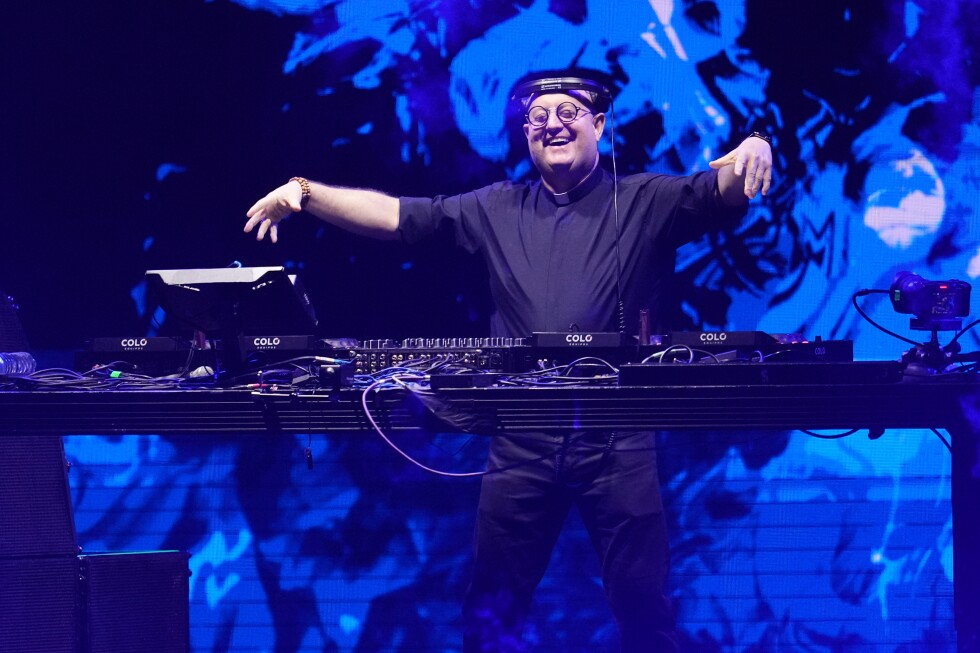
Peixoto, now in his 50s and widely known as “Padre Guilherme,” has cultivated a remarkable dual identity as both Catholic priest and electronic music star. Dressed in priestly attire complemented by DJ headphones, he commanded a console for two hours, blending techno beats with religious melodies while images of Pope Francis, Pope John Paul II, and white doves illuminated three enormous screens above the plaza.
“God bless you, and let’s dance,” announced a voice-over as Peixoto took the stage, signaling the start of an unconventional tribute that drew a diverse crowd spanning generations and religious backgrounds.
“This is a unique opportunity to see him, and it’s free,” remarked Jesús Martín, a 54-year-old Spaniard and electronic music enthusiast who attended the event. “In Ibiza, you have to pay 150 euros, and up to 2,000 euros for VIP.”
What began as a modest hobby has propelled Peixoto to international fame, with 2.8 million Instagram followers and over 220,000 monthly Spotify streams. Ordained in 1999—partly from religious calling and partly to fulfill his mother’s promise to God after a childhood illness nearly claimed his life—Peixoto initially kept his musical interests discreet, fearing ecclesiastical disapproval.
The Argentine-born Pope Francis’s ascension to the papacy in 2013 marked a turning point for Peixoto. “He often said, ‘Don’t be afraid,’ that we had to go out to the peripheries and that ‘We shouldn’t be afraid to use our hands.’ These messages were an inspiration,” Peixoto told The Associated Press before his Buenos Aires performance.
Emboldened by Francis’s progressive approach, Peixoto formally studied DJ techniques, collaborated with producers, and began creating original compositions. His breakthrough moment came during World Youth Day 2023, when he performed before Pope Francis’s open-air Mass.
“I will never lose this connection with Pope Francis,” Peixoto reflected. “He was the one who touched my heart with this facet of music.”
Saturday’s set list featured Peixoto’s hit “El Grano de Mostaza” alongside remixes of global artists like Bad Bunny and Queen. As laser lights transformed the historic plaza into an impromptu nightclub, teenagers and older attendees alike danced amid clouds of tobacco and marijuana smoke.
Many in attendance, like 60-year-old Silvia Garaggiola, came primarily to honor Pope Francis rather than for the music itself. “I learned about him when the tribute to Francis was first announced. I came to remember the Pope, but I think what he does is very original, as long as it’s done respectfully,” she said.
Others, like 17-year-old Ileana González, approached the event from a purely musical perspective: “It sounds really good. I have zero religion, but I’m having fun.”
This ability to connect with non-religious youth represents precisely what has made Peixoto’s ministry notable within the Catholic Church. From Spain’s Medusa Festival to Mexico’s Dreamfields and even Ibiza—often called the “Vatican” of electronic music—Peixoto broadcasts messages of peace and coexistence to predominantly secular audiences.
His approach aligns with Pope Francis’s efforts to modernize the Church and reconnect with younger generations who have grown increasingly distant due to institutional resistance to change, controversies surrounding sexual diversity, and abuse scandals.
Drawing inspiration from electronic music legends Carl Cox and Anyma, Peixoto sees his unique ministry as continuing Francis’s mission to make the Church more accessible and relevant.
“I believe it is incredibly important to make young people smile, to help them feel happy with themselves, rather than associating happiness with merely possessing this or that material thing,” he explained.
As the unusual evening concluded, Buenos Aires had witnessed a novel form of remembrance for its native son—one that blended spiritual devotion with contemporary expression in a way that perhaps Pope Francis himself, known for his embrace of unconventional outreach, might have appreciated.
Fact Checker
Verify the accuracy of this article using The Disinformation Commission analysis and real-time sources.

14 Comments
What a fascinating and unexpected tribute to Pope Francis! Padre Guilherme’s electronic music event in Buenos Aires sounds like a captivating fusion of faith and popular culture. I’m intrigued by his ability to bring together such a diverse audience through this unconventional approach to honoring the late pontiff’s memory.
This event demonstrates the adaptability and forward-thinking of religious leaders like Padre Guilherme as they seek to engage with modern audiences. It will be interesting to see if other faith-based organizations follow his lead in blending traditional elements with contemporary forms of artistic expression.
What an intriguing blend of faith and electronic music! Padre Guilherme seems to have found a captivating way to reach new audiences and celebrate Pope Francis’s legacy. I’m curious to learn more about his unique approach to fusing religion and dance culture.
It’s fascinating to see how religious leaders are adapting to connect with younger generations in creative ways. This event sounds like it struck an interesting balance between reverence and celebration.
This electronic music tribute to Pope Francis is a really creative way to celebrate his legacy and reach new audiences. Padre Guilherme’s ability to blend sacred and secular elements is quite impressive. I’m curious to learn more about the public’s reaction to this unusual event.
It will be interesting to see if this type of fusion between religion and electronic dance music becomes more common as religious institutions seek to modernize and appeal to younger generations. Padre Guilherme seems to have found a unique way to connect faith and popular culture.
Wow, what a unique and unexpected way to honor Pope Francis’s memory! Padre Guilherme’s electronic music tribute in Buenos Aires sounds like a captivating blend of sacred and secular elements. I’m intrigued by his ability to reach such a diverse audience through this unconventional approach.
This event demonstrates the creativity and adaptability of religious leaders as they seek to engage with modern audiences. It will be fascinating to see if other faith-based organizations follow Padre Guilherme’s lead in fusing traditional elements with contemporary forms of expression.
The electronic music tribute to Pope Francis organized by Padre Guilherme in Buenos Aires is a truly unique and innovative way to celebrate the late pontiff’s legacy. Blending sacred and secular elements in this manner could be an effective strategy for religious institutions to connect with younger generations and reach new audiences.
It’s inspiring to see religious leaders like Padre Guilherme finding creative ways to spread their message and make it more accessible. This event seems to have struck a balance between reverence and contemporary flair, which could serve as a model for future faith-based initiatives.
While an unusual pairing on the surface, the electronic music tribute to Pope Francis seems like an inspired way to honor his memory and connect with people of all ages and backgrounds. Padre Guilherme’s dual identity as both priest and DJ is quite remarkable.
It’s great to see religious leaders embracing new forms of artistic expression to spread their message. This event appears to have struck a balance between reverence and contemporary flair.
This is a really unique tribute to Pope Francis, using electronic music to bring his message to a diverse audience. Blending sacred and secular elements like this could be an effective way to make religious themes more accessible and engaging.
I wonder if this type of event could become more common as religious institutions seek to modernize and appeal to a broader demographic. It will be interesting to see if other faith leaders follow Padre Guilherme’s lead.