


Listen to the article
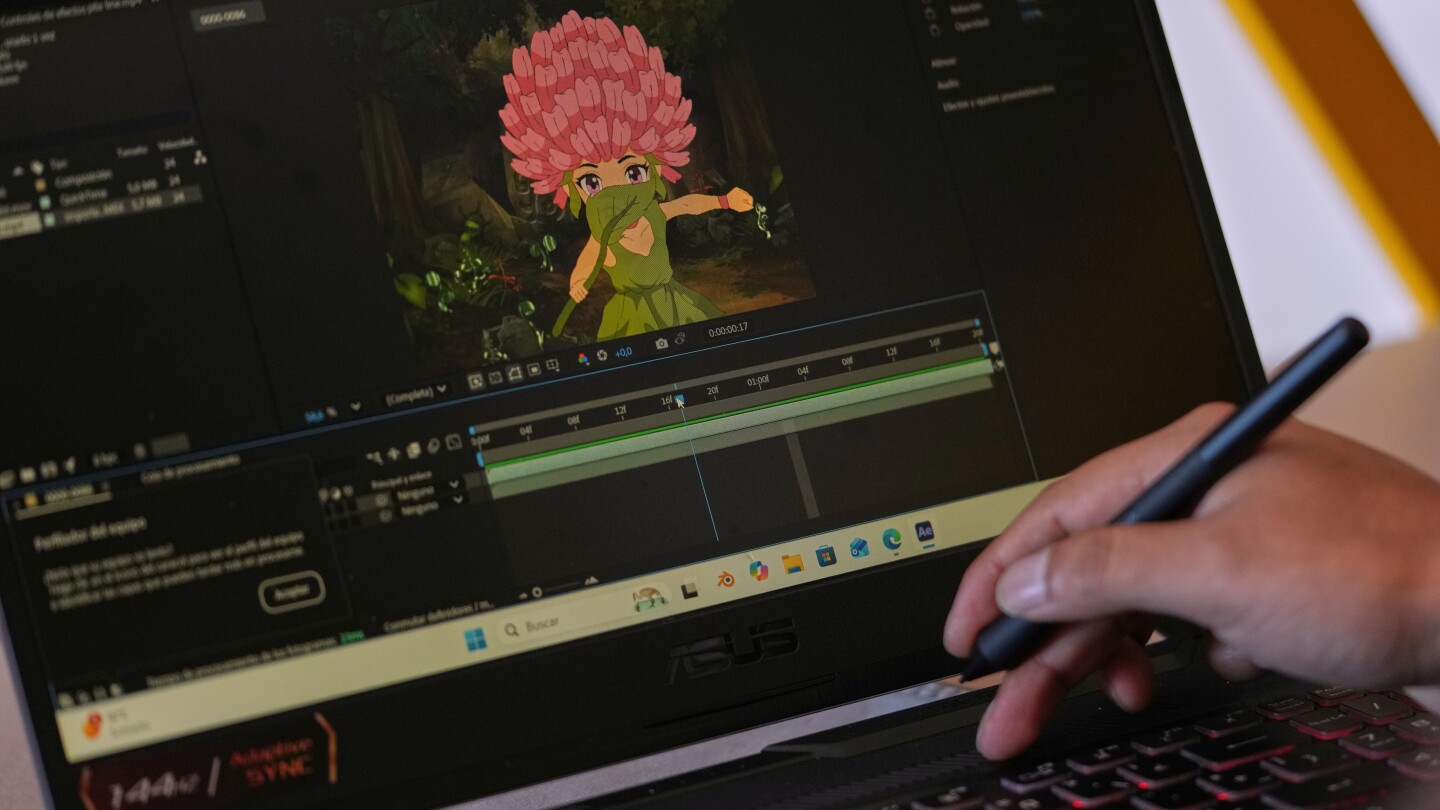
In the misty heights of Ecuador’s Andes Mountains, an innovative cultural preservation effort is taking shape as a group of young Otavalo Indigenous people harnesses the universal appeal of anime to reconnect children with their ancestral roots. Their animated short film, “We’re Aya,” represents a bold fusion of modern storytelling techniques and ancient cultural traditions.
The nine-minute film follows the adventures of Aya, a mythical Otavalo warrior, and other characters who journey under the watchful eye of a condor—a powerful symbol in Andean Indigenous cultures representing strength and spiritual energy. Drawing inspiration from acclaimed Japanese animator Hayao Miyazaki, the creators set their story against the breathtaking backdrop of the Imbabura province in Ecuador’s northern Andes, the traditional homeland of the Otavalo people.
“We faced two options,” explains Tupac Amaru, the film’s director and producer. “Lock ourselves out from the world and defend our culture, language, spirituality and clothing or stand tall and fight back.” The team chose the latter, recognizing that globalization has steadily eroded traditional Otavalo customs and language.
What makes “We’re Aya” particularly groundbreaking is its use of Quichua, the Indigenous language spoken by the Otavalo people. While Indigenous themes have appeared in previous Ecuadorian and Peruvian films, most featured Spanish-speaking characters. This project deliberately places the Quichua language at its center, featuring 12 Quichua-speaking characters.
“Quichua is the vibration that gives meaning to existence,” Amaru emphasizes. “Without the language, the meaning of life and our energy comes to an end.” He notes with concern that many Otavalo children no longer speak Quichua, which he believes leads to a diminished sense of cultural belonging and identity.
The storyline draws deeply from Otavalo cultural practices that have endured for generations. Yarik Sisa, the film’s creative manager, explains that one such practice involves taking musical instruments to energetically significant locations the night before celebrations, so the instruments become imbued with spiritual power.
The narrative features richly symbolic characters including Ayaruku, representing an indomitable spirit; Ayawa, embodying the sublime and feminine; and Ayaku, a child who symbolizes tenderness. These characters perform traditional dances and music as they venture into a dark cavern—a metaphor for globalization—where ancestral spirits charge them with becoming new seeds to regenerate their cultural heritage.
In one poignant scene, an Indigenous grandfather speaks with his granddaughter, who pledges to become “strong as a rock” and a defender of their culture. His response—asking her to never stray from this path—encapsulates the film’s central message about cultural continuity and responsibility.
The Otavalo people have long been known internationally for their distinctive handicrafts and textiles, which have become important economic resources as they’ve gained popularity in global markets. However, this commercial success has come with cultural trade-offs, as younger generations increasingly adopt mainstream cultural practices.
“We’re Aya” represents just the beginning of an ambitious cultural revitalization project. The creative team, including creative director Malkik Anrango, plans to release additional films and even develop video games in Quichua in the coming years. Their vision extends beyond local impact—they aspire to enter the international video game market with products “made by Quichuas in a Quichua environment.”
This initiative reflects a growing trend among Indigenous communities worldwide who are utilizing digital media and entertainment platforms to preserve and promote their languages and cultural practices. Rather than rejecting modern technology, these communities are strategically employing it to strengthen traditional identities.
For the Otavalo creators, animation provides an especially effective medium for engaging young people, who might otherwise view their ancestral language and customs as irrelevant in today’s interconnected world. By packaging traditional knowledge in a format that resonates with youth, they hope to ensure the vitality of Otavalo culture for generations to come.
Fact Checker
Verify the accuracy of this article using The Disinformation Commission analysis and real-time sources.

18 Comments
The Otavalo community’s use of anime to reconnect children with their ancient roots is a creative and accessible way to maintain cultural traditions in the face of globalization. I’m curious to see how this approach resonates with the younger generation.
Framing the story around a mythical Otavalo warrior named Aya and the powerful symbol of the condor is a smart way to blend modern storytelling with traditional Andean elements.
Fascinating to see the Otavalo people using the universal appeal of anime to revive their ancient culture and language. Preserving indigenous heritage through modern storytelling techniques is a clever approach.
I agree, the fusion of traditional Andean elements with the visual style of acclaimed Japanese animation is quite striking.
I’m impressed by the Otavalo people’s creativity in harnessing the universal appeal of anime to inspire pride in their ancient culture and language. It’s an innovative approach to cultural preservation that deserves recognition.
The team’s choice to stand tall and fight back rather than isolate themselves is a bold move that could resonate with younger generations of Otavalos.
The Otavalo people’s decision to fight back against globalization’s erosion of their customs and language, rather than isolate themselves, is an inspiring stance. Using anime to reconnect children with their roots is a clever and accessible strategy.
Setting the story against the breathtaking Andean backdrop of the Imbabura province adds an immersive quality that must enhance the viewing experience for the target audience.
Using a mythical warrior named Aya and powerful Andean symbols like the condor to connect young people with their roots is a smart strategy. Glad to see the Otavalo community fighting to maintain their cultural identity in the face of globalization.
Beautifully done to set the film against the stunning backdrop of Ecuador’s northern Andes, the traditional homeland of the Otavalo people.
The Otavalo people’s decision to embrace modern storytelling techniques while staying true to their roots is an admirable example of adapting to globalization without compromising cultural identity.
I’m curious to learn more about the specific Otavalo traditions and symbols featured in the animated short film ‘We’re Aya’.
Harnessing the universal appeal of anime to inspire pride in Otavalo culture and language is a savvy move. It’s encouraging to see this indigenous community adapting to modern times without losing sight of their ancestral heritage.
The breathtaking backdrop of Ecuador’s northern Andes region adds an immersive quality to the animated short film ‘We’re Aya’, grounding the story in the Otavalo people’s traditional homeland.
Kudos to the young Otavalo creators for their innovative approach to cultural preservation. Blending ancient traditions with contemporary anime techniques is a bold and commendable effort to engage the next generation.
I’m intrigued to learn more about the specific Otavalo cultural elements and symbols that are featured in the animated film. Sounds like a fascinating fusion of old and new.
Blending the visual style of acclaimed Japanese animation with the rich cultural heritage of the Otavalo people is a unique and compelling approach to preserving indigenous identity. Kudos to the creative team behind this project.
It’s heartening to see young Otavalos taking an active role in reviving their ancestral customs and language through innovative means like this animated film.