


Listen to the article
Following Australia’s lead, Denmark plans to ban social media for under-15s by 2026
Denmark is moving toward implementing one of Europe’s most restrictive social media policies for young people, following Australia’s recent groundbreaking ban for children under 16 years old. The Danish government announced last month that it had secured support from three governing coalition parties and two opposition parties in parliament to prohibit social media access for anyone under 15 years of age.
The proposal, which could become law as early as mid-2026, would give parents limited discretion to allow their children social media access from age 13. However, the Digital Affairs Ministry has not yet released complete details of the plan.
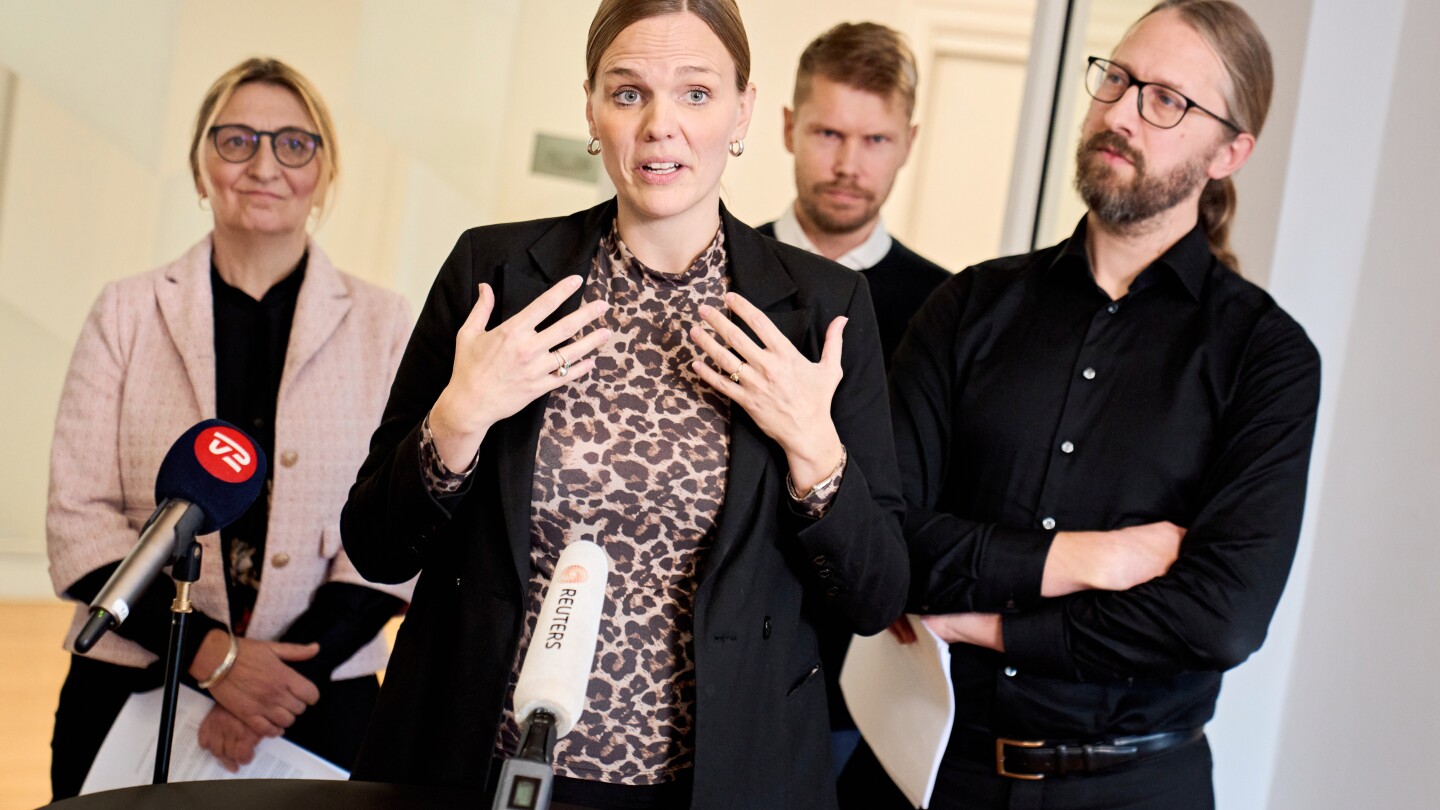
“In far too many years, we have given the social media platforms free play in the playing rooms of our children. There’s been no limits,” said Caroline Stage, Denmark’s minister for digital affairs, in an interview with The Associated Press. She compared the digital landscape to nightlife in cities, noting, “When we go into the city at night, there are bouncers who are checking the age of young people… In the digital world, we don’t have any bouncers, and we definitely need that.”
Despite existing restrictions—many platforms already officially ban users under 13, and EU law requires protective measures for young users—Danish authorities report that approximately 98% of Danish children under 13 have profiles on at least one social media platform, with nearly half of those under 10 maintaining accounts.
Australia’s pioneering legislation, which took effect this week, imposes fines of up to AU$50 million ($33 million) on major platforms including Facebook, Instagram, TikTok, X, YouTube and Snapchat if they fail to take reasonable steps to remove accounts belonging to Australian children under 16.
The Danish government has yet to detail enforcement mechanisms, though a new “digital evidence” app is expected to launch next spring. This app would display an age certificate to ensure compliance with the age restrictions.
Young Danes have expressed mixed reactions to the proposed ban. Ronja Zander, a 15-year-old who uses Instagram, Snapchat and TikTok, worries about losing connections with online friends. “I myself have some friends that I only know from online, and if I wasn’t fifteen yet, I wouldn’t be able to talk with those friends,” she told the AP.
Meanwhile, 14-year-old Copenhagen student Chloé Courage Fjelstrup-Matthisen acknowledged social media’s potential harms, including cyberbullying and graphic content. She recounted accidentally viewing a video of a man being shot several months ago: “The video was on social media everywhere and I just went to school and then I saw it.”
Parents like Line Pedersen from Nykøbing support the initiative. “I think that we didn’t really realize what we were doing when we gave our children the telephone and social media from when they were eight, 10 years old,” she said. “I don’t quite think that the young people know what’s normal, what’s not normal.”
Some experts, however, express concerns about the democratic implications of such restrictions. Anne Mette Thorhauge, an associate professor at the University of Copenhagen, argues that the ban potentially infringes on children’s rights. “To me, the greatest challenge is actually the democratic rights of these children. I think it’s sad that it’s not taken more into consideration,” she said. “Social media, to many children, is what broadcast media was to my generation. It was a way of connecting to society.”
The EU’s Digital Services Act, implemented two years ago, already requires platforms to provide parental controls and age verification tools. However, EU officials acknowledge that enforcing these regulations has proven challenging due to the need for member state cooperation and substantial resources.
Denmark joins a growing international movement to restrict young people’s social media access. Malaysia plans to ban social media accounts for those under 16 beginning next year, Norway is developing similar restrictions, and China has already imposed limits on children’s online gaming and smartphone usage time.
The Danish proposal is expected to undergo a consultation process and several parliamentary readings before potentially becoming law in late 2025 or 2026.
Fact Checker
Verify the accuracy of this article using The Disinformation Commission analysis and real-time sources.

12 Comments
As a parent, I can understand the desire to protect young people from the potential harms of social media. However, a full ban may be overly restrictive. More research is needed on effective, evidence-based policy solutions.
I agree, a nuanced, research-backed approach is needed. Outright bans can have unintended consequences and may not address the root issues.
Denmark’s move is a bold step, but the details and implementation will be critical. Striking the right balance between protection and empowerment is a significant challenge facing policymakers globally.
Absolutely. This is a complex issue without easy answers. Careful, evidence-based policymaking will be essential to navigating the tradeoffs.
While social media can have negative effects on young people, a complete ban may be too heavy-handed. A more balanced approach focused on digital literacy, parental controls, and age-appropriate content guidelines could be more effective.
That’s a fair perspective. A nuanced policy that empowers young people to navigate social media responsibly could be preferable to a blanket prohibition.
Interesting move by Denmark to restrict social media for young people. Protecting minors from the potential harms of social media is a complex challenge many countries are grappling with. Curious to see how this policy unfolds and if other nations follow suit.
I agree, this is a significant step. It will be important to monitor the real-world impacts and ensure any restrictions don’t overly limit youth engagement and expression online.
Denmark’s proposal raises challenging questions about children’s rights, digital access, and the role of government in regulating online spaces. Careful implementation will be key to balancing these complex issues.
Absolutely, this is a delicate balance to strike. It will be interesting to see how Denmark navigates the tradeoffs and potential unintended consequences.
This policy raises important questions about children’s digital rights and freedoms. While the intentions are understandable, a more collaborative approach with young people, families, and industry could yield better outcomes.
Well said. Engaging all stakeholders in the policymaking process will be crucial to developing effective, balanced solutions.