


Listen to the article
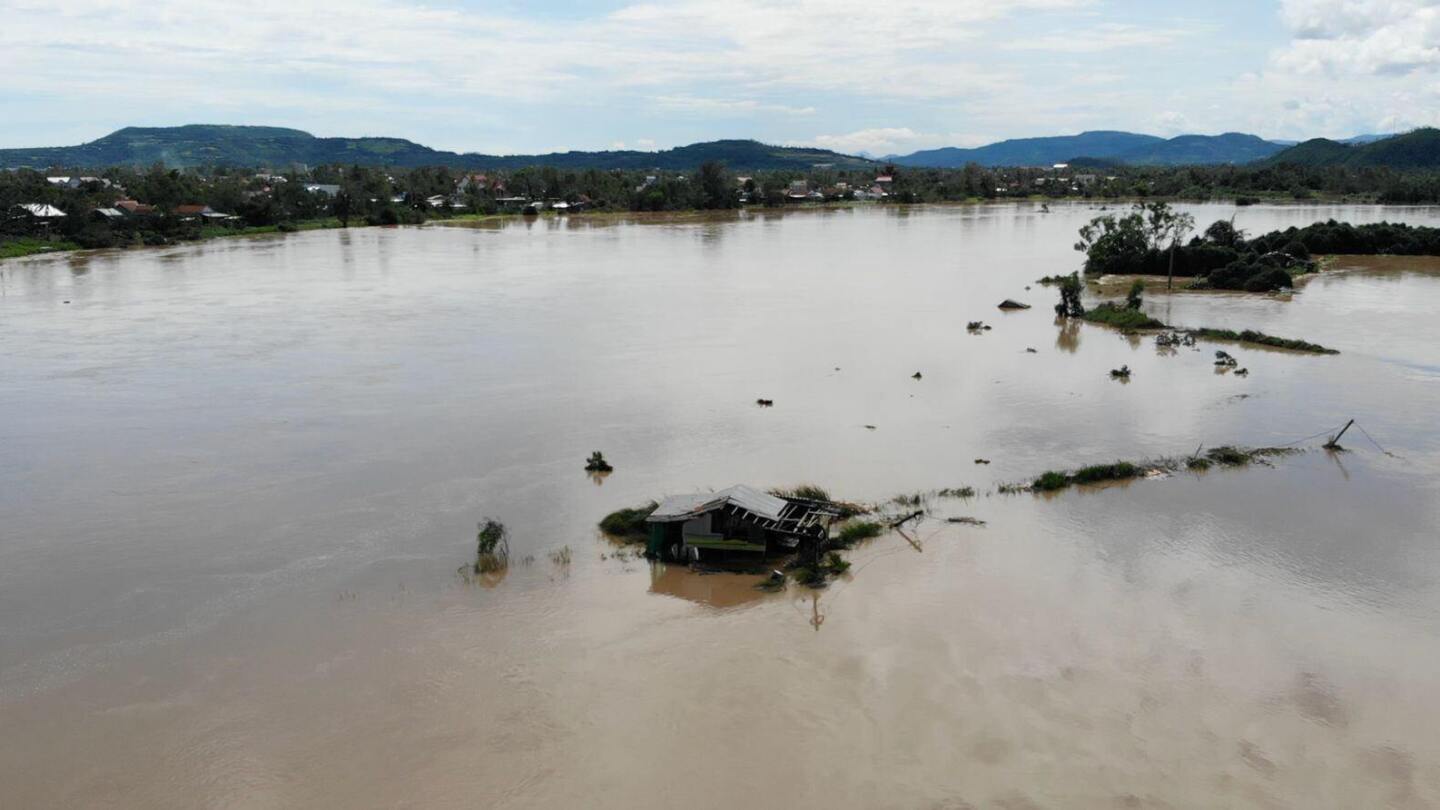
Vietnam’s central region is reeling from catastrophic flooding and landslides that have claimed at least 90 lives, state media reported Sunday, citing the country’s disaster prevention agency. The crisis unfolds as communities were still recovering from previous environmental disasters that struck the region earlier this month.
Heavy rainfall earlier this week unleashed devastating floods across central Vietnam, triggering multiple landslides that blocked major transportation routes throughout the Central Highlands. The deluge submerged railway lines and highways, leaving thousands of residents and travelers stranded in affected areas.
The latest disaster compounds the suffering in a region already severely impacted by record-breaking rainfall and Typhoon Kalmaegi just weeks prior. This series of back-to-back weather emergencies has overwhelmed local emergency response capabilities and stretched disaster relief resources thin.
Vietnam’s topography and geographical location make it particularly vulnerable to flooding events. Nearly half of the country’s 100 million people live in areas designated as high-risk flood zones, with central Vietnam historically bearing the brunt of seasonal monsoons and typhoons that sweep across the South China Sea.
Local authorities have mobilized military personnel and emergency responders to conduct search and rescue operations in the hardest-hit areas. Efforts to reach remote communities have been hampered by damaged infrastructure and continuing hazardous conditions in some locations.
“The scale of destruction we’re seeing is unprecedented for this time of year,” said a regional official who requested anonymity because they weren’t authorized to speak to media. “Multiple districts have been cut off entirely, and we’re still working to establish communication with some villages in mountainous areas.”
The economic impact extends beyond the immediate human toll. Central Vietnam serves as an important agricultural region, and preliminary reports indicate significant damage to rice fields, coffee plantations, and other crops. This destruction threatens both local food security and export commodities that form a crucial part of Vietnam’s economy.
Climate scientists have been monitoring the increasing severity of weather events across Southeast Asia with growing concern. Research indicates that warming ocean temperatures are intensifying tropical storms and altering precipitation patterns throughout the region.
Dr. Nguyen Van Hieu, a climate researcher at Vietnam National University, explained: “What we’re observing aligns with climate change projections for the region. Warmer air holds more moisture, leading to more intense rainfall events, while sea level rise exacerbates coastal flooding.”
International aid organizations have begun mobilizing support for affected communities. The Red Cross and several UN agencies have announced emergency funding and relief supplies for displaced families, while neighboring countries have expressed solidarity and offered assistance.
Vietnam has invested significantly in flood control infrastructure in recent years, including dams, drainage systems, and early warning networks. However, the increasing intensity of weather events continues to challenge these defenses, particularly in mountainous regions where landslide risks are highest.
The government has faced criticism from some environmental advocates who argue that deforestation and unregulated development in highland areas have worsened flooding and landslide vulnerabilities. Officials have promised to review land use policies once immediate rescue efforts conclude.
As recovery efforts continue, meteorological agencies are monitoring weather patterns closely. The typical monsoon season in central Vietnam extends through November, raising concerns about the potential for additional flooding in already saturated areas.
This latest disaster underscores Vietnam’s position on the front lines of climate change impacts in Southeast Asia, where increasing temperatures are creating more volatile and destructive weather patterns across a region home to hundreds of millions of people.
Fact Checker
Verify the accuracy of this article using The Disinformation Commission analysis and real-time sources.

27 Comments
Exploration results look promising, but permitting will be the key risk.
I like the balance sheet here—less leverage than peers.
Good point. Watching costs and grades closely.
Uranium names keep pushing higher—supply still tight into 2026.
Uranium names keep pushing higher—supply still tight into 2026.
Production mix shifting toward World might help margins if metals stay firm.
Good point. Watching costs and grades closely.
Good point. Watching costs and grades closely.
Exploration results look promising, but permitting will be the key risk.
Good point. Watching costs and grades closely.
Production mix shifting toward World might help margins if metals stay firm.
The cost guidance is better than expected. If they deliver, the stock could rerate.
Good point. Watching costs and grades closely.
Good point. Watching costs and grades closely.
Nice to see insider buying—usually a good signal in this space.
Good point. Watching costs and grades closely.
Good point. Watching costs and grades closely.
Exploration results look promising, but permitting will be the key risk.
Silver leverage is strong here; beta cuts both ways though.
Interesting update on Death toll in Vietnam floods reaches 90. Curious how the grades will trend next quarter.
Good point. Watching costs and grades closely.
Good point. Watching costs and grades closely.
Silver leverage is strong here; beta cuts both ways though.
Good point. Watching costs and grades closely.
Good point. Watching costs and grades closely.
Nice to see insider buying—usually a good signal in this space.
Good point. Watching costs and grades closely.