


Listen to the article
Death tolls have risen across Southeast Asia as devastating floods and landslides continue to wreak havoc in Vietnam, Thailand, and Malaysia, leaving thousands displaced and causing hundreds of millions in damages.
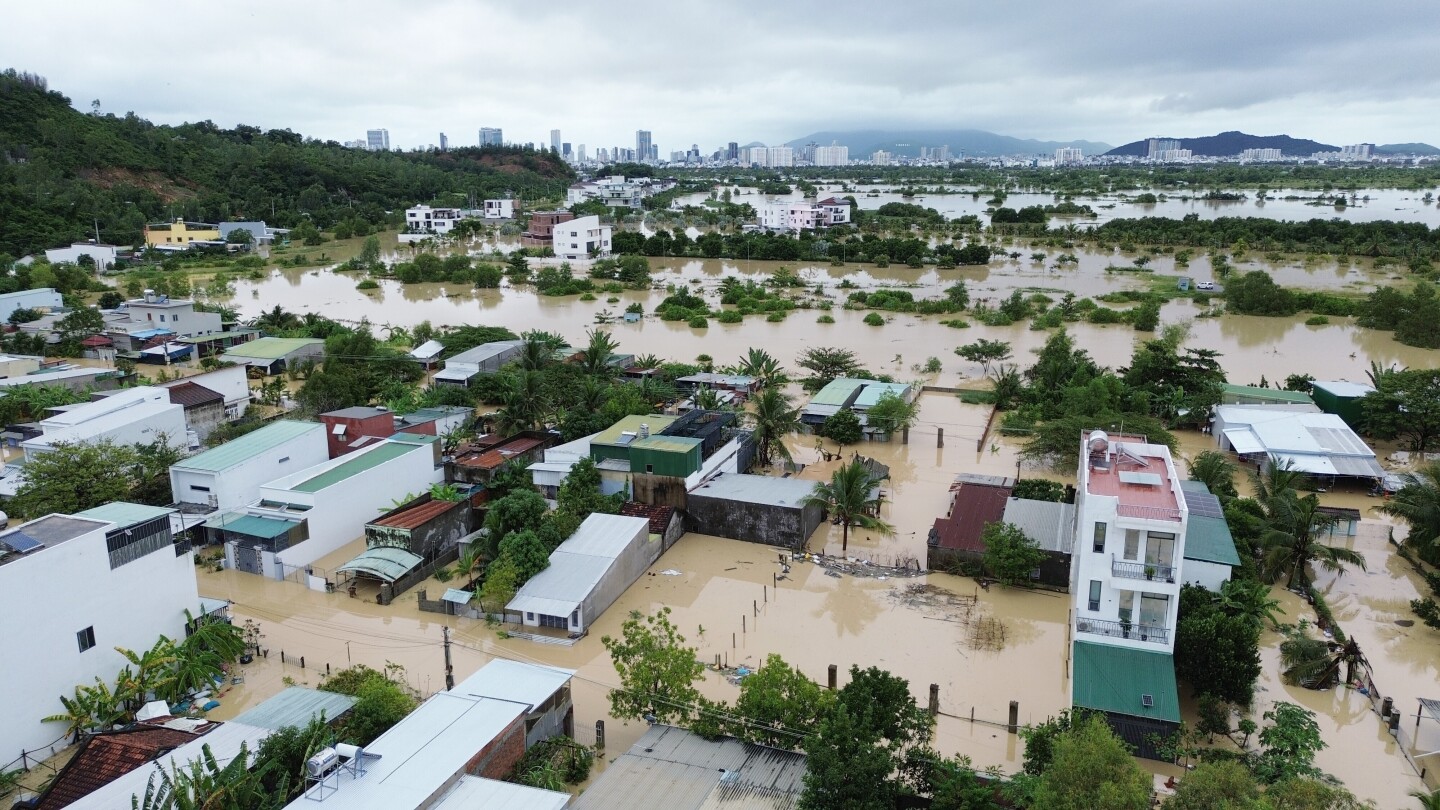
In Vietnam, authorities confirmed that 91 people have died and 11 remain missing after a week of torrential downpours pummeled the country’s central region. The disaster zone stretches approximately 800 kilometers from Quang Tri to Lam Dong provinces, including the highlands.
Dak Lak province has suffered the highest casualties, with 63 people killed, primarily from drowning. Additional fatalities were reported in Khanh Hoa, Lam Dong, Gia Lai, Danang, Hue, and Quang Tri provinces.
The flooding has rendered many roads impassable, forcing authorities to deploy helicopters to deliver emergency food supplies and evacuate stranded residents. Initial estimates place the damage from this latest round of floods at approximately $500 million.
“We’ve never experienced that much rain and such bad flooding,” said Pham Thu Huyen, a 45-year-old resident who joined hundreds of others cleaning up debris in Nha Trang, a popular tourist destination known for its beaches.
The disaster has dealt a significant blow to Vietnam’s agricultural sector, with floodwaters submerging coffee farms in Dak Lak, the country’s major coffee-growing region. This could potentially impact global coffee supplies and prices if production is significantly affected.
While water levels have receded in some areas, Vietnam’s weather agency warns that risks remain as rain continues in certain regions. More concerning, meteorologists have identified a new tropical depression forming that could bring even more severe weather later this week.
This latest catastrophe compounds the damage from earlier disasters. Vietnam was hit by powerful typhoons in September and October, with economic losses estimated at $1.2 billion, according to the United Nations International Organization for Migration. In response, South Korea has pledged $1 million in aid to help displaced communities and migrants affected by these earlier storms.
Climate scientists have pointed to these intensifying weather patterns as evidence of how global warming is making storms and rainfall increasingly destructive and frequent across Southeast Asia. Nearly half of Vietnam’s population lives in high-risk flood zones, making the country particularly vulnerable to these climate-related disasters.
Meanwhile, Thailand is battling severe flash flooding across its southern provinces, where torrential rainfall has affected nearly 2 million people. Regional health officials confirmed five deaths and four injuries across six southern provinces.
Hat Yai, a major economic hub in Songkhla province, recorded 335 millimeters (more than 13 inches) of rain on Friday alone—the highest 24-hour rainfall total in 300 years. Over three days, the city was deluged with 630 millimeters of rain, severely hampering evacuation efforts as residents and tourists became trapped in buildings surrounded by rising waters.
Emergency crews have been forced to use lifeboats to navigate flooded streets and transport people to safety. Officials warn that water levels are expected to rise further with rain forecasted to continue through Tuesday.
Thailand had already endured significant flooding in the north earlier this year, followed by months of inundation in the central region that claimed more than two dozen lives and caused extensive damage to agricultural lands.
In neighboring Malaysia, authorities report that more than 12,500 people across nine states have been evacuated to 86 temporary shelters. The northeastern state of Kelantan has been hit hardest, with officials warning that conditions may deteriorate as heavy rainfall persists. Malaysia typically experiences flooding during its annual monsoon season, which runs from November through March.
As these countries struggle with immediate rescue and relief operations, the long-term challenges of rebuilding infrastructure, restoring agricultural production, and implementing more effective flood mitigation strategies loom large in a region increasingly affected by extreme weather events.
Fact Checker
Verify the accuracy of this article using The Disinformation Commission analysis and real-time sources.

18 Comments
Production mix shifting toward World might help margins if metals stay firm.
Exploration results look promising, but permitting will be the key risk.
Good point. Watching costs and grades closely.
If AISC keeps dropping, this becomes investable for me.
Good point. Watching costs and grades closely.
Silver leverage is strong here; beta cuts both ways though.
Good point. Watching costs and grades closely.
Uranium names keep pushing higher—supply still tight into 2026.
Nice to see insider buying—usually a good signal in this space.
Good point. Watching costs and grades closely.
If AISC keeps dropping, this becomes investable for me.
Good point. Watching costs and grades closely.
Exploration results look promising, but permitting will be the key risk.
Uranium names keep pushing higher—supply still tight into 2026.
Good point. Watching costs and grades closely.
Good point. Watching costs and grades closely.
If AISC keeps dropping, this becomes investable for me.
Exploration results look promising, but permitting will be the key risk.