


Listen to the article
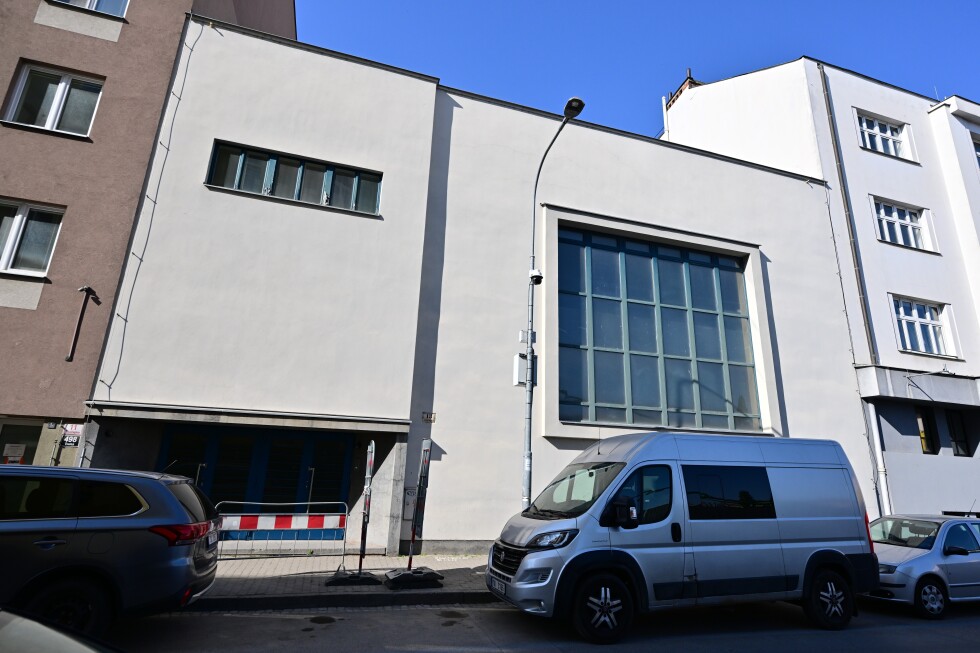
A Czech court has sentenced a 20-year-old man to seven years in prison for attempted terrorism and attempted murder following an attack on a Brno synagogue earlier this year, marking one of the country’s most significant domestic terrorism cases in recent years.
The ruling, handed down Tuesday by a court in Brno, the Czech Republic’s second-largest city, also included an additional two-year sentence for promoting terrorism, a crime the defendant committed after turning 18.
The January 2024 attack involved an improvised incendiary device that the convicted man and an accomplice attempted to use to set fire to the synagogue. During the incident, they also tried to kill an individual who survived the assault. Court proceedings were conducted behind closed doors, as is standard practice in the Czech judicial system for sensitive cases.
The defendant’s accomplice, who is still a minor, was not tried in court as they were below the country’s age of criminal responsibility. Under Czech law, individuals under a certain age cannot be prosecuted through the standard adult criminal justice system.
According to Czech authorities, the two attackers were part of a larger network of five teenagers who had allegedly been radicalized online through Islamic State propaganda. This group was arrested last year during a coordinated international operation involving law enforcement agencies from multiple European countries.
Officials report that the radicalized teens had been actively sharing hate content on social media platforms targeting minorities, the Jewish community, and LGBTQ+ individuals. They allegedly participated in online forums that recruited fighters for Islamic State operations in Syria and displayed what authorities described as “a fascination with violence.”
During raids conducted across the Czech Republic and neighboring Austria, police seized an arsenal of weapons including knives, machetes, axes, and gas pistols. The extensive investigation involved collaboration between Czech authorities and counterparts in Austria, Britain, and Slovakia, with additional support from Europol, the European Union’s law enforcement agency.
This case highlights the growing concern among European security agencies about online radicalization, particularly among young people. Extremist groups have increasingly turned to social media platforms to spread propaganda and recruit supporters, often targeting vulnerable individuals.
The synagogue attack in Brno comes amid rising antisemitism across Europe, with Jewish communities facing increased threats and violence in several countries. Czech authorities have stepped up security measures at Jewish sites and other potential targets in the wake of the incident.
The Czech Republic has historically maintained a strong stance against terrorism, with its security services actively monitoring potential threats and participating in international counter-terrorism initiatives. However, this case demonstrates that even countries with relatively low profiles in terms of terrorist activity are not immune to the global challenge of radicalization.
Security experts have noted that the involvement of such young individuals in terrorist activities represents a troubling trend that requires coordinated educational, social, and law enforcement responses. Many European countries are now developing specialized programs to identify early signs of radicalization and provide intervention before individuals progress to planning or executing attacks.
The sentencing comes as European nations continue to grapple with the complex challenge of balancing security concerns with civil liberties and the special considerations required when dealing with juvenile offenders in terrorism cases.
Fact Checker
Verify the accuracy of this article using The Disinformation Commission analysis and real-time sources.

30 Comments
Uranium names keep pushing higher—supply still tight into 2026.
Good point. Watching costs and grades closely.
Good point. Watching costs and grades closely.
Uranium names keep pushing higher—supply still tight into 2026.
Good point. Watching costs and grades closely.
Good point. Watching costs and grades closely.
Uranium names keep pushing higher—supply still tight into 2026.
Good point. Watching costs and grades closely.
If AISC keeps dropping, this becomes investable for me.
Good point. Watching costs and grades closely.
Good point. Watching costs and grades closely.
Silver leverage is strong here; beta cuts both ways though.
Good point. Watching costs and grades closely.
Good point. Watching costs and grades closely.
If AISC keeps dropping, this becomes investable for me.
Good point. Watching costs and grades closely.
I like the balance sheet here—less leverage than peers.
Good point. Watching costs and grades closely.
Good point. Watching costs and grades closely.
Silver leverage is strong here; beta cuts both ways though.
Silver leverage is strong here; beta cuts both ways though.
Exploration results look promising, but permitting will be the key risk.
Good point. Watching costs and grades closely.
The cost guidance is better than expected. If they deliver, the stock could rerate.
Good point. Watching costs and grades closely.
Interesting update on Czech man jailed for 7 years over attempted synagogue arson attack. Curious how the grades will trend next quarter.
Good point. Watching costs and grades closely.
Good point. Watching costs and grades closely.
If AISC keeps dropping, this becomes investable for me.
Good point. Watching costs and grades closely.