


Listen to the article
Colombian President Petro Releases Bank Records to Counter Drug Trafficking Allegations
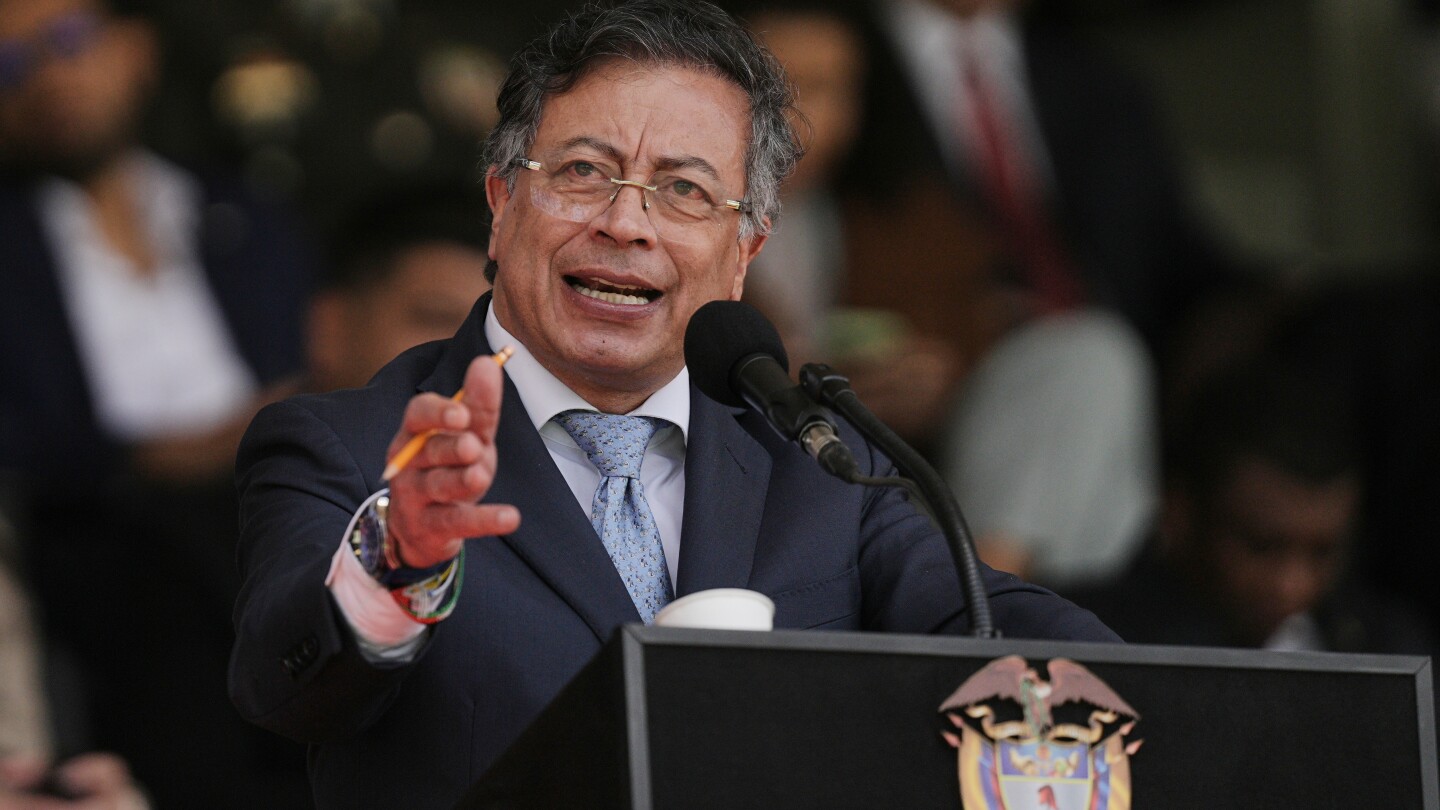
Colombian President Gustavo Petro has taken the unusual step of publicly releasing his personal bank statements in response to unsubstantiated allegations from U.S. President Donald Trump linking him to drug trafficking.
The Financial Information and Analysis Unit of Colombia began releasing Petro’s banking transactions from 2022 through June of this year to the media following the president’s directive issued on Monday.
“Don’t you find it alarming that my bank accounts and transactions contradict President Trump’s assessment of a president democratically elected by Colombians?” Petro wrote on X (formerly Twitter) on Wednesday, directly challenging the U.S. president’s claims.
The move comes after the U.S. Treasury Department imposed sanctions on Petro, First Lady Verónica Alcocer, and his eldest son Nicolás Petro, accusing them of connections to drug trafficking without providing evidence to support these claims.
Political analysts, however, remain skeptical about whether this transparency initiative will effectively counter the accusations. Yann Basset, political science professor at Universidad del Rosario, told The Associated Press that if there were illicit transactions related to drug trafficking, “they surely will not appear in the president’s accounts.” Basset suggested the gesture is “more an act of transparency toward the public” than a measure likely to convince U.S. authorities or expert observers.
While the released financial records have not revealed any suspicious transactions that would support drug trafficking allegations, they have exposed details about Petro’s personal spending habits. The documents show mortgage payments, purchases at luxury retailers like Gucci and Ralph Lauren, and a transaction at a strip club, which has drawn criticism from Colombian media.
Petro defended his spending patterns on social media, writing: “Your analysis is quite immature. It implies that if you’re a socialist you’ll starve, because all food in capitalism involves buying goods.” The president has positioned himself as a leftist leader dedicated to addressing inequality and poverty in Colombia since taking office in 2022.
Sandra Borda, political science professor at the University of Los Andes, expressed concern that this unintended consequence of transparency might backfire. “All of this is generating an additional, and completely unnecessary, debate about the president’s spending,” she said. “I think it could negatively affect people’s perception of Petro’s social commitment.”
The timing of this transparency initiative is significant, coming as Colombia begins preparing for congressional and presidential elections scheduled for March and May 2026. While Petro himself cannot seek reelection due to constitutional term limits, he has indicated his intention to help maintain leftist leadership in the country.
Basset notes that the decision to release banking records “is understood in the context of the electoral campaign and a will to show transparency,” though he acknowledges that public reaction remains uncertain. Colombian voters may either applaud the president’s commitment to openness or focus more on the controversies surrounding his personal expenditures.
The situation highlights the complex relationship between Colombia and the United States, traditionally strong allies in the region, particularly in counter-narcotics operations. Colombia has historically been one of the largest recipients of U.S. security aid in Latin America, receiving billions in assistance to combat drug trafficking and guerrilla movements over the past decades.
Petro, the first leftist president in Colombia’s modern history, campaigned on promises of significant social reform and a new approach to drug policy that emphasizes public health over militarized enforcement. His presidency has marked a shift in Colombia’s traditional political alignment, which may have contributed to tensions with some U.S. officials.
As this diplomatic tension unfolds, the effectiveness of Petro’s transparency gambit remains to be seen, with Colombian public opinion divided between supporters who see it as a bold defense against unwarranted accusations and critics who question both the strategy and the revelations about his personal spending.
Fact Checker
Verify the accuracy of this article using The Disinformation Commission analysis and real-time sources.

6 Comments
This clash between the Colombian and US presidents over drug trafficking allegations is a significant geopolitical development that warrants close attention. Petro’s move to release his bank records is an interesting attempt at transparency, but the analysts’ skepticism suggests there may be more to this story than meets the eye.
The sanctions imposed on Petro and his family by the US Treasury are concerning, given the lack of evidence provided to support the drug trafficking claims. Petro’s bank records could help shed light on the situation, but political analysts are skeptical about the impact.
Releasing personal bank information is a bold move by Petro. While it may help dispel the US accusations, the political analysts’ skepticism suggests there could be more complexity to this issue than meets the eye. I’m curious to see how this unfolds.
This dispute over drug trafficking allegations between the Colombian and US presidents is a significant geopolitical development. Petro’s move to release his bank records demonstrates a willingness to address the issue head-on, but the skepticism from analysts suggests there may be more to the story.
The drug trafficking allegations against Petro and his family are serious, and his decision to publicly release his bank records is an attempt to counter those claims. However, the analysts’ doubts about the impact of this move highlight the complexity of the situation.
This is a high-profile clash between the Colombian and US presidents. Petro’s move to publicly release his bank records is an interesting transparency initiative, but it remains to be seen if it will effectively counter the unsubstantiated drug trafficking allegations from the US.