


Listen to the article
China Announces Partial Resumption of Ties with Taiwan Following Opposition Leader’s Visit
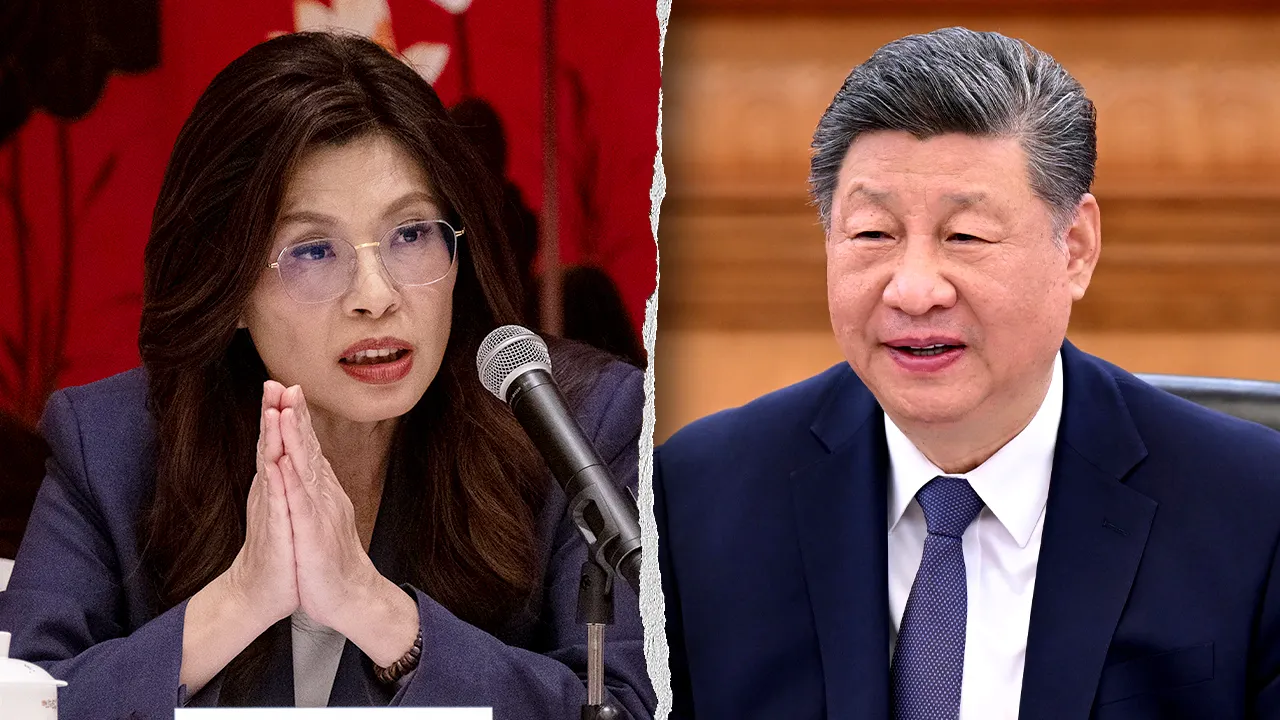
China announced Sunday it would restore several previously suspended ties with Taiwan, including direct flights and imports of Taiwanese aquaculture products, following a high-profile meeting between Taiwan’s opposition leader and Chinese President Xi Jinping.
The Taiwan Work Office under China’s Communist Party issued a statement outlining plans to explore a long-term communication mechanism between the Chinese Communist Party and Taiwan’s Kuomintang Party (KMT). The announcement comes after Cheng Li-wun, the KMT chairperson, met with Xi in Beijing on Friday for talks focused on peace across the Taiwan Strait, though specific agreements were not detailed.
Taiwan’s Mainland Affairs Council quickly responded to the announcement, characterizing the measures as “political transactions” between the two parties that deliberately circumvent Taiwan’s official government channels. The council emphasized that cross-strait matters involving public authority must be negotiated by both governments “on an equal and dignified basis” to effectively protect citizens’ rights.
Relations between China and Taiwan have remained tense since their split in 1949 following the Chinese Civil War. Beijing considers Taiwan part of its territory and has never renounced the possible use of force to achieve reunification. Tensions escalated significantly after the 2016 election of Taiwan’s President Tsai Ing-wen from the Democratic Progressive Party, which Beijing views as pro-independence.
Following Tsai’s election, China suspended most official dialogue with Taiwan’s government and has increasingly demonstrated military pressure by conducting daily naval and air operations around the island, raising regional security concerns.
The measures announced by China include resuming direct flights between Taiwan and mainland cities such as Xi’an and Urumqi. However, implementation remains uncertain without approval from Taiwan’s government. China had previously banned its citizens from making individual trips to Taiwan in 2019, while Taiwan currently requires Chinese visitors to hold valid resident visas from countries like the United States or European Union nations before applying for Taiwanese visitor visas.
China also reiterated its intention to construct bridges connecting the mainland to the Taiwanese islands of Matsu and Kinmen, which lie geographically closer to China than to Taiwan’s main island. This proposal has been mentioned by Beijing multiple times in the past but has never progressed beyond the planning stage.
In the economic sphere, Beijing plans to facilitate the import of Taiwan’s aquaculture products, which had been subject to restrictions since 2021. China began by banning Taiwanese pineapples that year before expanding restrictions to other products including grouper fish, squid, and tuna. These trade barriers have significantly impacted Taiwan’s agricultural and fishing sectors, which previously relied heavily on the Chinese market.
After the initial ban on grouper exports, Taiwan’s Ministry of Agriculture attempted to address China’s concerns to meet import requirements. China responded by providing only a limited list of individual companies permitted to sell to the mainland market, without offering comprehensive explanations for its restrictions.
The latest announcements represent a calculated diplomatic approach by Beijing, offering limited concessions while maintaining pressure on Taiwan’s government. Analysts note that by engaging with Taiwan’s opposition party rather than its elected government, China continues its strategy of attempting to isolate President Tsai’s administration while cultivating ties with political forces it considers more amenable to its positions.
The effectiveness of these measures remains to be seen, as their implementation will likely depend on complex negotiations and Taiwan’s willingness to participate in arrangements made without its government’s direct involvement.
Fact Checker
Verify the accuracy of this article using The Disinformation Commission analysis and real-time sources.

9 Comments
The announced measures seem more like political gestures than substantive progress. True reconciliation requires China to acknowledge Taiwan’s democratic status and refrain from coercive tactics.
Well said. Until China is willing to engage with Taiwan’s government as an equal partner, any deals will be viewed with skepticism by the international community.
The resumption of some ties is a small step, but China’s continued efforts to sideline Taiwan’s government are concerning. True progress requires a genuine shift in Beijing’s approach to cross-strait relations.
Interesting development, but it seems China is still trying to sidestep Taiwan’s official government. Maintaining stable cross-strait relations will require genuine dialogue and mutual respect between the two sides.
Agreed. Any progress needs to happen through proper government-to-government channels, not just between political parties. Bypassing Taiwan’s leadership could undermine trust and further complicate the situation.
This is a complex issue with deep historical roots. While improved communication is welcome, Taiwan’s autonomy and the will of its people must be the foundation for any cross-strait agreements.
Exactly. Lasting peace can only be achieved through genuine dialogue and mutual understanding, not unilateral actions that ignore Taiwan’s legitimate concerns.
While the partial resumption of ties is a positive step, the details will be crucial. Taiwan’s sovereignty and the rights of its citizens must be fully respected in any agreements between the parties.
Absolutely. China’s unilateral actions raise concerns about its true intentions. Transparent and inclusive negotiations are needed to build lasting stability in the region.