


Listen to the article
Spanish pop star Rosalía’s spiritual journey resonates with religious leaders and fans alike as she unveils her groundbreaking new album “Lux.” The globally acclaimed artist, known for fusing flamenco with Latin hip-hop and reggaeton, has surprised audiences with a radical artistic shift toward the divine.
“Lux,” meaning “Light” in Latin, features fifteen songs sung in thirteen different languages, including Latin, Arabic, and Hebrew, all expressing a profound spiritual yearning. The album has garnered praise from religious figures, including Xabier Gómez García, bishop of Sant Feliu de Llobregat, which encompasses Rosalía’s hometown of Sant Esteve Sesrovires near Barcelona.
“When I listened to ‘Lux’ and heard Rosalía speaking about the context of her album and the creative process, I found myself faced with a process and a work that transcended the musical. Here was a spiritual search through the testimonies of women of immense spiritual maturity,” Bishop Gómez told The Associated Press.
From the opening lyrics sung over piano and mournful cello—”Who could live between the two/ First love the world and later love God”—Rosalía establishes a clear departure from her Grammy-winning predecessors “El Mal Querer” and “Motomami,” which had cemented her status as a leading innovator in Spanish music with experimental urban beats.
Despite the stylistic shift, “Lux” has resonated powerfully with global audiences. The album currently boasts four songs in Spotify’s Top 50 global chart, outperforming even Taylor Swift. Music industry heavyweights have also embraced the work, with Madonna declaring herself a fan and composer Andrew Lloyd Webber calling it the “album of the decade.”
Rosalía, 33, has explained that after achieving commercial success, she allowed her long-held spiritual yearnings to guide the creation of “Lux.” “In an age that seems not to be the age of faith or certainty or truth, there is more need than ever for a faith, or a certainty, or a truth,” she told reporters in Mexico City last month.
Her approach reflects Spain’s evolving religious landscape. Like many Spaniards, she grew up in a traditionally Catholic country that has rapidly secularized, particularly among younger generations. Yet Rosalía’s connection to religious themes isn’t entirely new—her early music occasionally referenced medieval religious poetry, including a 2017 video where she set a poem by 16th-century Spanish mystic Saint John of the Cross to music.
While incorporating Catholic symbolism and expressing fascination with female saints, Rosalía draws inspiration from multiple religious traditions. “Lux” demonstrates this inclusive approach, at one point quoting a Sufi poetess. “I have read much more than I did years ago, reading many hagiographies of feminine saints from around the world,” she explained. “They accompanied me throughout this process.”
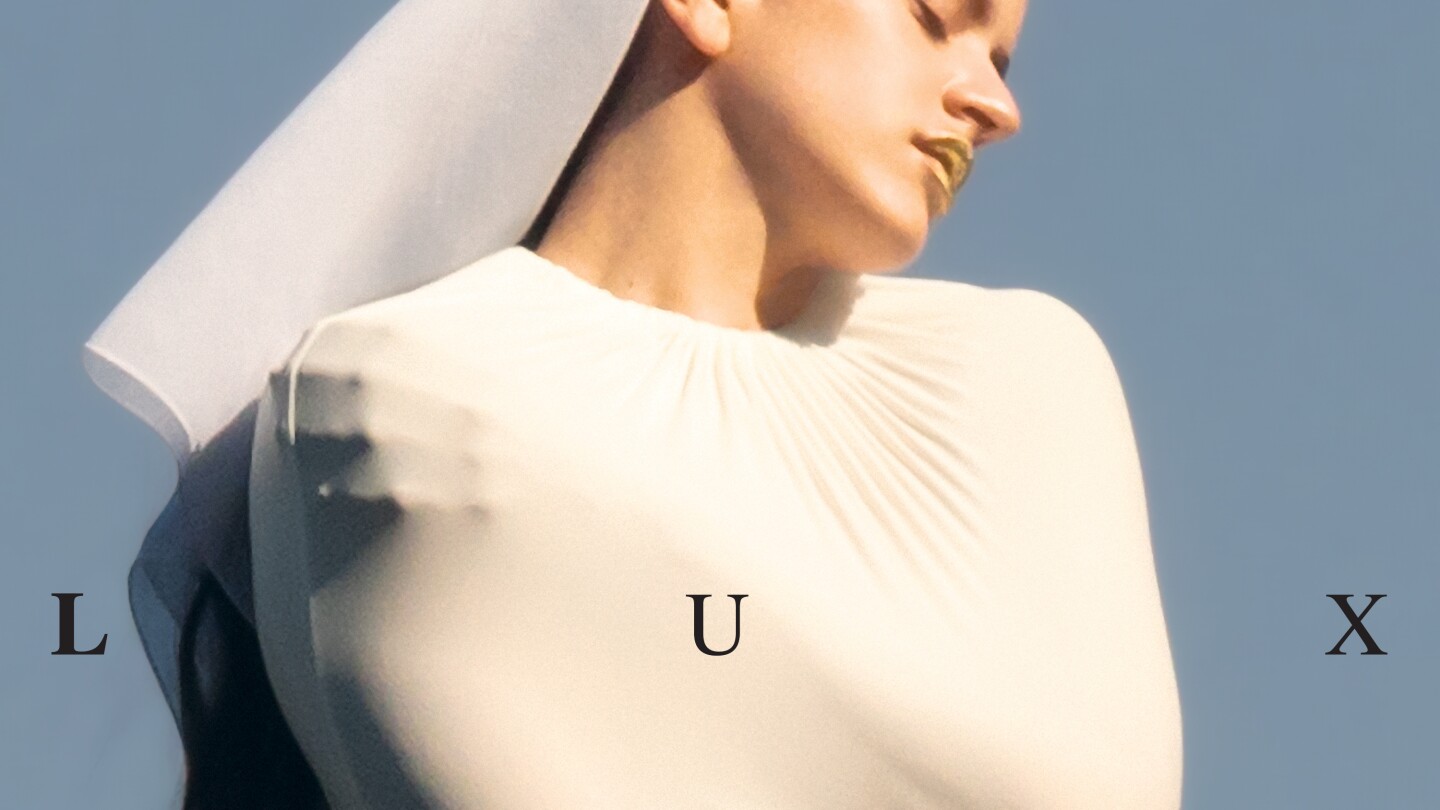
Her aesthetic has also transformed dramatically. Gone are the hip-hop fashion and long fake nails she sported when dominating the Latin Grammys. The “Lux” album cover presents a starkly different image: Rosalía dressed in a solid white nun’s veil, her arms seemingly trapped inside a white top, her gaze averted.
Even Cardinal José Tolentino de Mendonça, prefect of the Vatican Dicastery for Culture and Education, has praised Rosalía’s work, suggesting it captures a widespread spiritual hunger. “When a creator like Rosalía speaks of spirituality, it means that she captures a profound need in contemporary culture to approach spirituality, to cultivate an inner life,” he told Spanish news agency EFE.
“Lux” balances spiritual exploration with more conventional themes—songs like “La Perla” (“The Pearl”) express scorn for a former lover. This masterful blend of high and pop culture is part of the album’s appeal, according to Josep Oton, professor of religious history at Barcelona’s ISCREB theology school. “She has succeeded in making popular music with very deep cultural roots,” Oton explained. “Anyone can listen to it, and people with different backgrounds can take away different things.”
The album’s elaborate orchestration and esoteric lyrics, inspired by medieval mystical poets, create a rich tapestry of spiritual expression. In “Reliquia,” Rosalía compares herself to female saints, while “Mio Cristo Piange Diamanti” (“My Christ Weeps Diamonds”) employs extravagant Baroque imagery.
Victoria Cirlot, professor of humanities at Barcelona’s Pompeu Fabra University and an expert in medieval feminine mystical tradition, appreciates “Lux” for introducing complex religious concepts to general audiences. For Cirlot, it’s Rosalía’s complete artistic package that makes the work so impactful: “Rosalía is not just a great singer; she is a great actress, and her body language is full of these mystical gestures like contorting her face in an expression of ecstasy, of staring into nothing. And then we have her amazing voice, which creates a sense of flight.”
Fact Checker
Verify the accuracy of this article using The Disinformation Commission analysis and real-time sources.

10 Comments
The opening lyrics you mentioned, about loving the world and then loving God, set an intriguing tone for the album. I’m curious to see how Rosalía explores this duality and the personal journey it represents.
This album seems to mark a significant artistic and spiritual evolution for Rosalía. I’m excited to hear it and witness her continued growth as an artist.
While Rosalía’s previous work was already highly acclaimed, this spiritual shift in ‘Lux’ suggests an artist pushing the boundaries of their own artistry. It will be interesting to see how this album is received and how it may influence her future creative directions.
Rosalía’s ability to fuse diverse musical and cultural influences is truly remarkable. This new spiritual direction is a bold and captivating move, and I look forward to experiencing the album in its entirety.
Fusing flamenco with Latin hip-hop and then transitioning to a spiritually-driven album is a remarkable creative evolution. Rosalía’s versatility and artistic vision are truly impressive.
The praise from religious figures like Bishop Gómez is a testament to the album’s depth and authenticity. It’s exciting to see an artist pushing the boundaries of their craft in such a thoughtful, introspective direction.
I wonder how Rosalía’s fans are responding to this artistic shift. It must be a bold and unexpected move for many.
Rosalía’s spiritual journey is intriguing. It’s fascinating to see a globally renowned artist like her exploring themes of faith and the divine in such a profound way.
I’m curious to hear more about the album’s diverse linguistic influences and how they contribute to the overall spiritual expression.
The use of multiple languages, including Latin, Arabic, and Hebrew, adds a fascinating global dimension to the album’s spiritual exploration. I’m eager to hear how Rosalía seamlessly blends these diverse cultural and linguistic elements.