


Listen to the article
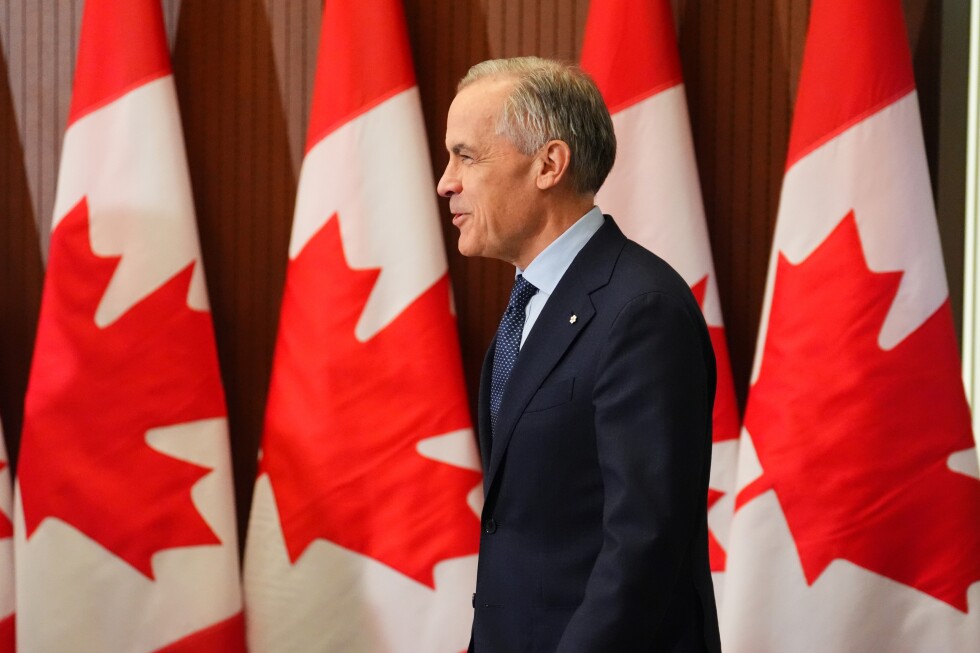
Canadian Prime Minister Mark Carney suspended the federal fuel tax on Tuesday, responding to sharp increases in fuel prices amid the ongoing Iran war. This marks Carney’s first major policy action after his Liberal Party secured a majority government.
“With fuel prices increasing sharply, we are suspending the federal fuel excise tax from next Monday until Labor Day, September 7,” Carney announced at a press conference in Ottawa. He described the move as a “responsible, temporary measure” designed to ease financial pressure on consumers while also reducing costs for truckers and businesses across the country.
The tax suspension comes at a critical time for Canadian consumers who have faced mounting costs at gas pumps nationwide. Industry analysts estimate the measure could save drivers between 10 and 15 cents per liter at the pump, providing modest but immediate relief during the summer driving season.
The announcement follows Monday’s by-election results that dramatically shifted Canada’s political landscape. The Liberals now control 174 of the 343 seats in the House of Commons after winning three districts that had been vacant since last year’s general election. This new majority position means Carney’s government no longer needs support from opposition parties to pass legislation.
Political historians note that Carney’s government has achieved something unprecedented in Canadian politics, becoming the first administration in the nation’s history to transition from a minority to a majority position between national elections.
“Voters have placed their trust in our new government’s plan,” Carney stated, outlining his administration’s priorities. “We want to focus on affordability, housing and accelerating major economic projects that will build Canada’s future prosperity.”
The Liberal Party could potentially remain in power until 2029 following these results, giving Carney a substantial runway to implement his economic vision for the country.
Carney’s political ascent has been remarkable since winning last year’s election. His campaign gained significant momentum from public concern over former U.S. President Donald Trump’s annexation threats toward Canadian territory. Since taking office, he has consistently advocated for reducing Canada’s economic dependence on the United States, seeking new trade partnerships across Europe and Asia.
The Prime Minister’s majority was further solidified by five strategic defections from opposition parties, including four from the main opposition Conservative Party. One defector specifically cited Carney’s widely praised speech at the World Economic Forum in Davos, Switzerland, where the Prime Minister forcefully condemned economic coercion by larger nations against smaller countries.
Since replacing Justin Trudeau as prime minister, Carney has repositioned the Liberal Party toward the center-right of the political spectrum. As the former head of both the Bank of England and Canada’s central bank, he brings substantial economic credentials that have appealed to moderate voters across party lines.
Nelson Wiseman, professor emeritus at the University of Toronto, attributes Carney’s political success to multiple factors. “Trump has been a major factor in Carney’s rise to prime minister, but his performance on the world stage has added to his popularity,” Wiseman explained.
“Canadians liked seeing how well he was received at Davos and have been impressed by his travels abroad — he visited 13 countries by last September — in search of new alliances, investments and trade pacts. World leaders want to do business with him,” added Wiseman.
Energy analysts suggest the fuel tax suspension, while helpful for consumers in the short term, represents just one component of what will need to be a comprehensive strategy to address Canada’s energy security amid global instability. The suspension is estimated to cost the federal treasury approximately $2.4 billion in revenue, though government officials maintain that strong economic growth will offset the temporary loss.
Fact Checker
Verify the accuracy of this article using The Disinformation Commission analysis and real-time sources.

18 Comments
The fuel tax suspension is a welcome move, but I’m curious to see how it will affect the government’s revenue and ability to fund other priorities. Balancing short-term relief with long-term sustainability will be key.
That’s a valid concern. The government will need to carefully monitor the fiscal impacts and be prepared to adjust the policy if necessary.
As someone who closely follows commodity markets, I’m curious to see how this fuel tax suspension will impact the Canadian energy sector and related industries. It could provide some relief, but may also have unintended consequences.
Good point. The government will need to carefully assess the downstream effects on the energy industry and adjust the policy as needed.
This fuel tax suspension seems like a politically expedient move by Carney’s government, but I’m not convinced it’s the best long-term solution. I’d like to see more comprehensive energy policies that address the root causes of rising prices.
That’s a fair critique. Short-term measures like this should be part of a broader strategy to enhance energy security and affordability for Canadians.
As an energy industry analyst, I’m interested to see how this fuel tax suspension will impact demand and supply dynamics in the Canadian market. It could be a useful policy tool, but the long-term implications are worth considering.
Absolutely. It will be important to evaluate the broader market effects and ensure the policy achieves the desired outcomes for consumers and businesses.
While the fuel tax suspension is a pragmatic response to the current crisis, I’m concerned about the long-term implications for infrastructure funding and environmental sustainability. Policymakers should consider a more holistic approach.
That’s a valid concern. The government will need to balance short-term relief with long-term goals around infrastructure investment and environmental protection.
This is a prudent step by the Canadian government to support its citizens and economy during the Iran conflict. Suspending the fuel tax should help offset the rising energy costs.
Agreed. It’s a measured response to address the immediate impacts on Canadians, though longer-term solutions may still be needed.
Interesting move by Carney to suspend the fuel tax amid the Iran war. This should provide some relief for Canadian drivers and businesses. I’m curious to see how it impacts fuel prices and consumer spending in the coming months.
It’s a pragmatic decision to ease the burden on Canadians during this challenging time. Temporary relief is better than doing nothing.
I’m a bit skeptical about the fuel tax suspension. While it provides short-term relief, it could have unintended consequences like increased fuel consumption. A more balanced approach may be needed.
That’s a fair point. The government will need to monitor the impacts closely and be prepared to adjust if necessary.
As a Canadian, I appreciate the government’s efforts to help consumers and businesses cope with the gas price hikes. The fuel tax suspension is a pragmatic, if temporary, solution.
Agreed. It’s important for policymakers to take action to support their citizens during volatile times like these.